Cleveland Museum of Art
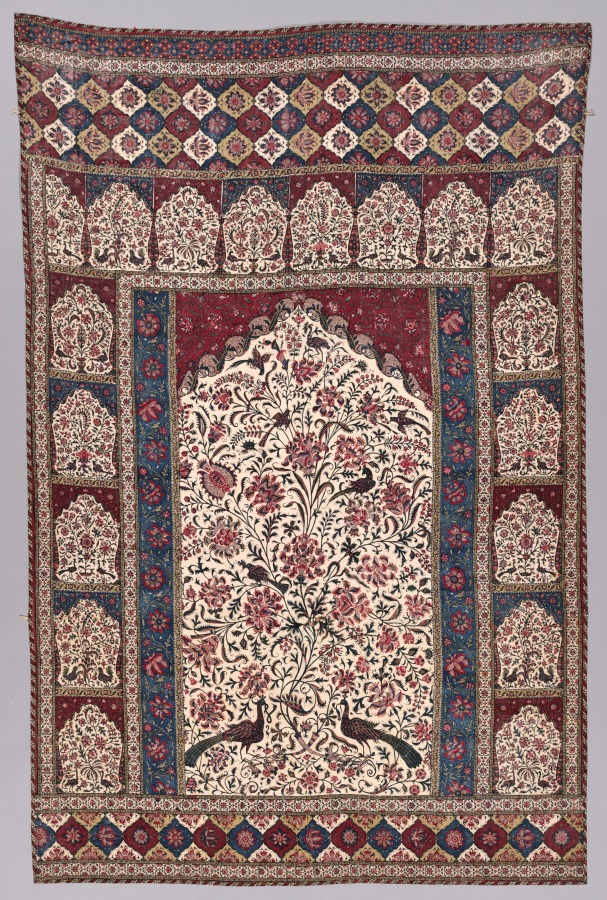
Chintz door curtain
- Date
- 1800s
- Medium
- Cotton: plain weave; chintz; hand drawing and block printing: bleach, mordant, and dye
- Culture
- Iran, Isfahan, Qajar period (1779–1925)
- Department
- Textiles
- Institution
- Cleveland Museum of Art
Lightweight white cotton cloth was transformed into this beautiful chintz, admired for its vibrant and durable colors, stunning pattern, fine quality, and rarity. Peacocks and a variety of birds appear amid vines with fanciful blossoms in the niche field and main border. Striking end borders feature blossoms in leaf-outlined diamonds on alternating ground colors of white, mustard, red, and blue. The complex chintz technique involving hand drawing, block printing, bleach, mordant, and dyes was developed in India. By the 1600s and 1700s, chintz was designed to target European and Asian markets and often featured large tree-of-life patterns. Chintz was also made in Iran by the 1400s, but this rare door curtain from the 1800s is among the oldest known examples.
The authoritative record is held by Cleveland Museum of Art. LinkedCulture surfaces this object and its connections; it does not alter institutional metadata.
Get printable QR codesHide QR codes
Open QR codes for this object page and the museum record. They stay collapsed until needed.
Related across collections
Semantically similar works from Cleveland Museum of Art and other institutions.