Cleveland Museum of Art
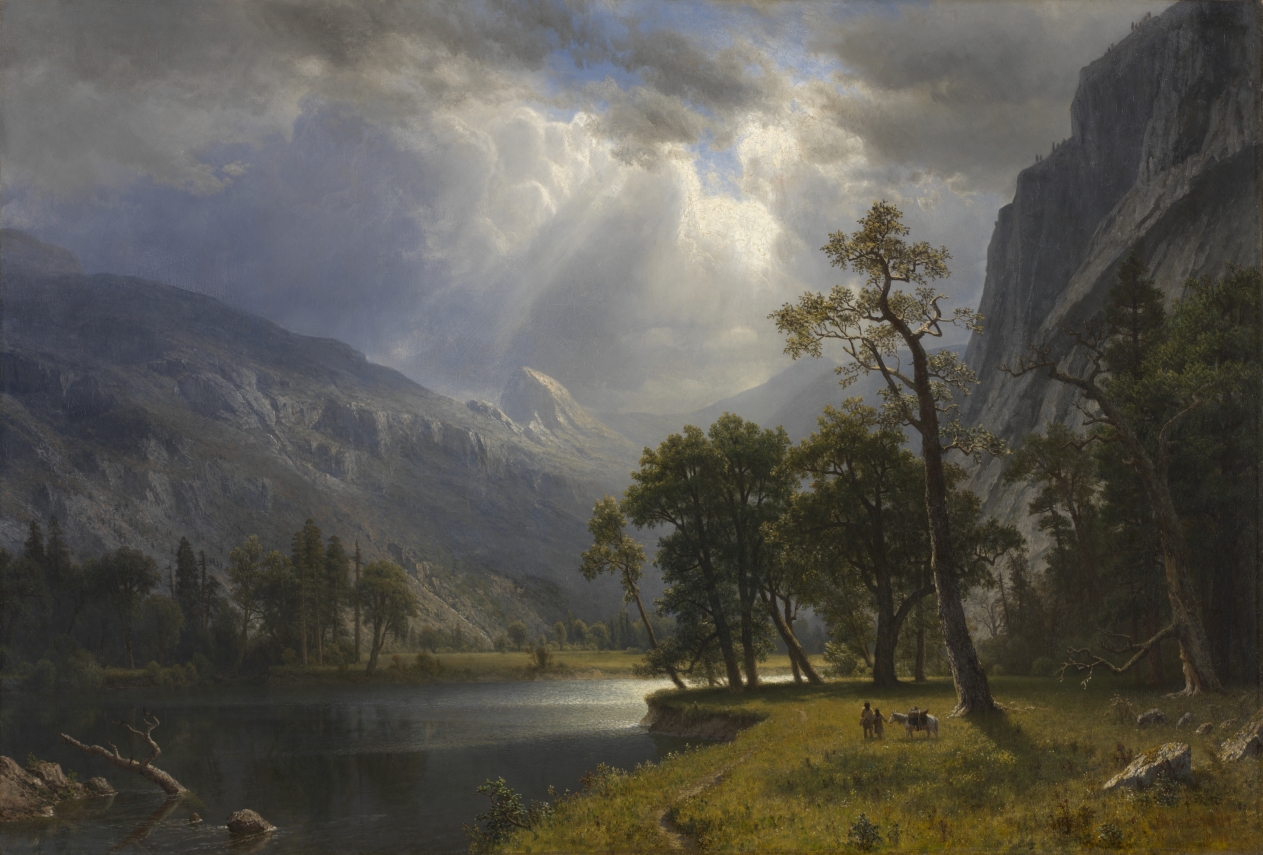
Mount Starr King, Yosemite
Albert BierstadtLinkedCulture matchlcp-2b1ec23c6bf3
- Date
- 1866
- Medium
- oil on canvas on panel-back stretcher
- Culture
- America
- Department
- American Painting and Sculpture
- Institution
- Cleveland Museum of Art
- Object ID
- 172815
From the Cleveland Museum of Art record
During the summer of 1863, Bierstadt visited Yosemite Valley in California and made numerous sketches. Back in his New York studio, he used them to produce many majestic paintings, including this view of the distant granite peak Mount Starr King. Such scenes thrilled East Coast audiences and helped encourage early movements to safeguard natural wonders. In 1864, President Lincoln signed a bill preserving Yosemite as public property; it became a national park in 1890. Bierstadt included two Native Americans with a packhorse in his composition, and their presence references the fact that Indigenous peoples had inhabited or seasonally visited the region for millennia. Over time, various government and military agencies dispossessed them of these ancestral lands. Although no longer residents in the national park, descendants of the seven Indigenous nations with ties to Yosemite persevered to live in neighboring areas. Highly successful, Bierstadt built a mansion and named it Malkasten, a German word meaning “paintbox.”
The authoritative record is held by Cleveland Museum of Art. LinkedCulture surfaces this object and its connections; it does not alter institutional metadata.
Get printable QR codesHide QR codes
Open QR codes for this object page and the museum record. They stay collapsed until needed.
Provenance & credit
As published by the source institution. Coverage varies — not every institution's open-data feed includes ownership history.
- Credit line
- Hinman B. Hurlbut Collection
- Provenance
- Chester Guild Cutter (1852–1917), Nyack, NY, purchased from the artist | Frank E. Marshall (1857–1915), Philadelphia, PA | 1922: [Vose Gallery, Boston, MA] | 1922-: The Cleveland Museum of Art, Cleveland, OH, purchased in 1922
Related across collections
Semantically similar works from Cleveland Museum of Art and other institutions.