Cleveland Museum of Art
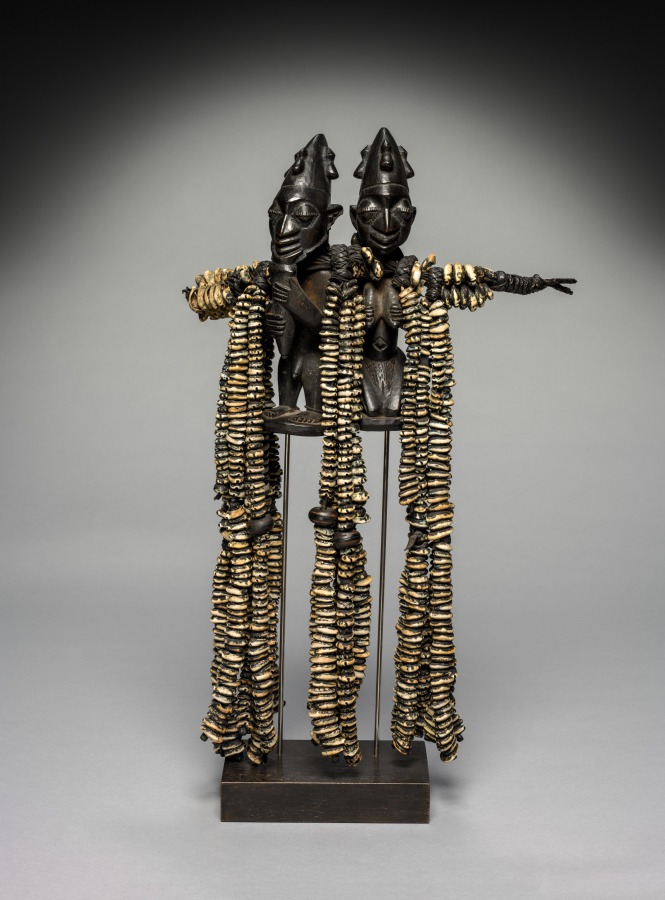
Dance staff for Èṣù (Ògò Èlẹ́gba)
- Date
- 1800s
- Medium
- Wood, leather, cowrie shells, seeds, and natural fiber
- Culture
- Africa, West Africa, Nigeria, Yorùbá-style maker
- Department
- African Art
- Institution
- Cleveland Museum of Art
- Object ID
- 296866
From the Cleveland Museum of Art record
Èṣù (also called Èḷégba) embodies the most complex deity in the Yorùbá pantheon of gods. The messenger of the Yorùbá gods, Èṣù is also the bearer of sacrifices, guardian of the ritual way of life, and is associated with highly significant places including crossroads, markets, and home entrances. As seen here, Èṣù's power is often visually represented in Ògò Èḷégba (dance staffs); in this example, the unusually paired man and woman reference his ability to switch between the two genders, turn death into life (through childbirth), and to overcome the tension between the sexes. The male character bears a ritual flute reserved for this god. The abundance of cowrie shells means that Èṣù brings wealth. If Eshu isn’t properly honored, trouble may befall the community or individual.
The authoritative record is held by Cleveland Museum of Art. LinkedCulture surfaces this object and its connections; it does not alter institutional metadata.
Get printable QR codesHide QR codes
Open QR codes for this object page and the museum record. They stay collapsed until needed.
Provenance & credit
As published by the source institution. Coverage varies — not every institution's open-data feed includes ownership history.
- Credit line
- John L. Severance Fund
- Provenance
- ?–1974: (Lucien Van de Velde [1910–1996], Anvers, Belgium, sold to Dr. Marc Lorre) | 1974–2012: Mrs. Marc Lorre, Antwerp, Belgium, sold to Christie’s | 2012: (Christie’s, Paris, France, December 11, 2012, no. 59, sold to a private collector) | 2018: Private collection, Paris, France, sold to Christie’s | 2018: (Christie’s, Paris, France, April 8, 2018, Sale 16061 Arts d'Afrique, d'Océanie et d'Amérique, no. 58 sold to the Cleveland Museum of Art) | 2018–: The Cleveland Museum of Art, Cleveland, OH
Related across collections
Semantically similar works from Cleveland Museum of Art and other institutions.