Cleveland Museum of Art
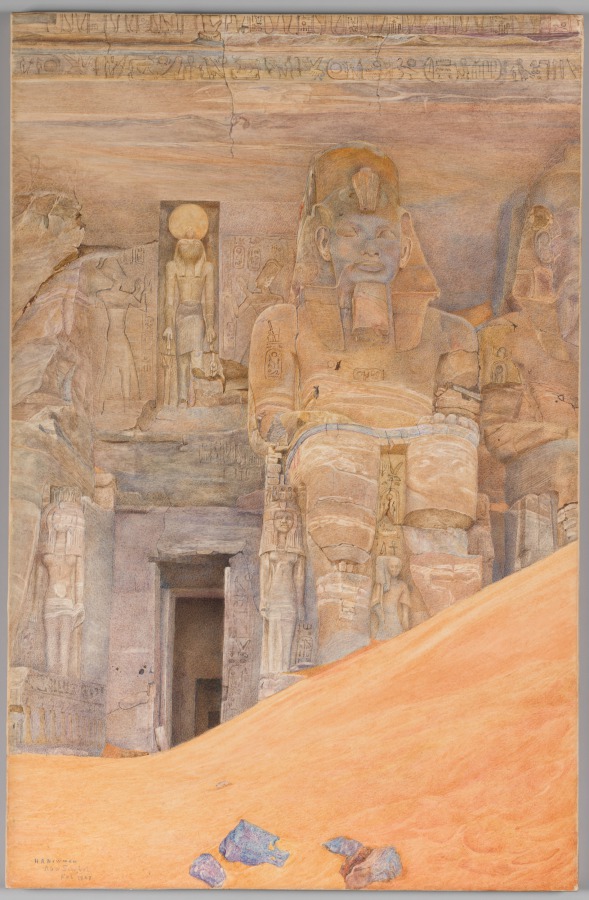
Abu Simbel
Henry Roderick Newman
- Date
- 1907
- Medium
- watercolor
- Culture
- America
- Department
- Drawings
- Institution
- Cleveland Museum of Art
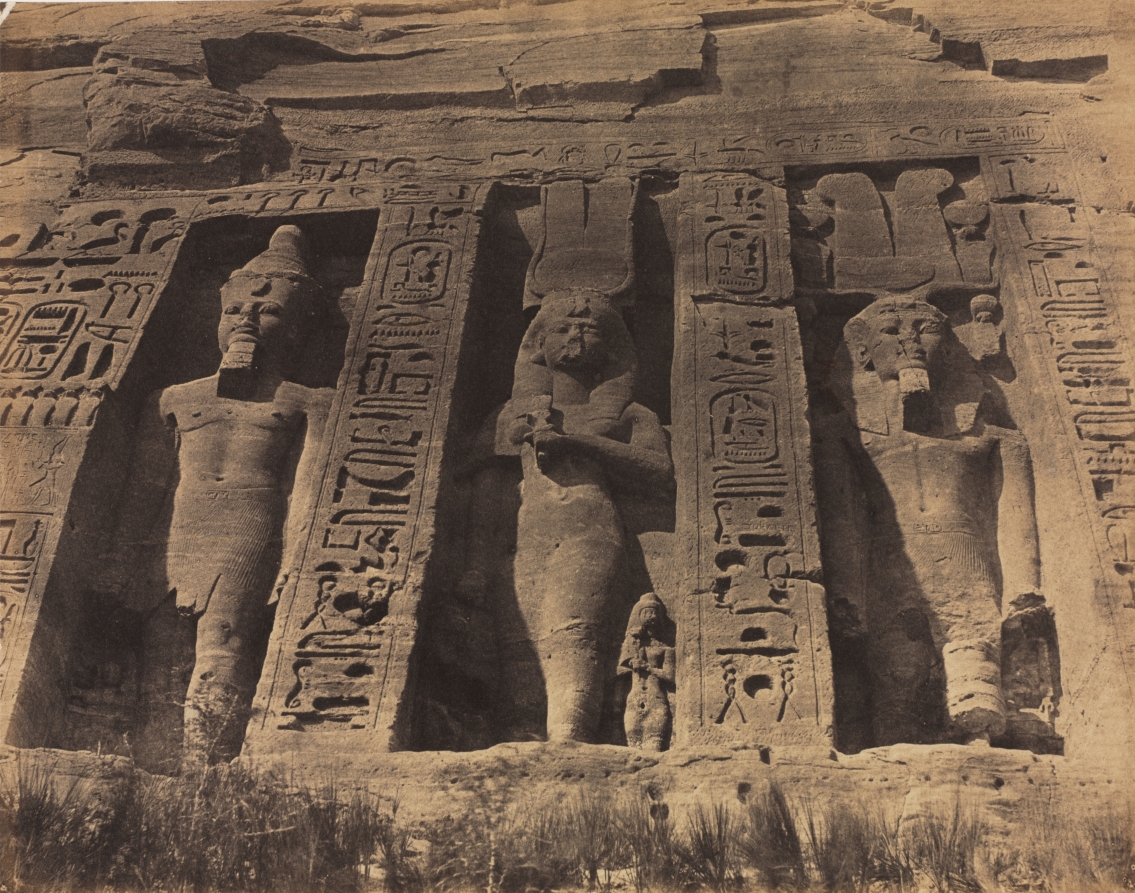
This watercolor provides a close-up view of the Abu Simbel temples, which were buried in sand until their rediscovery in the 19th century. The American artist Henry Roderick Newman portrayed their architecture in multiple drawings between 1894 and 1913. In this later work, he meticulously layered dots and other marks to capture the tonality of sand and desert light.
The authoritative record is held by Cleveland Museum of Art. LinkedCulture surfaces this object and its connections; it does not alter institutional metadata.
Related across collections
Semantically similar works from Cleveland Museum of Art and other institutions.
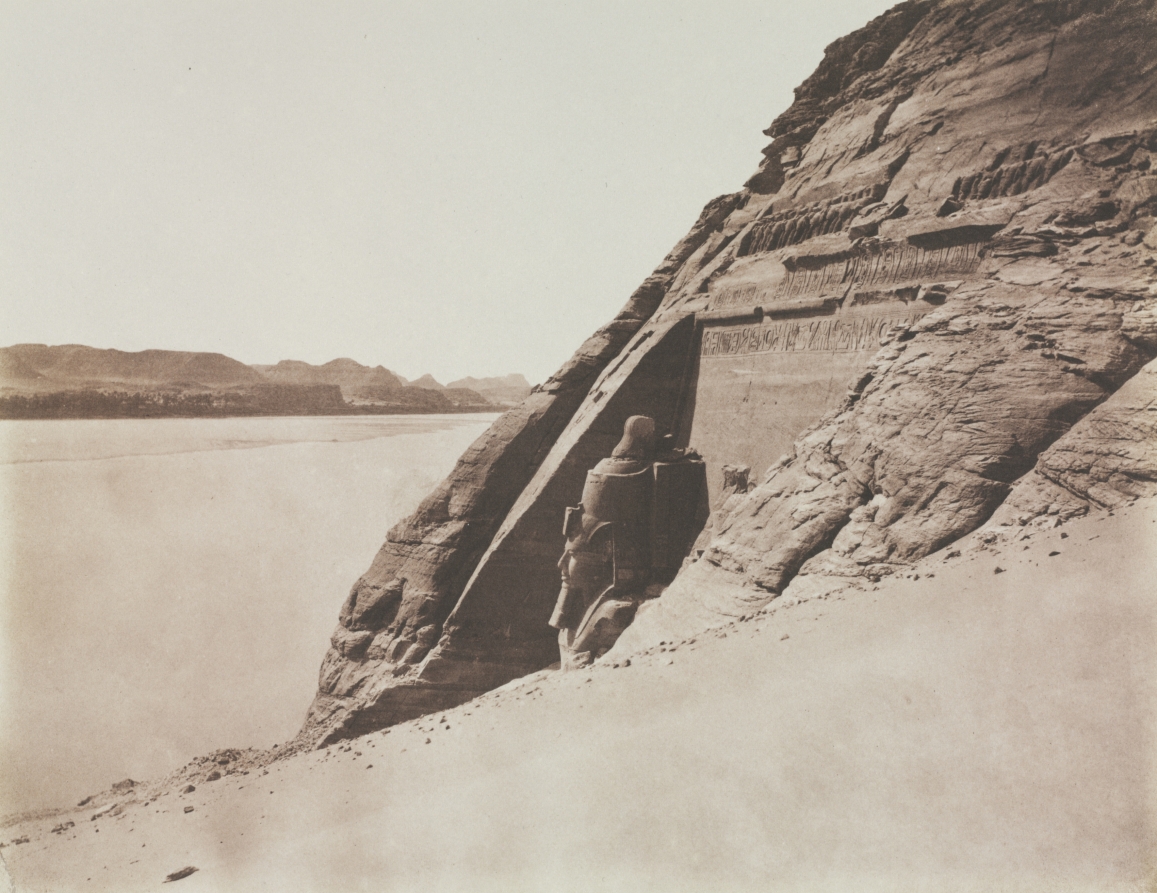
Large Speos - View taken from the Sand Slope (Temple of Ramesses II), Abu Simbel
Cleveland Museum of Art
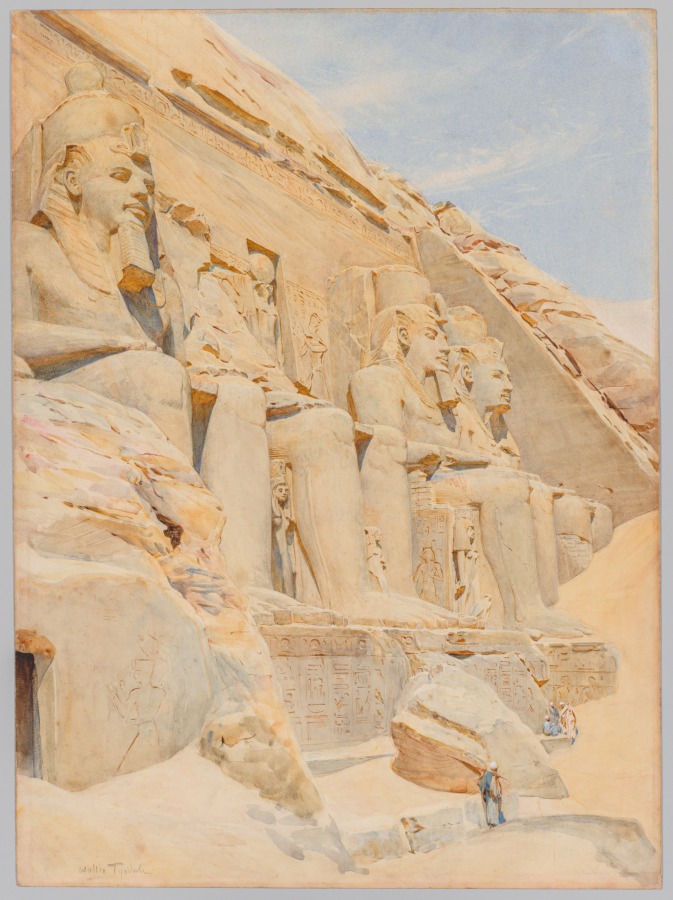
The Great Temple of Abu Simbel
Cleveland Museum of Art

Interior of the Temple of Aboo Simbel
Minneapolis Institute of Art

The Great Temple of Aboo Simble, Nubia
Minneapolis Institute of Art
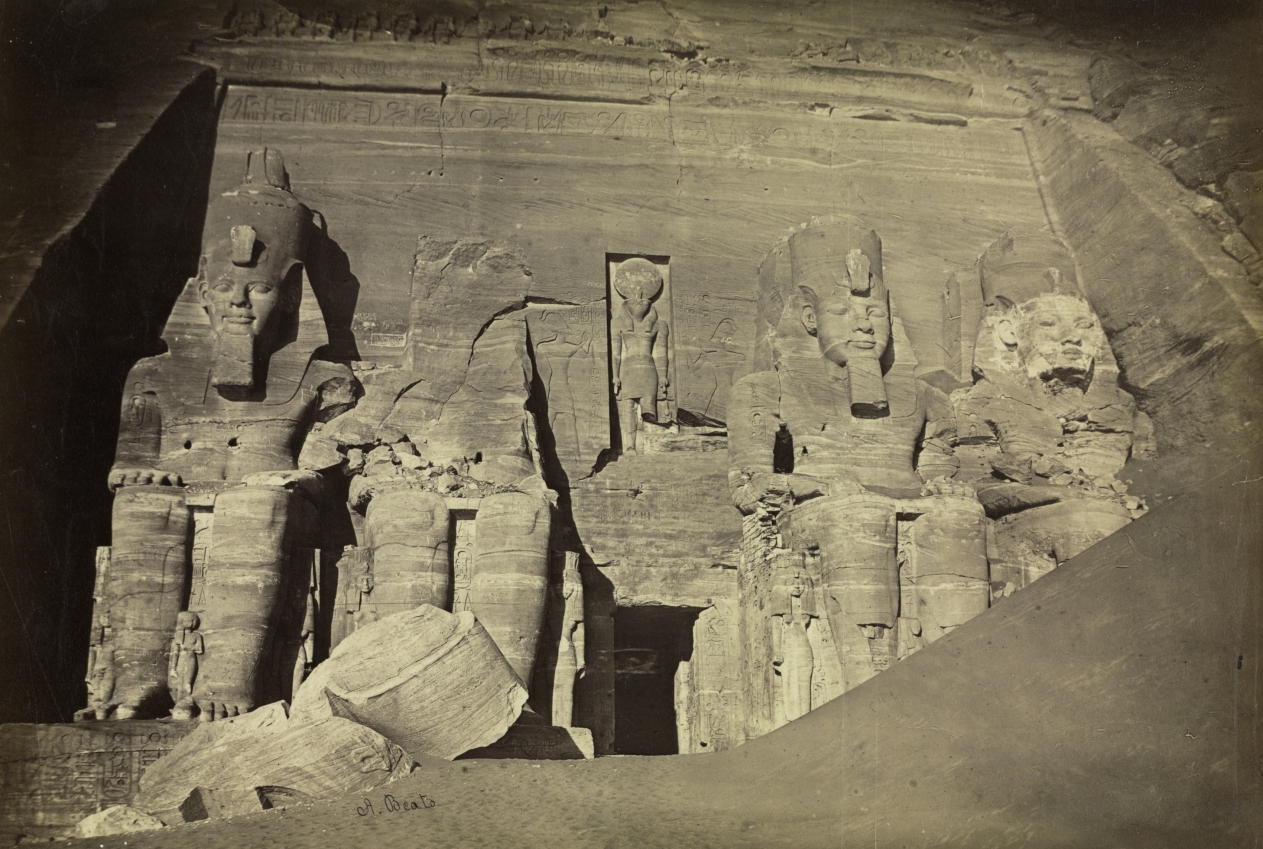
Temple of Ramesses II, Abu Simbel
Cleveland Museum of Art
Temple of Abu Simbel
Cleveland Museum of Art

Nubie. Temple d'Abou-Simbel, Égypte
Getty Museum

Facade of Rock Temple at Abu Simbel
Getty Museum

Nubie. Temple d'Abou Simbel, dédié à Athor (Égypte)
Getty Museum

Abu Simbel, Grande Temple, Intérieur de la Salle
Minneapolis Institute of Art
![[Nubia - Temple of Abu Simbel]](https://media.getty.edu/iiif/image/b217e746-3a61-4fcc-8b18-146adcc7eb84/full/808,/0/default.jpg)
[Nubia - Temple of Abu Simbel]
Getty Museum

Abu Simbel, Grand Temple, Statue of Ramesses II, Nubia
Minneapolis Institute of Art