Cleveland Museum of Art
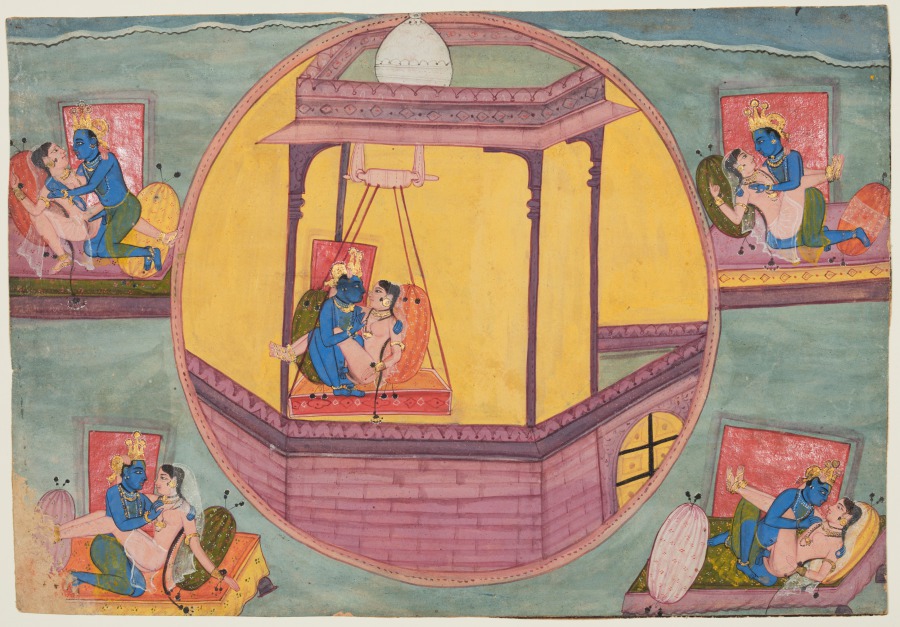
Five Poses of Krishna Making Love, from a Bikaner Bhagavata Purana
- Date
- c. 1600
- Medium
- Gum tempera and gold on paper
- Culture
- Northwestern India, Rajasthan, Rajput Kingdom of Bikaner
- Department
- Indian and Southeast Asian Art
- Institution
- Cleveland Museum of Art
- Object ID
- 314493
From the Cleveland Museum of Art record
When the Hindu god Vishnu incarnated as his human avatar Krishna, he spent his youth in a cowherd village. When he reached adolescence, the milkmaids were all drawn to him. A passage in the text explains that Krishna miraculously multiplied himself so he could be with each one individually, so they could experience the bliss of divine union. Krishna can be seen making love on a swing in the central circle.
The authoritative record is held by Cleveland Museum of Art. LinkedCulture surfaces this object and its connections; it does not alter institutional metadata.
Get printable QR codesHide QR codes
Open QR codes for this object page and the museum record. They stay collapsed until needed.
Provenance & credit
As published by the source institution. Coverage varies — not every institution's open-data feed includes ownership history.
- Credit line
- Purchase and partial gift from the Catherine and Ralph Benkaim Collection; Severance and Greta Millikin Purchase Fund
Related across collections
Semantically similar works from Cleveland Museum of Art and other institutions.