Cleveland Museum of Art
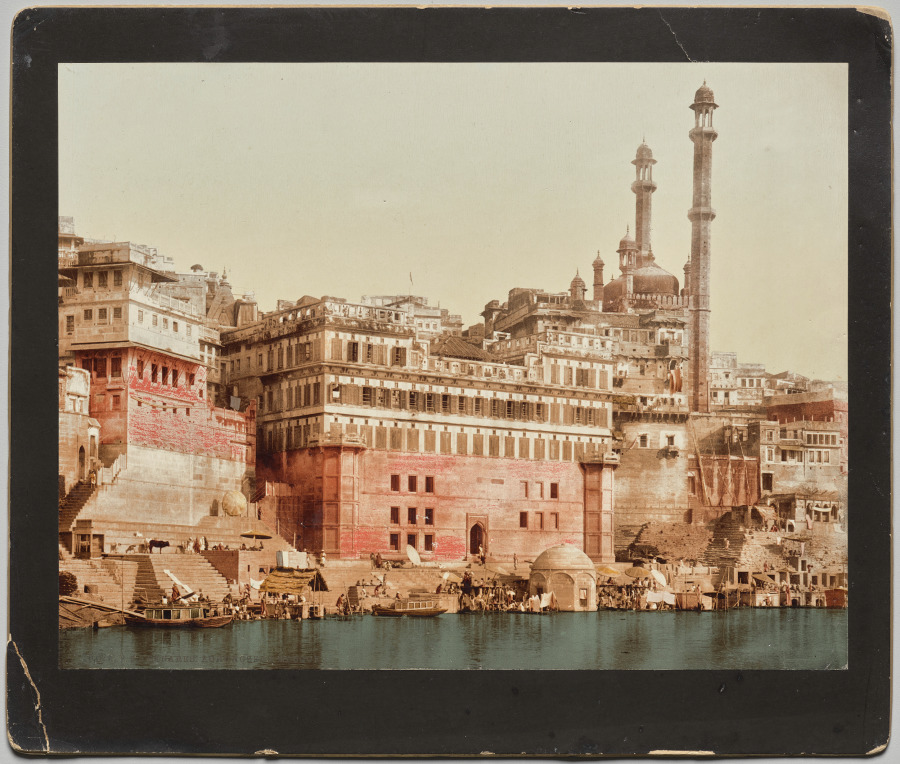
India. Benares. Aurangzeb's Mosque, after a photo by Dr. Kurt Boeck
Photoglob Co.LinkedCulture matchlcp-fbb637cfa54c
- Date
- c. 1890–1910
- Medium
- Photochrom
- Culture
- India, 19th century
- Department
- Photography
- Institution
- Cleveland Museum of Art
- Object ID
- 360442
From the Cleveland Museum of Art record
The sixth Mughal emperor Aurangzeb, a very pious Muslim, had this enormous mosque built in a blend of Islamic and Hindu architectural styles. It was constructed in the late 1600s on the site of one of the most sacred ancient Hindu temples in the city of Varanasi (formerly Benares). The Taj Mahal was created as a tomb for Aurangzeb’s mother.
The authoritative record is held by Cleveland Museum of Art. LinkedCulture surfaces this object and its connections; it does not alter institutional metadata.
Get printable QR codesHide QR codes
Open QR codes for this object page and the museum record. They stay collapsed until needed.
Provenance & credit
As published by the source institution. Coverage varies — not every institution's open-data feed includes ownership history.
- Credit line
- Gift of Catherine Glynn Benkaim and Barbara Timmer
- Provenance
- Gunther Heil [1938–2014], Berlin, Germany | Catherine Glynn Benkaim and Barbara Timmer, Beverly Hills, CA, given to the Cleveland Museum of Art | September 9, 2019: The Cleveland Museum of Art, Cleveland, OH
Related across collections
Semantically similar works from Cleveland Museum of Art and other institutions.