Cleveland Museum of Art
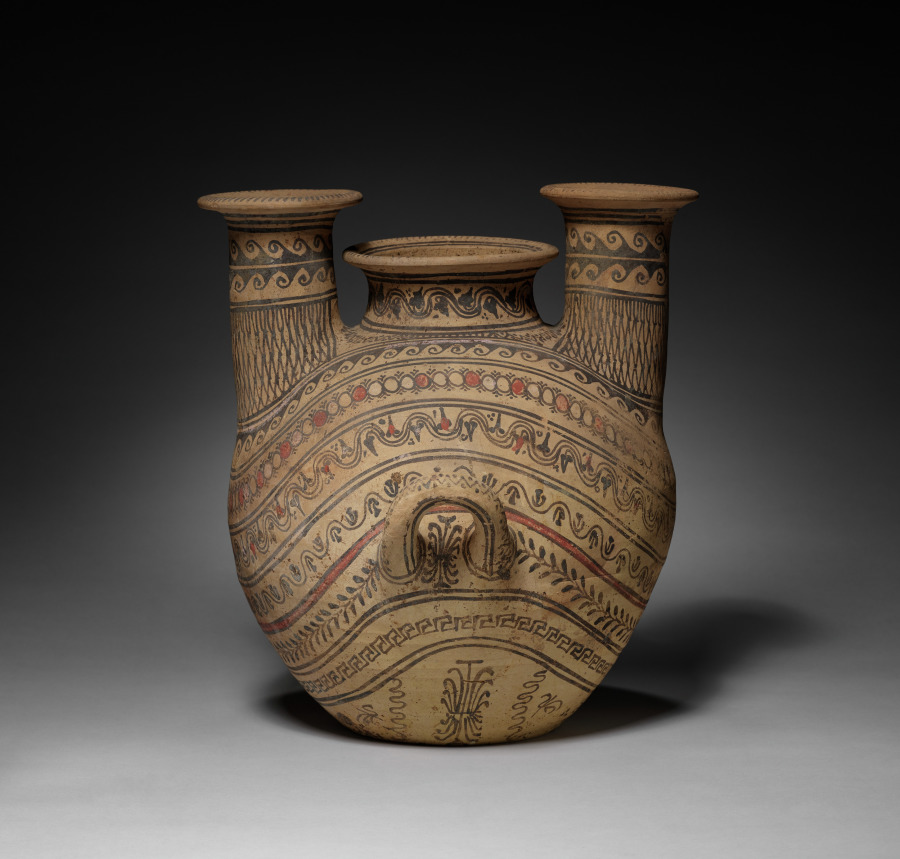
Two-Spouted Strainer Askos (Flask)
- Date
- 300–200 BCE
- Medium
- ceramic
- Culture
- South Italian, Daunian or Canosan
- Department
- Greek and Roman Art
- Institution
- Cleveland Museum of Art
Although now referred to by the Greek term askos, because of its resemblance to the animal skins used to hold wine in ancient Greece, this ceramic shape developed in the South Italian region of Daunia (north of Apulia, on the Adriatic coast). This example is unusual for its three openings—one covered by a lid, the others spouted with built-in strainers. Its profusely painted decoration, mostly geometric and vegetal patterns applied in black with added red and white, is arranged in bands that follow the contours of the vessel. Each spout has a built-in strainer—one near the top, the other near the bottom.
The authoritative record is held by Cleveland Museum of Art. LinkedCulture surfaces this object and its connections; it does not alter institutional metadata.
Related across collections
Semantically similar works from Cleveland Museum of Art and other institutions.
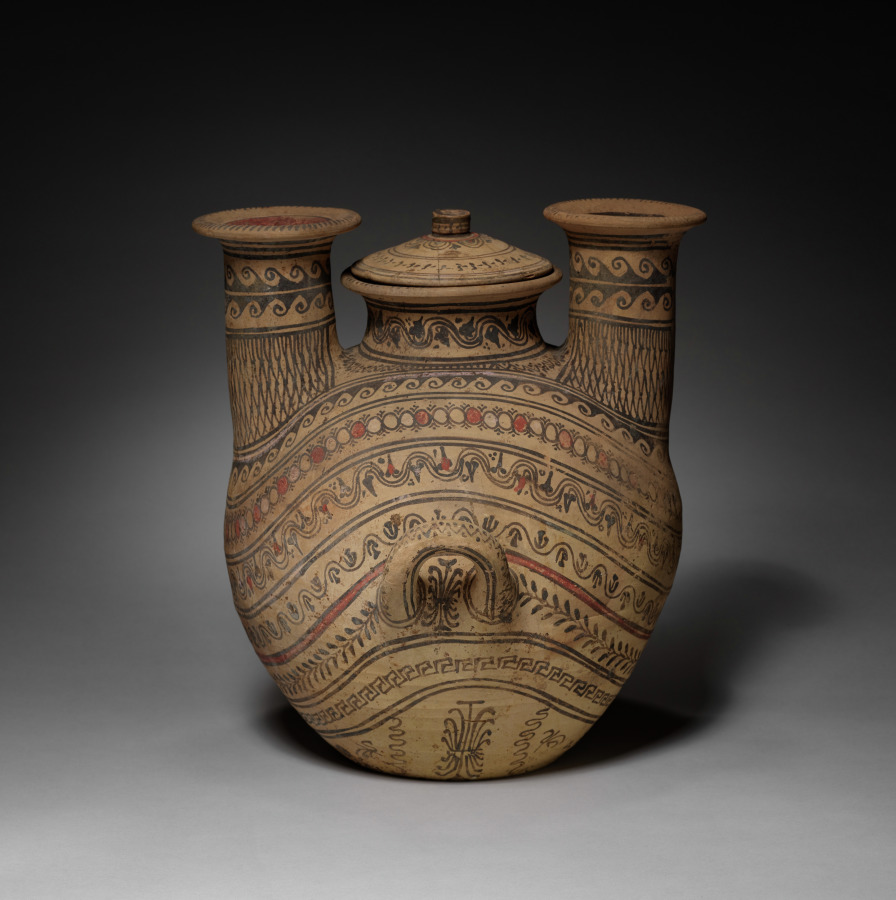
Two-Spouted Strainer Askos (Flask) with Lid
Cleveland Museum of Art
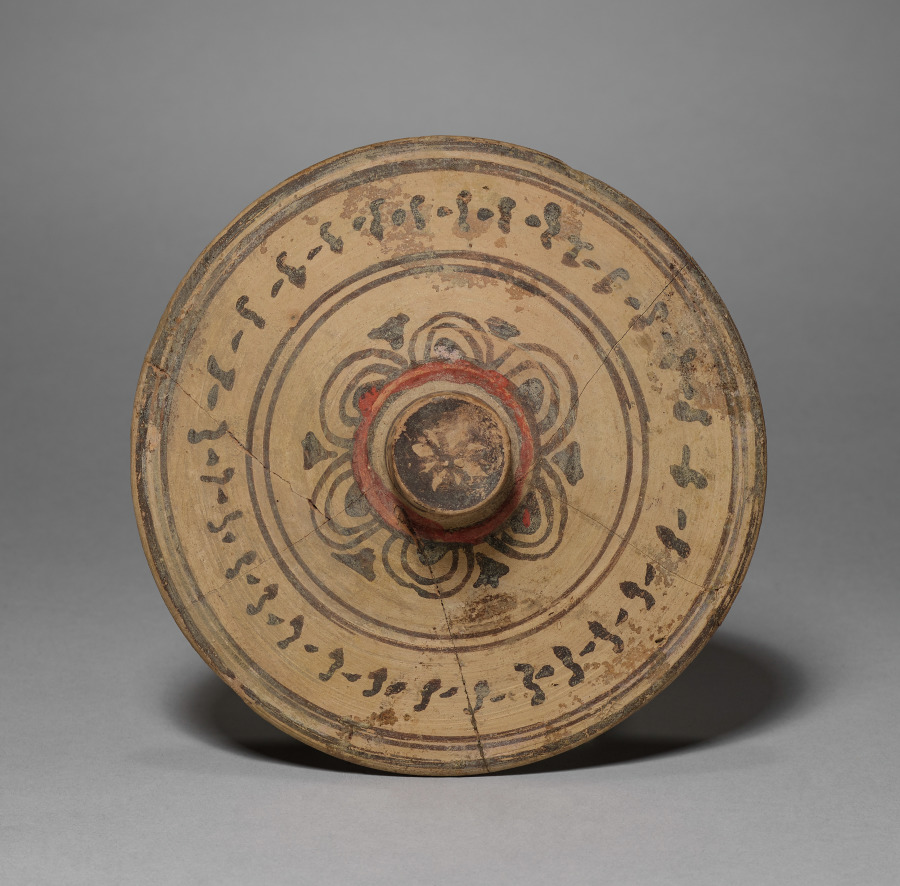
Lid for Two-Spouted Strainer Askos (Flask)
Cleveland Museum of Art

Terracotta askos (flask with a spout and handle over the top)
The Metropolitan Museum of Art

Terracotta fragment of an askos (flask with a spout and handle over the top)
The Metropolitan Museum of Art

Campanian Black Duck Askos (medium-sized)
Getty Museum
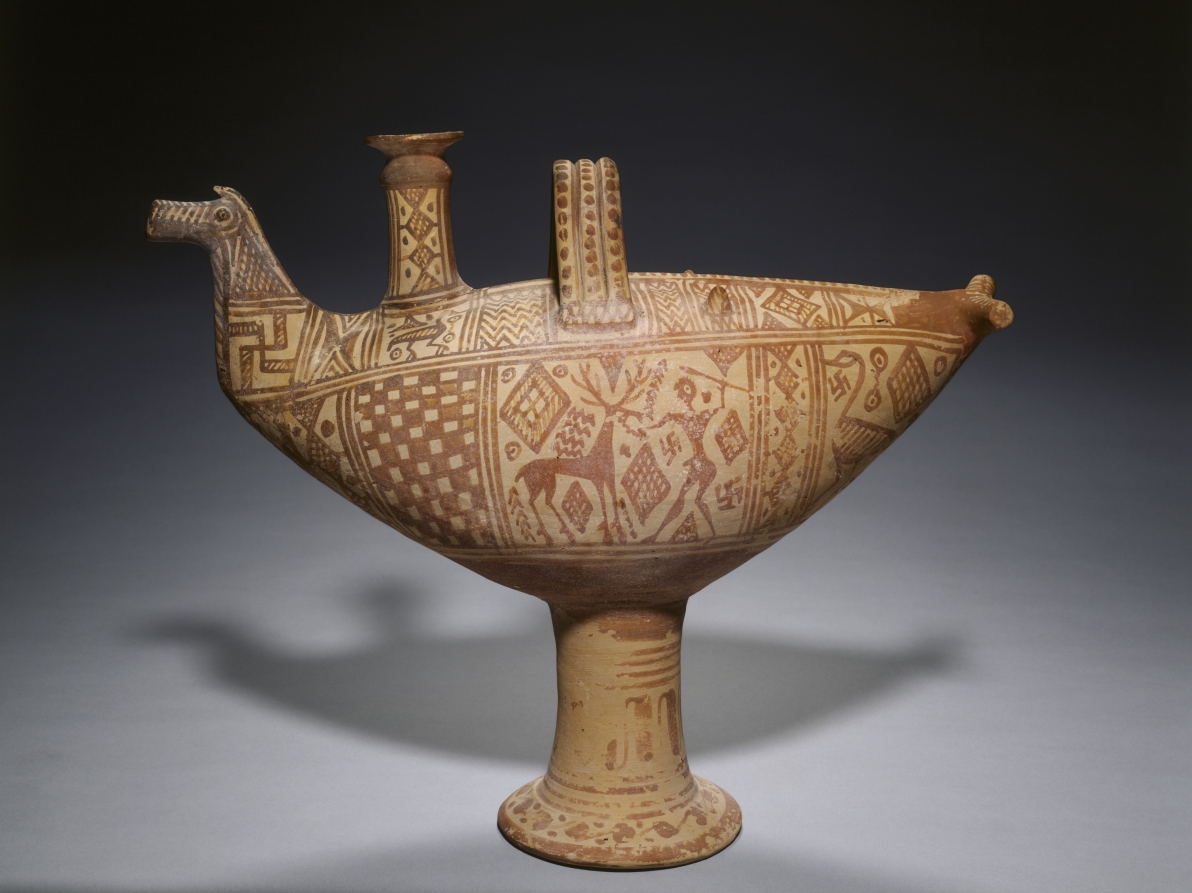
Italo-Geometric Bird Askos (Oil Vessel): Hunter (Herakles?) and Stag
Cleveland Museum of Art
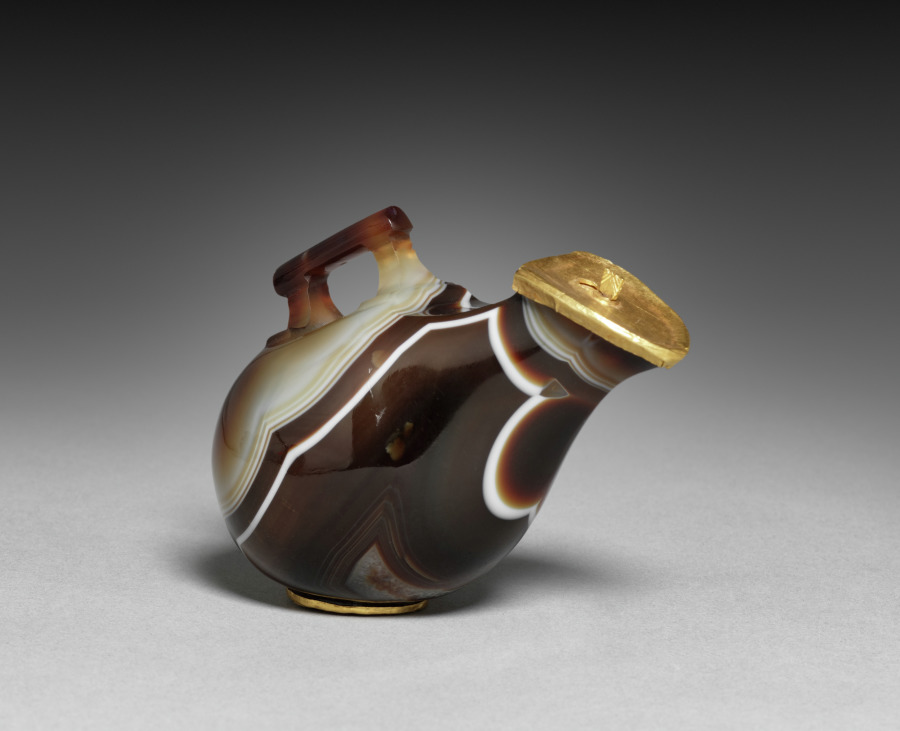
Askos
Cleveland Museum of Art

Plastic Askos
Getty Museum

Apulian Red-Figure Askos
Getty Museum

Canosan Askos
Getty Museum
askos (zoomorphe)
Joconde

Campanian Black Duck Askos (large-sized)
Getty Museum