Cleveland Museum of Art
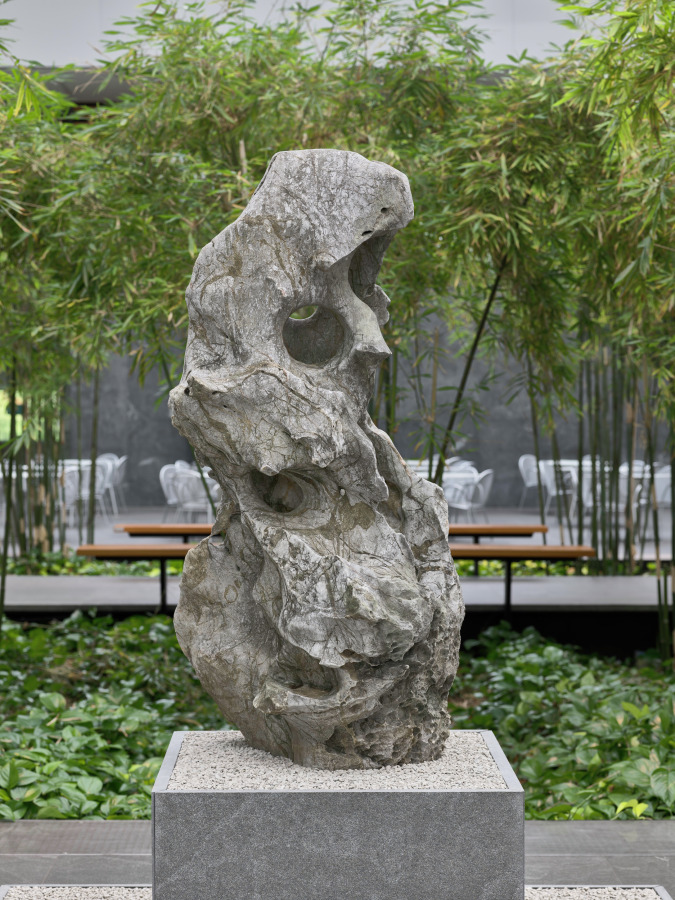
Taihu Garden Stone
- Date
- 0
- Medium
- Limestone
- Culture
- China, Jiangsu province, Wuxi
- Department
- Chinese Art
- Institution
- Cleveland Museum of Art
In China, rocks are considered elements of nature that possess spirit and life energy. With its upward winding masses, perforations, weathered surface, and multiple viewpoints, the stone exhibits sculptural qualities and embodies constant transformation through natural forces and human intervention. A solid piece of rock, it was originally sourced from the Lake Tai region. Stones were collected, set up in gardens, or installed on scholar’s desks as miniature mountains. Traditionally, Taihu stones were the most desirable type of rock. This stone is a gift by the contemporary artist Liu Dan, known for his depictions of rocks, who calls them "the stem cells of Chinese landscape." The donor, Liu Dan, is the most prominent and celebrated painter of rocks in contemporary China.
The authoritative record is held by Cleveland Museum of Art. LinkedCulture surfaces this object and its connections; it does not alter institutional metadata.
Related across collections
Semantically similar works from Cleveland Museum of Art and other institutions.

Scholar's rock
Minneapolis Institute of Art

Scholar's rock
Minneapolis Institute of Art

Leaf from Traveling Among The Five Sacred Peaks
Minneapolis Institute of Art

Leaf from Traveling Among The Five Sacred Peaks
Minneapolis Institute of Art

Leaf from Traveling Among The Five Sacred Peaks
Minneapolis Institute of Art

Leaf from Traveling Among The Five Sacred Peaks
Minneapolis Institute of Art

Leaf from Traveling Among The Five Sacred Peaks
Minneapolis Institute of Art

Leaf from Traveling Among The Five Sacred Peaks
Minneapolis Institute of Art

Leaf from Traveling Among The Five Sacred Peaks
Minneapolis Institute of Art

Leaf from Traveling Among The Five Sacred Peaks
Minneapolis Institute of Art

Leaf from Traveling Among The Five Sacred Peaks
Minneapolis Institute of Art

Leaf from Traveling Among The Five Sacred Peaks
Minneapolis Institute of Art