Cleveland Museum of Art
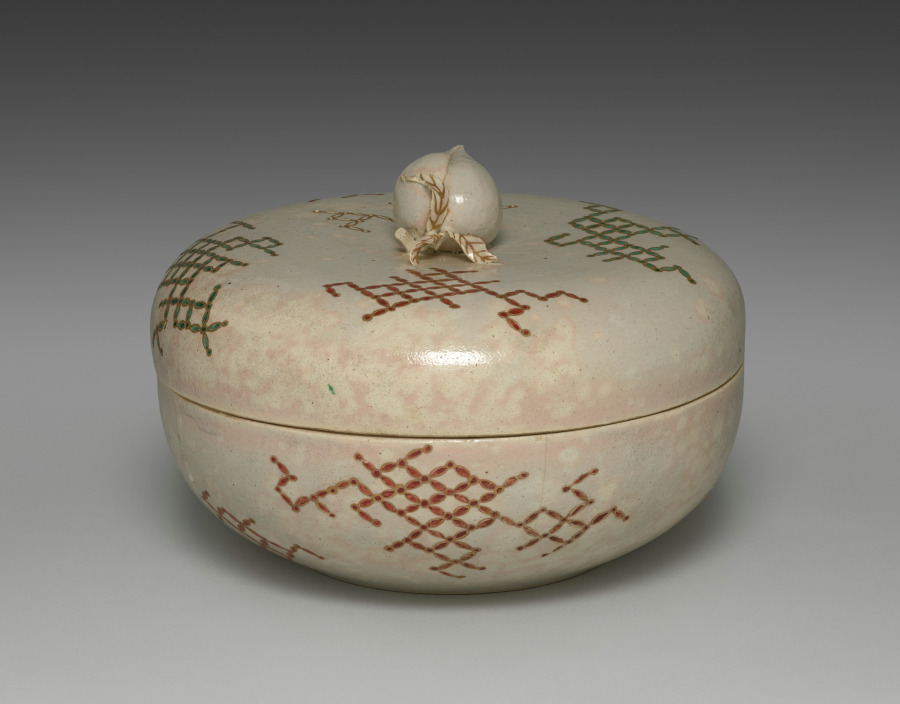
Covered Bowl with Seven Treasures
Seifū Yohei IILinkedCulture matchlcp-53402d29de8c
- Date
- 1861–78
- Medium
- Stoneware with overglaze color enamel and gold
- Culture
- Japan, Edo period (1615–1868)
- Department
- Japanese Art
- Institution
- Cleveland Museum of Art
- Object ID
- 447088
What the image shows
A round ceramic box with a lid featuring a small decorative handle.
Generated by LinkedCulture from the photograph alone, without the museum’s catalogue text (Qwen/Qwen2.5-VL-7B-Instruct), and not yet reviewed by a person. It describes the picture, not the object’s history, and it is not part of the museum’s record.
From the Cleveland Museum of Art record
The box lid for this large covered bowl by Yohei II identifies it as in the style of Ninsei, a reference to Nonomura Ninsei. Overglaze enamels in red, green, and white sit within lattices of jewel-shaped gold forms scattered across the lid and base in a design known as the seven treasures. At the center of the lid is a knob in the shape of a peach with a stem and leaves. A prominent feature of the piece is the appearance of warm pink dots known as gohon . Here creamy at their center and with a gradation to almost red at the edges, they appear during firing due to high iron content in the clay. Pieces with this effect were made in emulation of certain ash-glazed ceramics imported from Korea. The originals were made to order for the Japanese market at a kiln in Busan. The kiln was established within the Japanese diplomatic compound in that port city by the lord of Tsushima in 1639 and continued production until 1717. In the 17th century, teabowls from Korea in a variety of styles were extremely popular among practitioners of Japanese-style tea, and they were soon copied by ceramists active on the archipelago, including in Kyoto. The peach's leaf veins are detailed in gold.
The authoritative record is held by Cleveland Museum of Art. LinkedCulture surfaces this object and its connections; it does not alter institutional metadata.
Get printable QR codesHide QR codes
Open QR codes for this object page and the museum record. They stay collapsed until needed.
Provenance & credit
As published by the source institution. Coverage varies — not every institution's open-data feed includes ownership history.
- Credit line
- Gift of James and Christine Heusinger
- Provenance
- ?–2022: James and Christine Heusinger, Berea, OH, given to the Cleveland Museum of Art | 2022–: The Cleveland Museum of Art, Cleveland, OH
Part of a LinkedCulture topic
 Japanese Decorated Porcelain Dishes
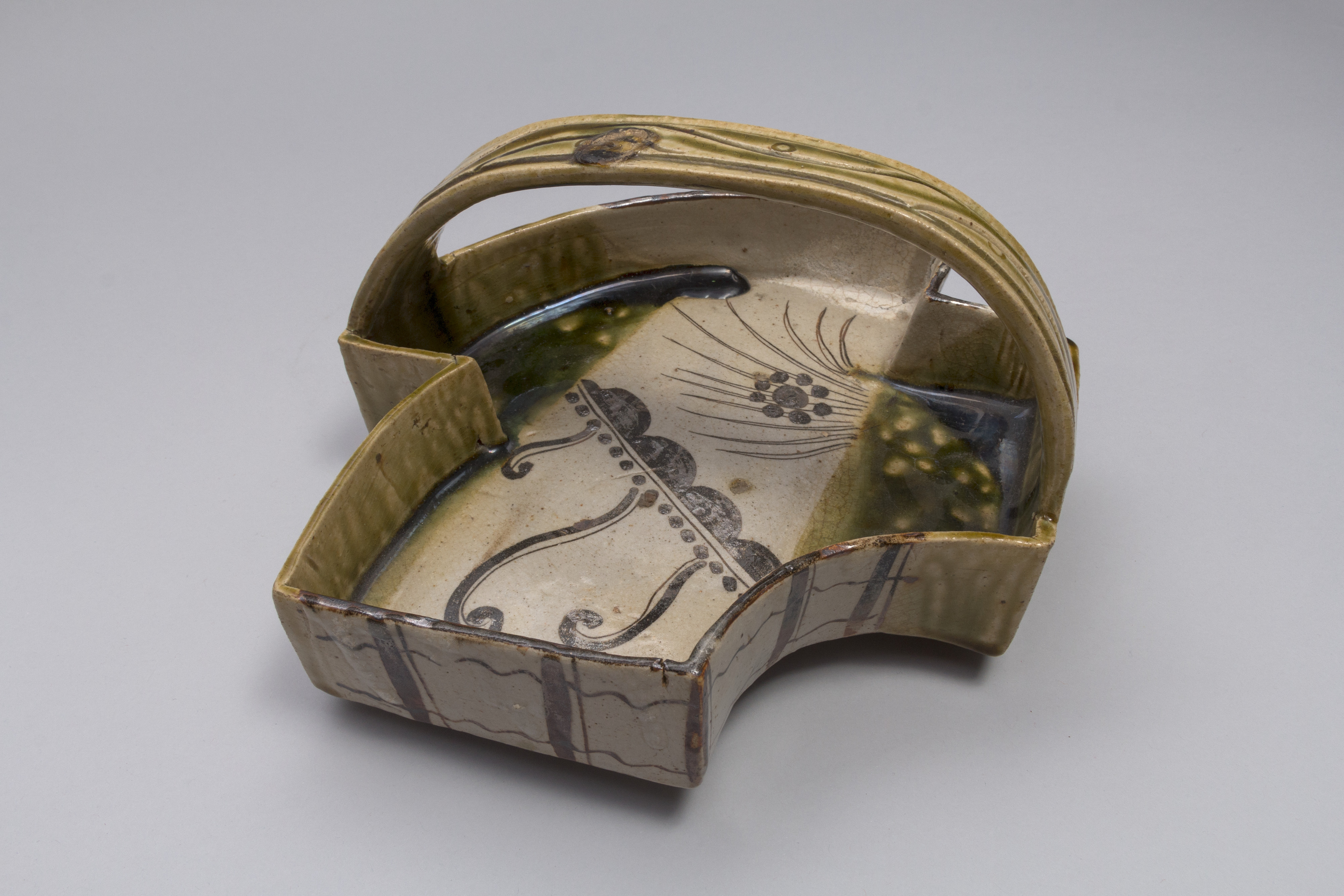
These objects are all ceramic dishes from Japan spanning the Momoyama, Edo, and Meiji periods, featuring various decorative techniques including underglaze blue, overglaze enamels, and naturalistic or figural motifs.
106 objects from 4 institutions
Related across collections
Semantically similar works from Cleveland Museum of Art and other institutions.