Cleveland Museum of Art
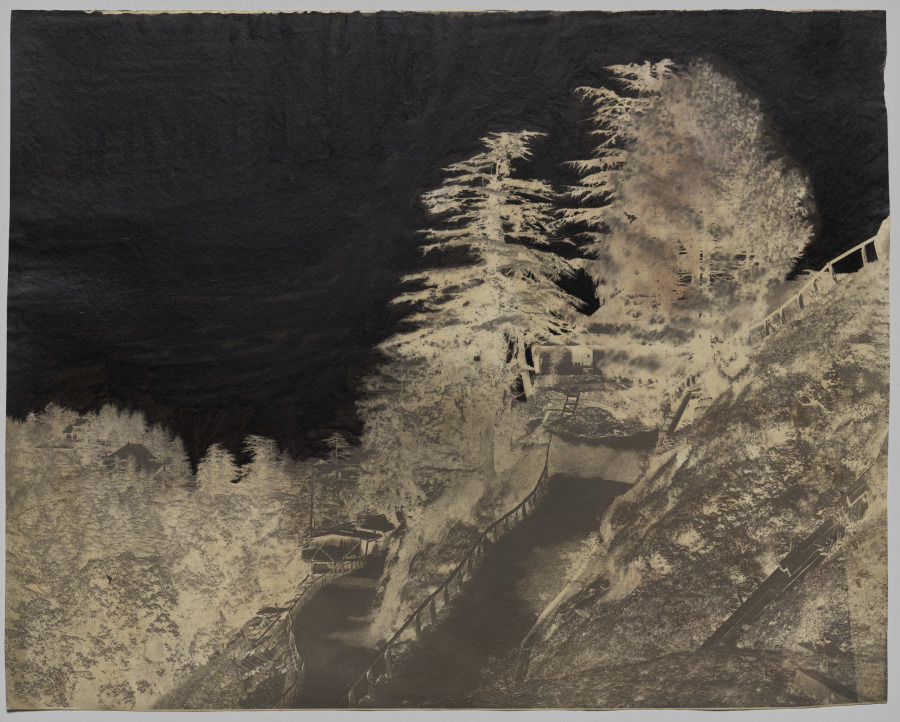
Shimla
Dr. John MurrayLinkedCulture matchlcp-5b3414c664e5
- Date
- 1865
- Medium
- waxed paper negative
- Culture
- England
- Department
- Photography
- Institution
- Cleveland Museum of Art
- Object ID
- 449528
From the Cleveland Museum of Art record
Before digital photography, most cameras yielded a negative, an image in which the tones are the reverse of those in the original subject. Early photographers shot on sheets of paper that were waxed to make them more translucent, then coated with a light-sensitive solution and exposed in the camera. To create a positive image, light was passed through the negative onto light-sensitive paper, which was developed in a series of chemical baths to create the print. Simla, a town in the Himalayan foothills, became the summer capital of British colonial India in 1864.
The authoritative record is held by Cleveland Museum of Art. LinkedCulture surfaces this object and its connections; it does not alter institutional metadata.
Get printable QR codesHide QR codes
Open QR codes for this object page and the museum record. They stay collapsed until needed.
Provenance & credit
As published by the source institution. Coverage varies — not every institution's open-data feed includes ownership history.
- Credit line
- Gift of William and Margaret Lipscomb
- Provenance
- ?-2004: (Vintage Works, Ltd. Fine Photography, Chalfont, PA) | 2004–21: William S. and Margaret Lipscomb, Shaker Heights, OH, given to The Cleveland Museum of Art, Cleveland, OH | December 6, 2021: The Cleveland Museum of Art, Cleveland, OH
Related across collections
Semantically similar works from Cleveland Museum of Art and other institutions.