Cleveland Museum of Art
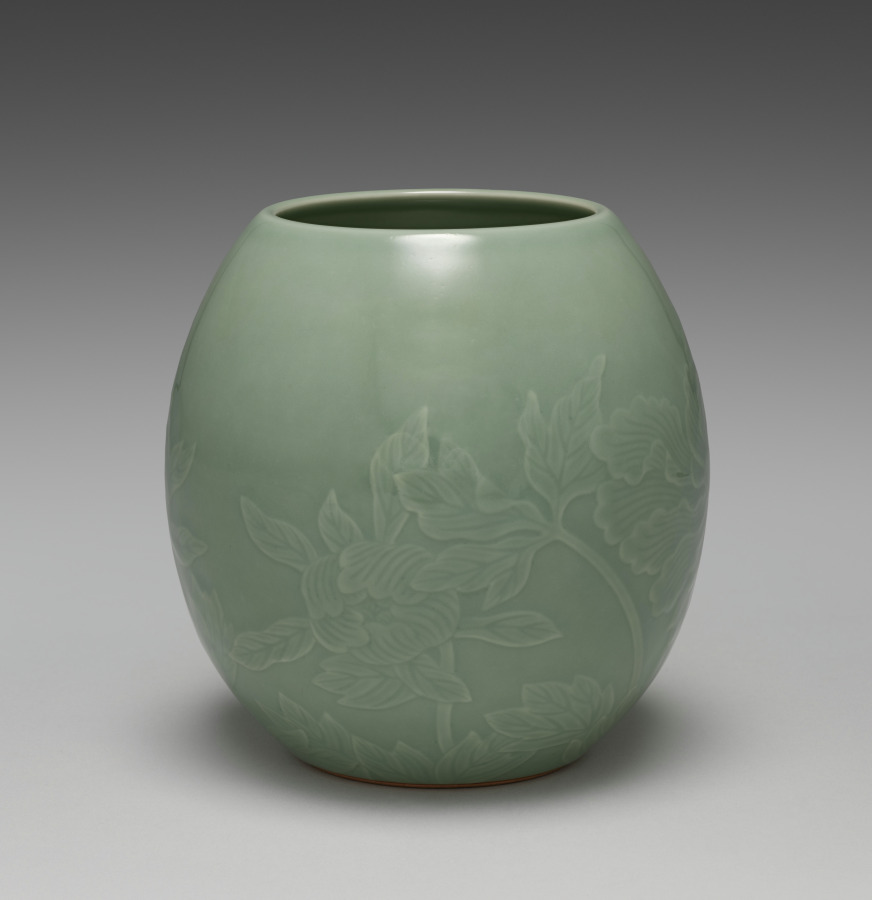
Water Container with Peonies
Seifū Yohei IIILinkedCulture matchlcp-76f8f3f7462b
- Date
- 1900–1914
- Medium
- Porcelain with molded and carved design, green glaze
- Culture
- Japan, Meiji period (1868–1912)
- Department
- Japanese Art
- Institution
- Cleveland Museum of Art
- Object ID
- 519447
From the Cleveland Museum of Art record
This ceramic is an especially accomplished example of Yohei III’s combination of an all-over translucent colored glaze with molded and carved designs. It features the peony as its primary motif. The water container, or mizusashi , has a green glaze, and its design takes into consideration the rounded shape and the seated position of the host and guests. It begins low on the body with a flower just beginning to open and continues with another flower a bit higher up, with its petals fully extended and beginning to open outward. It finishes with a flower in full bloom, petals and leaves unfurled and spread outward from the center, now occupying almost the entire surface. The water container once belonged to the Hosokawa family, whose go-between corresponded with Yohei IV about the piece. Yohei IV thanked them for their payment and requested that despite his father’s death in the previous year, they continue to favor the studio with their orders. The letter and its envelope, as well as an auction tag, remain with the object. Yohei III often made chanoyu pieces for select clients, as documented by letters still preserved with this water container, or mizusashi .
The authoritative record is held by Cleveland Museum of Art. LinkedCulture surfaces this object and its connections; it does not alter institutional metadata.
Get printable QR codesHide QR codes
Open QR codes for this object page and the museum record. They stay collapsed until needed.
Provenance & credit
As published by the source institution. Coverage varies — not every institution's open-data feed includes ownership history.
- Credit line
- Gift of James and Christine Heusinger
- Provenance
- ?–2022: James and Christine Heusinger, Berea, OH, given to the Cleveland Museum of Art | 2022–: The Cleveland Museum of Art, Cleveland, OH
Related across collections
Semantically similar works from Cleveland Museum of Art and other institutions.