Cleveland Museum of Art
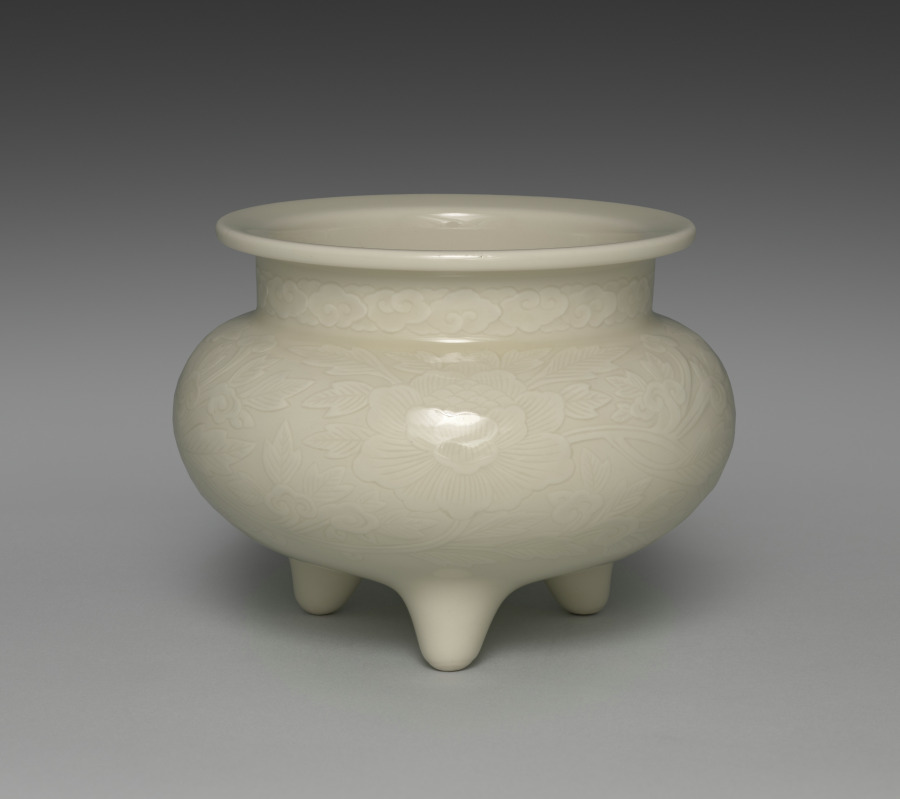
Incense Burner with Peony and Cloud
Seifū Yohei IIILinkedCulture matchlcp-76f8f3f7462b
- Date
- 1914–46
- Medium
- Porcelain with molded and incised design, pale pink glaze
- Culture
- Japan, Meiji period (1868–1912)
- Department
- Japanese Art
- Institution
- Cleveland Museum of Art
- Object ID
- 519648
From the Cleveland Museum of Art record
Yohei IV’s incense burner has a scrolling floral pattern of peonies and nyoi staff-head forms around the body and a band of clouds around the collar. These are done in low relief, with incised lines marking the details in the flower petals and leaves. The silver lid has a proliferation of flowers, including lily, peony, and a variety of chrysanthemums. The box lid identifies the subtle pink over an ivory body as “dawn’s light[–glazed] porcelain” ( shokōji ). After he became an Artist of the Imperial Household, Yohei III created a number of glaze and clay combinations with what would have been considered Japan-focused names to be in alignment with his position as an artist representing the nation. Among them was a glaze called “dawn’s light pale [pink] color” ( akebonoiro tansai ), which he invented in 1895. It is possible that this incense burner is an example with this glaze, despite the slightly different name given on the box. While the name alludes to the Land of the Rising Sun, an epithet for Japan, the burner’s motifs remain very much drawn from the Chinese repertoire. Seifū Yohei IV’s incense burner has a pale pink glaze named “dawn’s light.”
The authoritative record is held by Cleveland Museum of Art. LinkedCulture surfaces this object and its connections; it does not alter institutional metadata.
Get printable QR codesHide QR codes
Open QR codes for this object page and the museum record. They stay collapsed until needed.
Provenance & credit
As published by the source institution. Coverage varies — not every institution's open-data feed includes ownership history.
- Credit line
- Gift of James and Christine Heusinger
- Provenance
- ?–2022: James and Christine Heusinger, Berea, OH, given to the Cleveland Museum of Art | 2022–: The Cleveland Museum of Art, Cleveland, OH
Related across collections
Semantically similar works from Cleveland Museum of Art and other institutions.