Cleveland Museum of Art
Container from Lit Charcoal and Ash Containers
Seifū Yohei IIILinkedCulture matchlcp-76f8f3f7462b
- Date
- 1893–1914
- Medium
- One from a set of four containers; porcelain with molded design
- Culture
- Japan, Meiji period (1868–1912)
- Department
- Japanese Art
- Institution
- Cleveland Museum of Art
- Object ID
- 519698
What the image shows
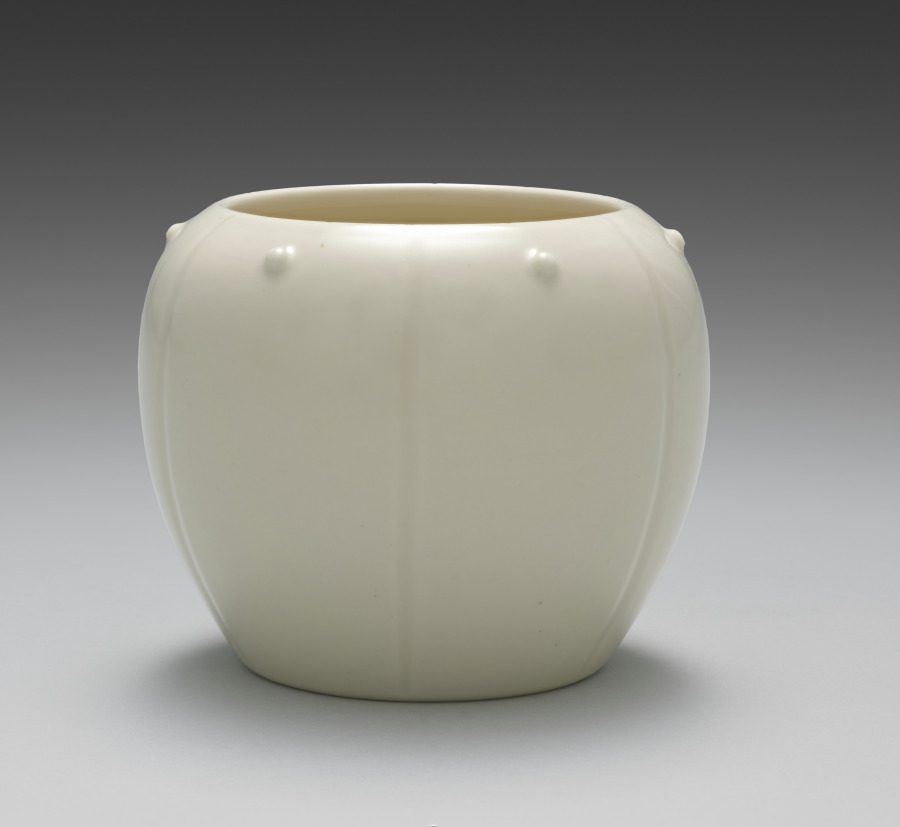
A white ceramic vase with a rounded shape and small protrusions on the sides.
Generated by LinkedCulture from the photograph alone, without the museum’s catalogue text (Qwen/Qwen2.5-VL-7B-Instruct), and not yet reviewed by a person. It describes the picture, not the object’s history, and it is not part of the museum’s record.
From the Cleveland Museum of Art record
The box lid for these six-lobed lit charcoal and ash containers, or hiire , identifies them as kōhakuji , another of Yohei III’s translucent cream colors over ivory clay bodies. One might translate the name as “lustrous pearl[–glazed ivory] porcelain.” A hiire was filled with ash with burnt coals at the center so that embers and tobacco ash could be discarded safely during a gathering. Each of the lobes on the containers has a round protrusion set below the rim. The studlike pattern is called ruiza . The term is also used to describe the pattern that rings the shoulder of some flower vases or metal kettles used in chanoyu. The Seifu studio generally followed the standard practice in Japan for identifying the artist and object in box inscriptions.
The authoritative record is held by Cleveland Museum of Art. LinkedCulture surfaces this object and its connections; it does not alter institutional metadata.
Get printable QR codesHide QR codes
Open QR codes for this object page and the museum record. They stay collapsed until needed.
Provenance & credit
As published by the source institution. Coverage varies — not every institution's open-data feed includes ownership history.
- Credit line
- Gift of James and Christine Heusinger
- Provenance
- ?–2022: James and Christine Heusinger, Berea, OH, given to the Cleveland Museum of Art | 2022–: The Cleveland Museum of Art, Cleveland, OH
Related across collections
Semantically similar works from Cleveland Museum of Art and other institutions.