Cleveland Museum of Art
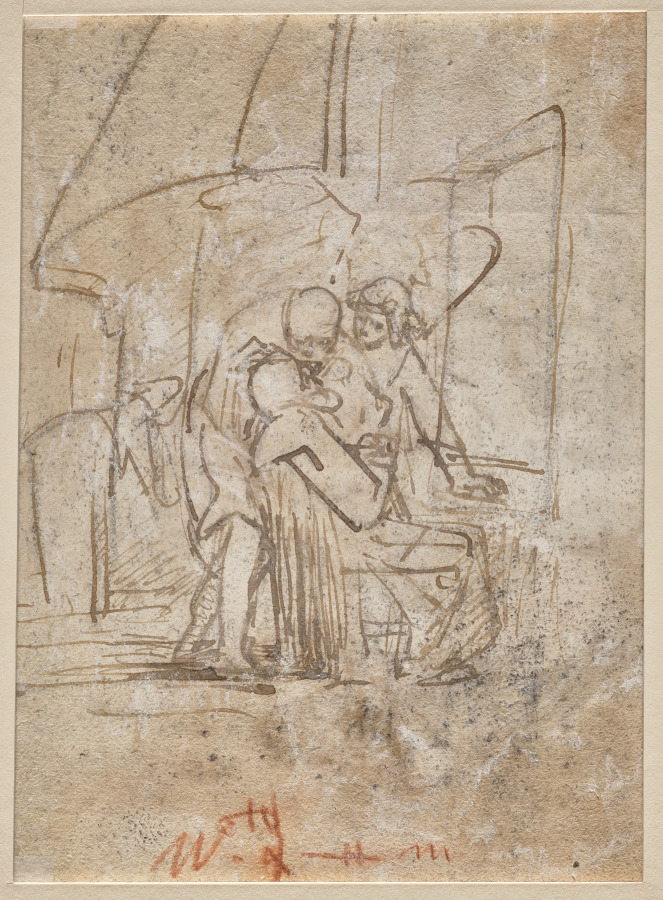
The Healing of Tobit (verso)
Ferdinand BolLinkedCulture matchlcp-4dc03b1880a5
- Date
- c. 1630s
- Medium
- pen and brown ink (verso)
- Culture
- Netherlands
- Department
- Drawings
- Institution
- Cleveland Museum of Art
- Object ID
- 693399
From the Cleveland Museum of Art record
Ferdinand Bol was one of the most prominent pupils and followers of Rembrandt van Rijn, for whom drawing played a central role in his workshop practice and teaching. This image of a man within a darkened interior before a window—perhaps a scholar or philosopher—is similar to compositions of saints as well as portraits that Rembrandt made in the 1630s and 1640s. Bol was quite interested in the theme, portraying similar figures in at least two paintings, ten drawings, and four etchings. Like Rembrandt, he employed an expressive but controlled use of ink wash, emphasizing the psychological interiority of the sitter with dramatic shading. The verso (back) of the drawing features a quick sketch by Bol after another of Rembrandt’s compositions, Tobit Healing his Father’s Blindness, 1640-45, held today in the CMA’s collection (1969.69). Ferdinand Bol’s subtle and controlled use of ink wash reveals a large trunk on the floor, while retaining bright highlights on the figure, book, and globe on the windowsill.
The authoritative record is held by Cleveland Museum of Art. LinkedCulture surfaces this object and its connections; it does not alter institutional metadata.
Get printable QR codesHide QR codes
Open QR codes for this object page and the museum record. They stay collapsed until needed.
Provenance & credit
As published by the source institution. Coverage varies — not every institution's open-data feed includes ownership history.
- Credit line
- Purchase from the J. H. Wade Fund
- Provenance
- Unidentified 17th century collector | 1700s: Private Collection, England | December 6, 2024: (Millea Brothers Auctioneers, Boonton, NJ) | ?–2025: (Benjamin Perronet, Paris, France, sold to The Cleveland Museum of Art, Cleveland, OH) | June 9, 2025–: The Cleveland Museum of Art, Cleveland, OH
Related across collections
Semantically similar works from Cleveland Museum of Art and other institutions.