Cleveland Museum of Art
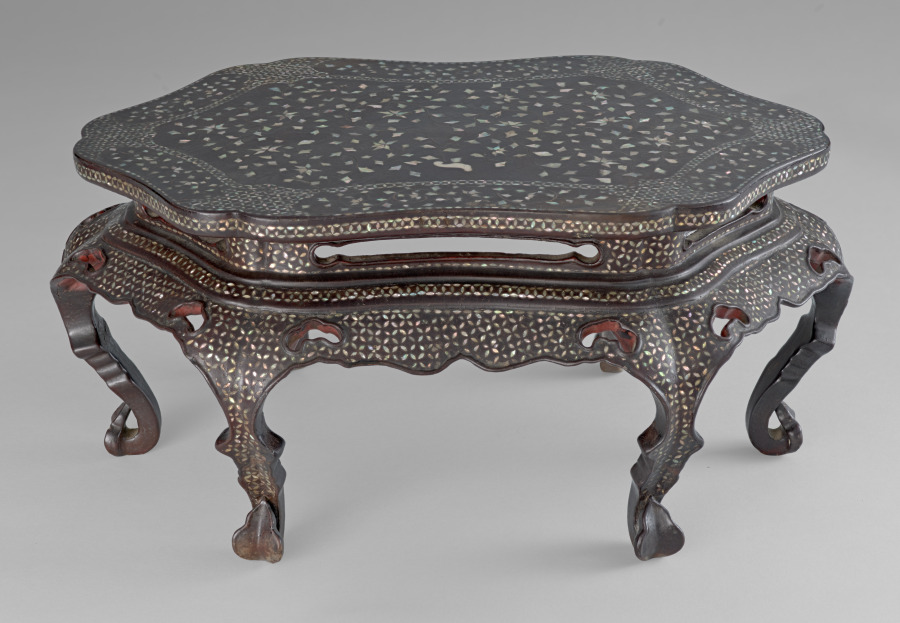
Hexafoil-Shaped Table with Mother-of-Pearl Inlay
- Date
- late 1400s–early 1500s
- Medium
- Inlaid abalone shells on black lacquer ground, applied with red lacquer on the interior
- Culture
- Korea, Joseon dynasty (1392–1910)
- Department
- Korean Art
- Institution
- Cleveland Museum of Art
This low table showcases intricate mother-of-pearl and twisted brass-wire inlay forming chrysanthemum scrolls and floral lattices against black lacquer. As one of the few surviving early Joseon lacquer works employing the rare brass-wire technique, it reflects refined craftsmanship made for elite patrons. Likely used in Buddhist offering ceremonies, it would have supported precious ritual objects such as rolls of sutras or miniature Buddhist statuary. The use of inlaid twisted brass wires in this mother-of-pearl lacquer table was first introduced in the twelfth century and is believed to have been employed in high-quality lacquerware through the end of the fifteenth century.
The authoritative record is held by Cleveland Museum of Art. LinkedCulture surfaces this object and its connections; it does not alter institutional metadata.
Related across collections
Semantically similar works from Cleveland Museum of Art and other institutions.
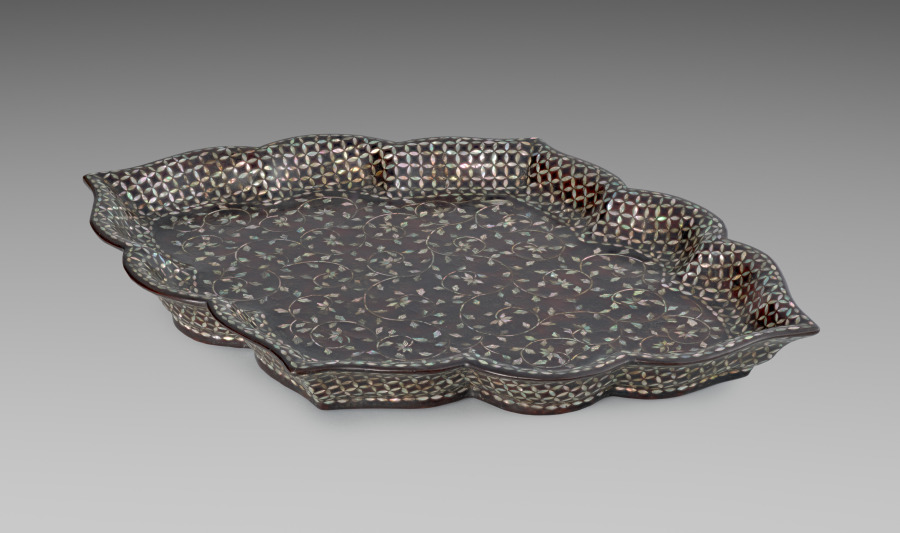
Foliate-Shaped Tray with Mother-of-Pearl Inlay
Cleveland Museum of Art

Box with floral scrolls
Minneapolis Institute of Art
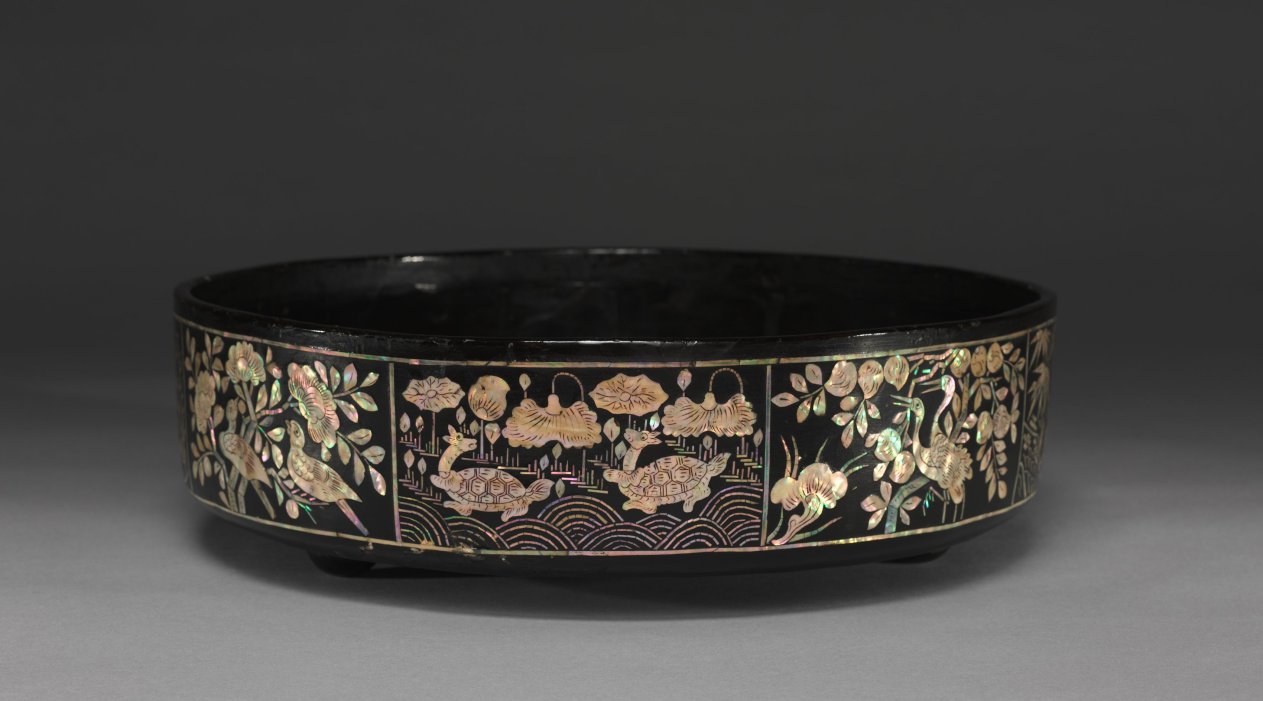
Tray for Sewing Tools with Mother-of-Pearl Inlay
Cleveland Museum of Art

Table with mother-of-pearl inlay
Minneapolis Institute of Art
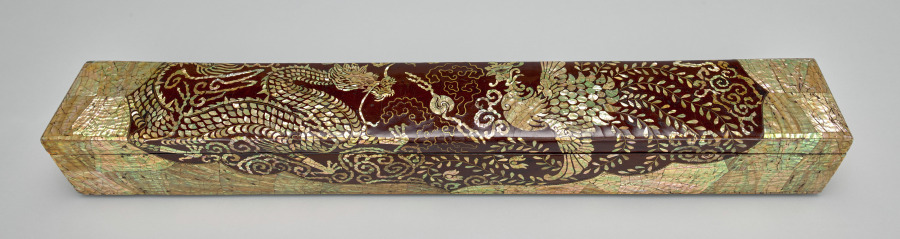
Scroll Box with Dragon and Phoenix Design
Cleveland Museum of Art

Ceremonial offering stand, one of a pair
Minneapolis Institute of Art

Small Circular Box
Minneapolis Institute of Art

Tray
Minneapolis Institute of Art

Foliate box and cover
Minneapolis Institute of Art

Box with chrysanthemum design
Minneapolis Institute of Art
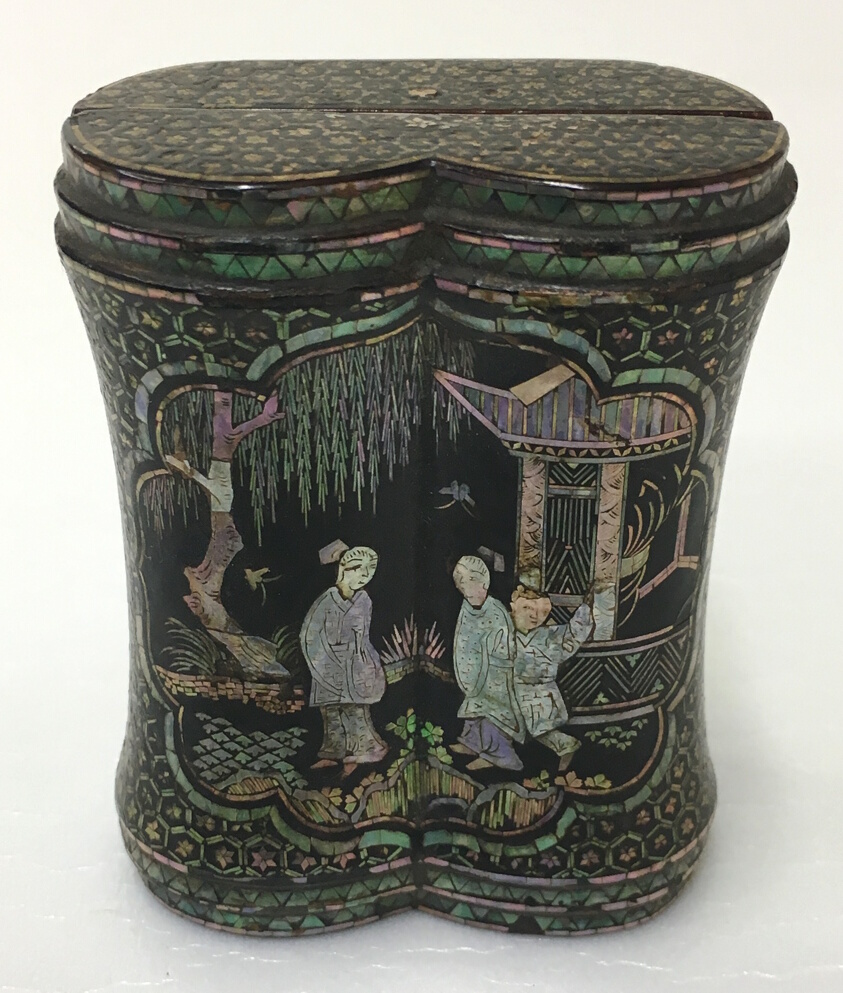
Lacquer Box with Mother-of-Pearl Inlay
Art Institute of Chicago

Tray
Minneapolis Institute of Art