Cleveland Museum of Art
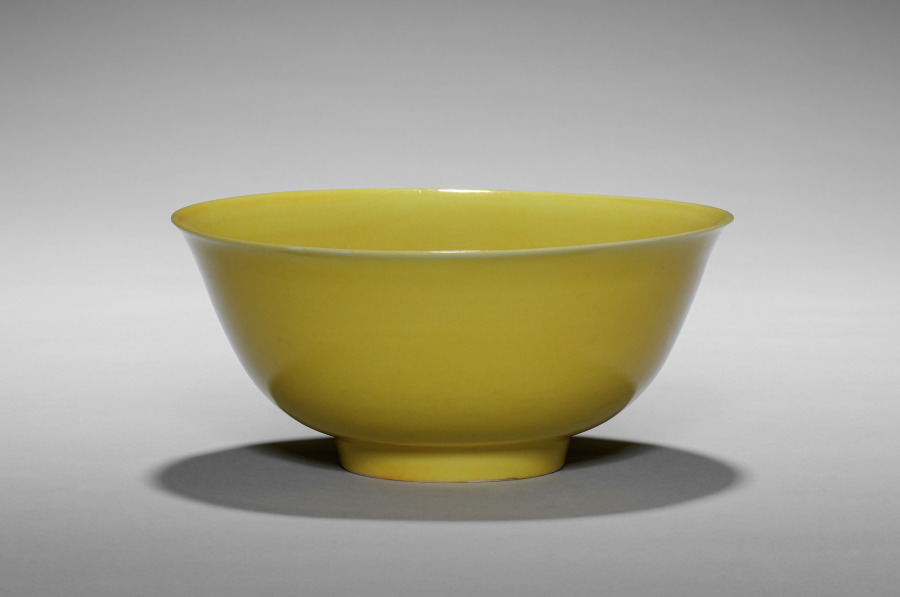
Yellow-Glazed Bowl
- Date
- 1505–21
- Medium
- Porcelain with monochrome yellow glaze
- Culture
- China, Jiangxi province, Jingdezhen kilns, Ming dynasty (1368–1644), Zhengde mark and reign (1505–21)
- Department
- Chinese Art
- Institution
- Cleveland Museum of Art
- Object ID
- 75573
From the Cleveland Museum of Art record
Monochrome yellow–glazed porcelain appears first during the Ming dynasty and is the combined result of technological advancement, the requirements of state rituals, and aspirations of taste. The base bears a mark of the Zhengde (正德) reign period, renowned for its high-quality imperial porcelain, and a pleasure-seeking emperor who died in his youth. Imperial marks were permitted to be applied only by Jingdezhen workshops affiliated with the court. Most scholars believe that yellow monochrome ware was reserved for the use of the imperial household or served as diplomatic gifts. The color is therefore often called “imperial yellow.” Zhengde–marked bowls of this so-called imperial yellow type are also preserved in the National Palace Museum in Taipei and the Topkapi Saray, Istanbul, once the palace of the Ottoman sultans.
The authoritative record is held by Cleveland Museum of Art. LinkedCulture surfaces this object and its connections; it does not alter institutional metadata.
Get printable QR codesHide QR codes
Open QR codes for this object page and the museum record. They stay collapsed until needed.
Provenance & credit
As published by the source institution. Coverage varies — not every institution's open-data feed includes ownership history.
- Credit line
- Nancy F. and Joseph P. Keithley Collection Gift
- Provenance
- ?–2011: (Marchant, London, UK, sold to Mr. and Mrs. Joseph P. Keithley) | 2011–2020: Nancy F. and Joseph P. Keithley, Cleveland, OH, given to the Cleveland Museum of Art | 2020–: The Cleveland Museum of Art, Cleveland, OH
Related across collections
Semantically similar works from Cleveland Museum of Art and other institutions.