Cleveland Museum of Art
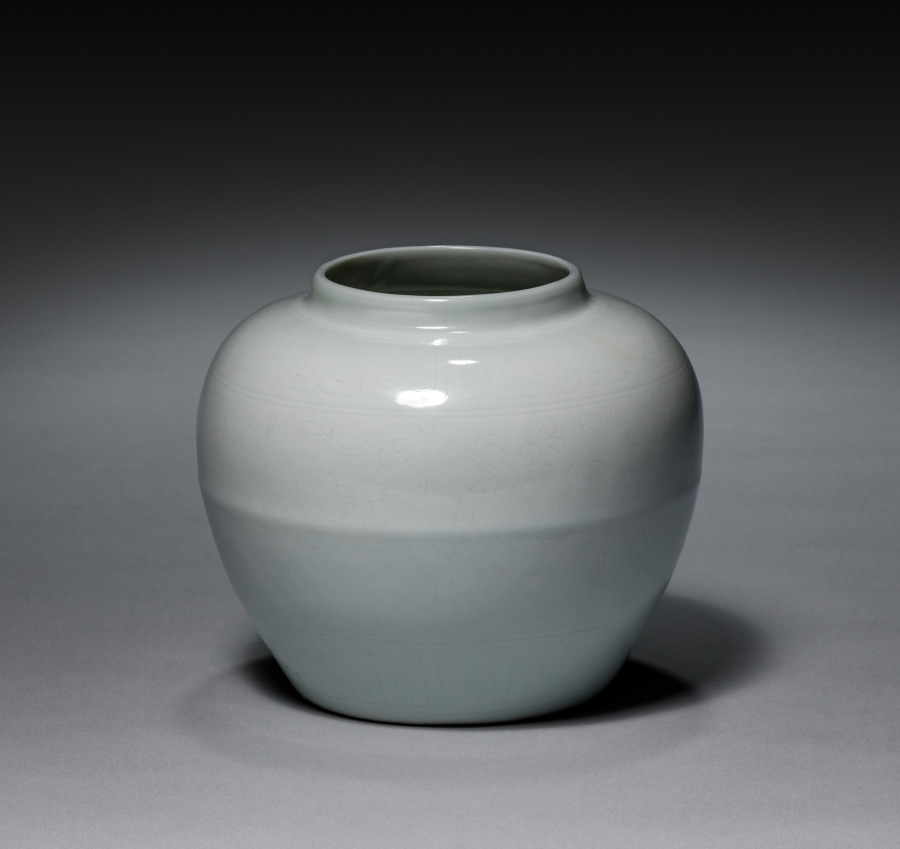
White-Glazed Jar with Hidden Design
- Date
- 1500s–1600s
- Medium
- Porcelain with sweet-white (tianbai; 甜白) glaze
- Culture
- China, Jiangxi province, Jingdezhen kilns, Ming dynasty (1368-1644)
- Department
- Chinese Art
- Institution
- Cleveland Museum of Art
White was a ritual color used in Buddhist ceremonies, as well as the color of mourning. This jar is made of two molded halves that were joined where the vessel’s middle section shows a raised line. It is covered by a silky white glaze called “sweet-white” ( tianbai ; 甜白). A “hidden design” ( anhua ; 暗花) of floral scrolls on the shoulder and stylized petals around the base shine through the glaze. The jar may have been used as a planter, a vase for flowers, or it may have held incense sticks on a home altar. Tianbai , or sweet-white glaze, was developed to accommodate the Yongle emperor’s (reigned 1403–24) preference for white ceramics.
The authoritative record is held by Cleveland Museum of Art. LinkedCulture surfaces this object and its connections; it does not alter institutional metadata.
Related across collections
Semantically similar works from Cleveland Museum of Art and other institutions.
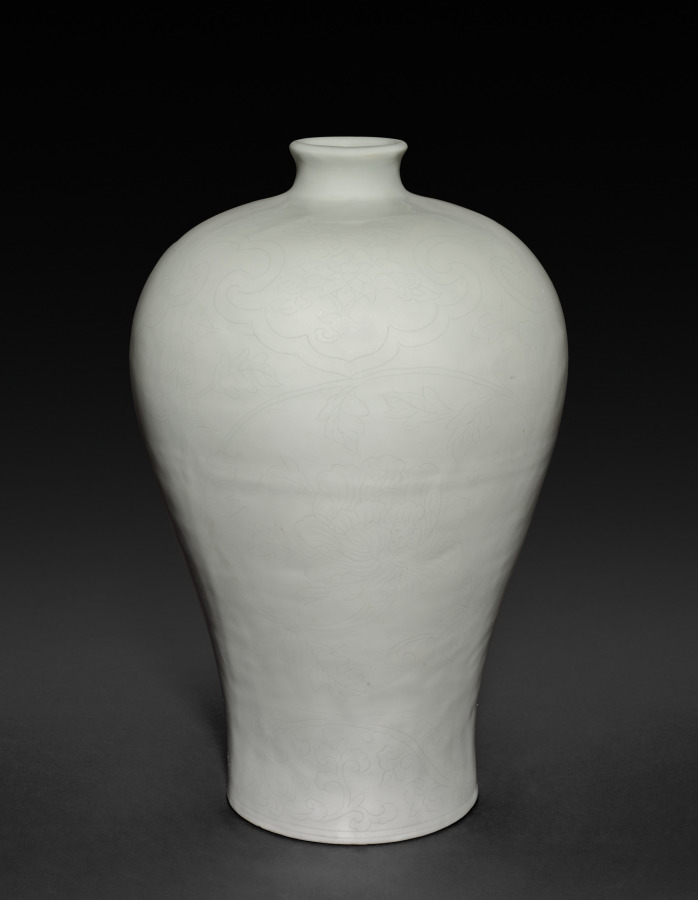
Meiping Vase with Cloud Collars and Peony Sprays
Cleveland Museum of Art

Large Storage Jar with Cover
Minneapolis Institute of Art

Wide Mouth Jar (guan)
Minneapolis Institute of Art

Vase
Minneapolis Institute of Art

Reliquary Jar in the Shape of a Stupa
Minneapolis Institute of Art

Small Wide Mouthed Jar
Minneapolis Institute of Art
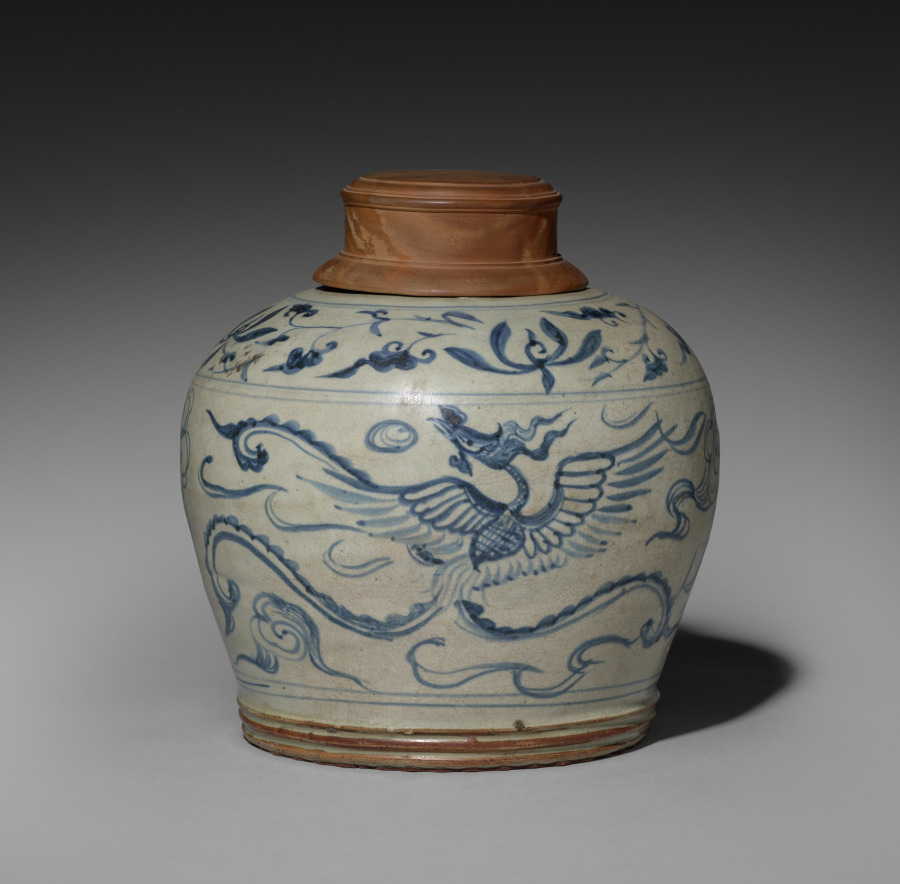
Covered Jar
Cleveland Museum of Art
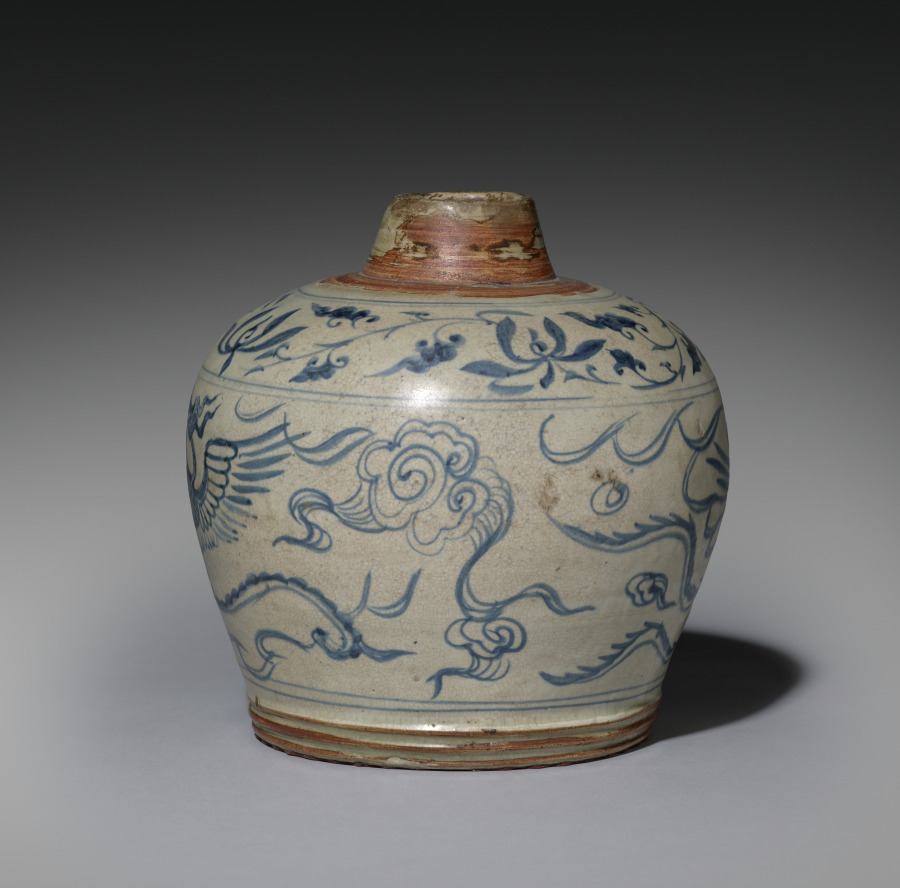
Covered Jar
Cleveland Museum of Art
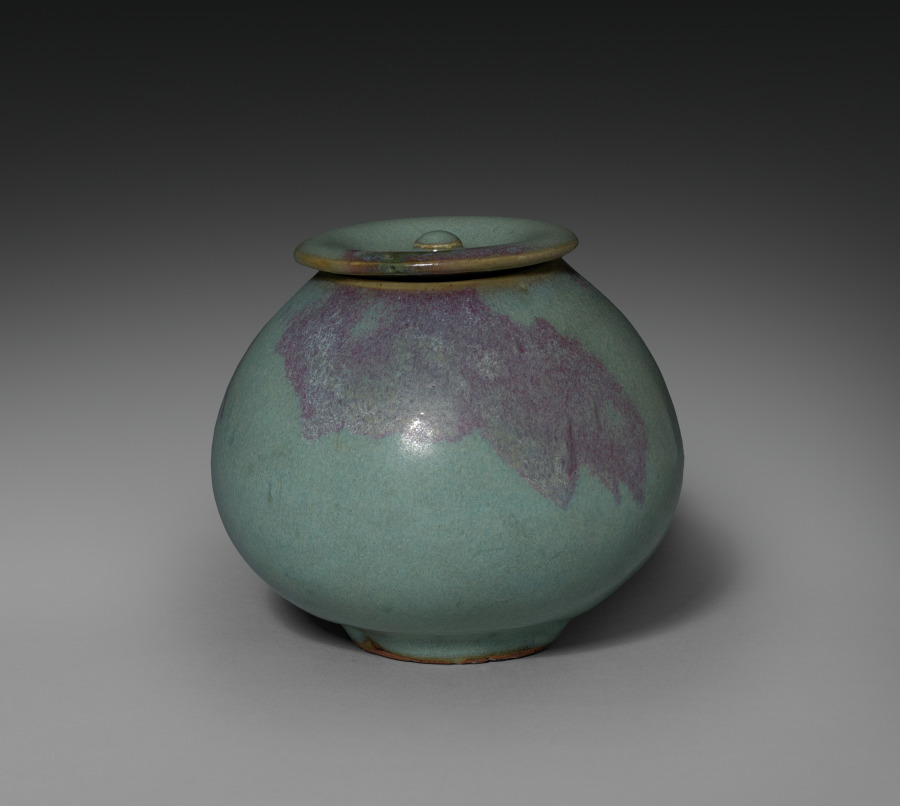
Jar with Cover
Cleveland Museum of Art
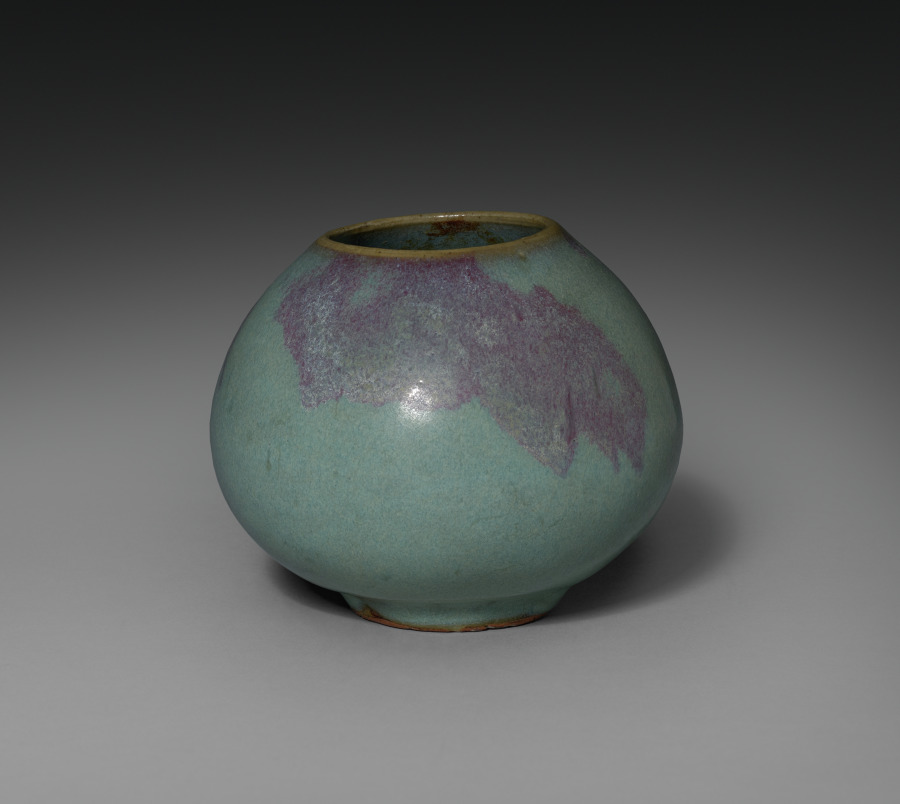
Jar with Cover
Cleveland Museum of Art
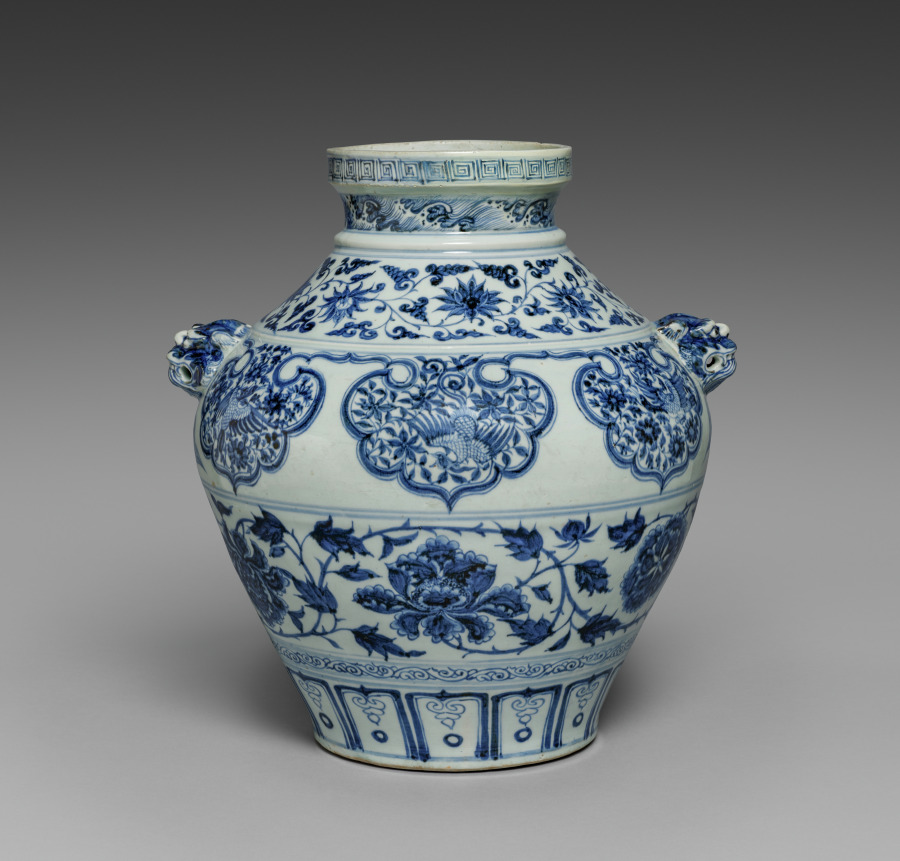
Jar with Lion-Head Handles
Cleveland Museum of Art

Jar with phoenix among clouds
Minneapolis Institute of Art