Cleveland Museum of Art
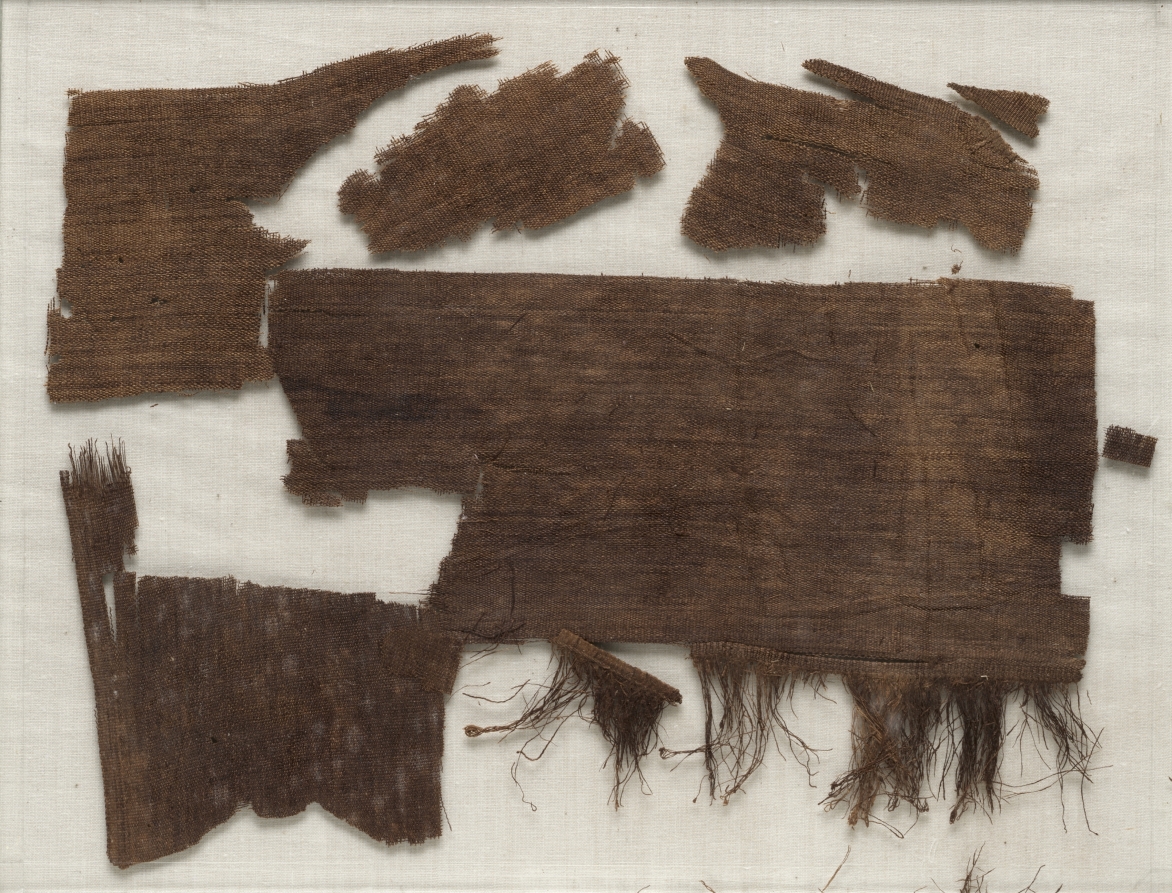
Fragments of Egyptian Mummy Wrappings fround in Senbi Coffin
- Date
- c. 1918–1859 BCE
- Medium
- linen; plain weave
- Culture
- Egypt, Middle Kingdom (2040–1648 BCE)
- Department
- Textiles
- Institution
- Cleveland Museum of Art
- Object ID
- 94198
From the Cleveland Museum of Art record
The most common type of coffin during the Middle Kingdom took the shape of a rectangular box with lid. The mummy inside was placed on his left side, facing east, his head behind the two magical eyes. These—in the shape of human eyes, to which have been added the markings of a falcon's head—were supposed to enable him to behold the rising sun, reborn daily. The long horizontal inscriptions are prayers to Anubis (god of embalming) and Osiris (god of the dead) for offerings of food and drink and other items necessary for survival in the afterlife. The short vertical inscriptions place him under the protection of the gods of earth, sky, air, and moisture, as well as various funerary deities.
The authoritative record is held by Cleveland Museum of Art. LinkedCulture surfaces this object and its connections; it does not alter institutional metadata.
Get printable QR codesHide QR codes
Open QR codes for this object page and the museum record. They stay collapsed until needed.
Provenance & credit
As published by the source institution. Coverage varies — not every institution's open-data feed includes ownership history.
- Credit line
- Gift of the John Huntington Art and Polytechnic Trust
Part of a LinkedCulture topic
 Ancient Egyptian Personal Objects
These objects are cosmetic implements and grooming tools from ancient Egypt, including mirrors, palettes for grinding pigments, and decorative knives, representing daily life and personal adornment practices.
476 objects from 5 institutions
Related across collections
Semantically similar works from Cleveland Museum of Art and other institutions.