Cleveland Museum of Art
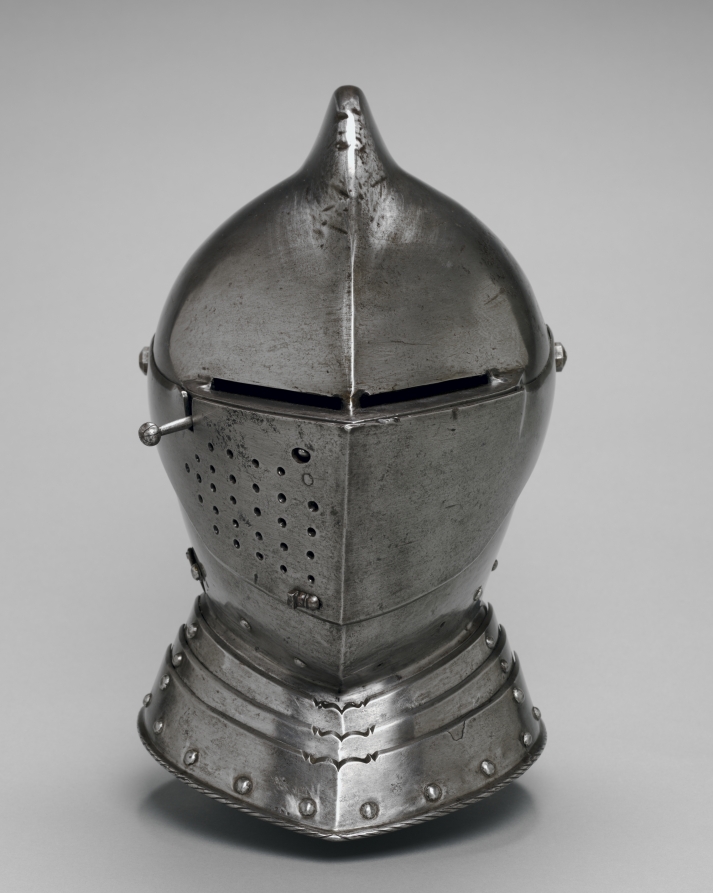
Helmet
- Date
- c. 1560–80
- Medium
- steel
- Culture
- Germany, Saxony, 16th century
- Department
- Medieval Art
- Institution
- Cleveland Museum of Art
- Object ID
- 95817
From the Cleveland Museum of Art record
This helmet was developed for the joust, a sporting combat of arms between two mounted contestants. This example shows the asymmetry of jousting armor. The participants rode along a wall-like barrier known as a "tilt" with their left sides facing. Consequently, armor on that side of the body tended to be thicker. The breath holes in the helmet were placed on the right side (farthest from an opponent's lance) to avoid injuries from splinters. The popularity of jousts and tournaments peaked around 1500 and required armor and other sporting equipment adapted for the endlessly varied games. By the reign of Emperor Maximilian I (1493–1519), there were at least 11 different forms of mounted jousts, exclusive of the numerous ceremonial combats on foot using such weapons as swords, halberds, pikes, and throwing axes. Each blow in the contest, especially favored in Germany, was carefully numbered and prescribed by rules. Jousting contestants wore armor and charged at each other full speed on horseback, attempting to dismount the other with a lance. Such equipment protected contestants from injury, much like the helmet worn by football players today.
The authoritative record is held by Cleveland Museum of Art. LinkedCulture surfaces this object and its connections; it does not alter institutional metadata.
Get printable QR codesHide QR codes
Open QR codes for this object page and the museum record. They stay collapsed until needed.
Provenance & credit
As published by the source institution. Coverage varies — not every institution's open-data feed includes ownership history.
- Credit line
- Gift of Mr. and Mrs. John L. Severance
- Provenance
- Saxon Electoral Army, Dresden, Germany | -1916: Frank Gair Macomber (1849-1941), Boston, MA, sold to the Cleveland Museum of Art | 1916-: The Cleveland Museum of Art, Cleveland, OH
Part of LinkedCulture topics
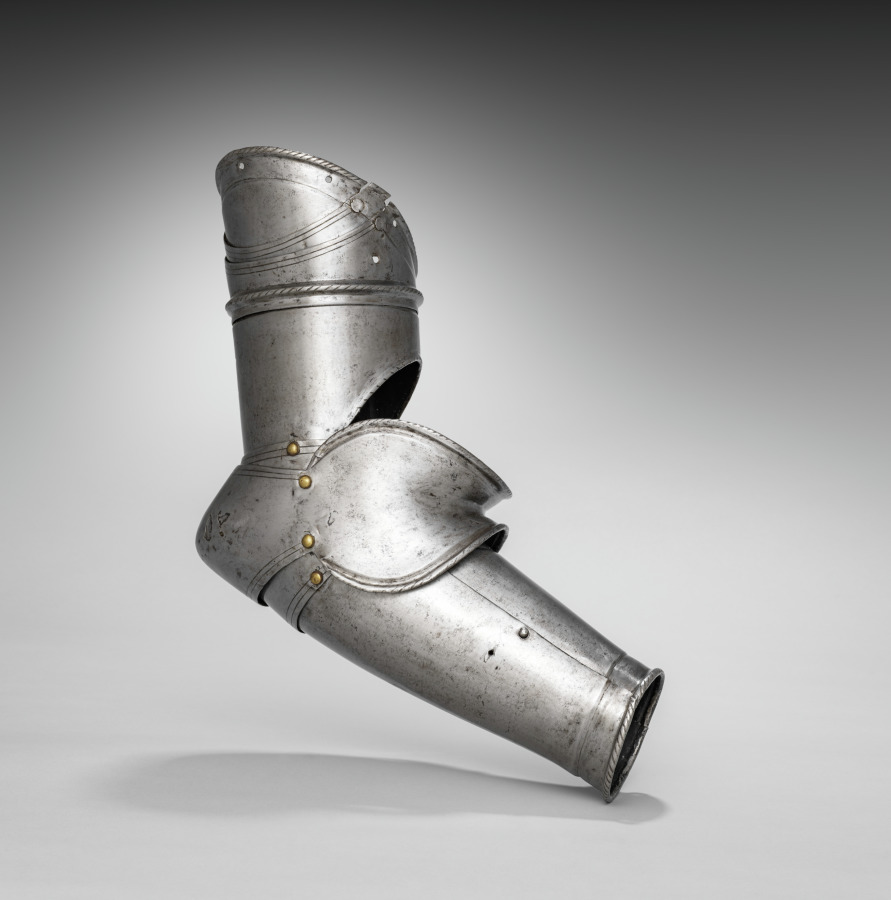 16th Century German Tournament Armor
These objects are components of German Renaissance jousting and tournament armor, specifically tilting suits and reinforcing pieces used in martial competitions during the 16th century.
20 objects from 2 institutions
 European Renaissance Armor Components
These objects are all pieces of defensive armor and military equipment from 15th-17th century Europe, primarily from major armoring centers like Italy, Germany, and France.
500 objects from 4 institutions
Related across collections
Semantically similar works from Cleveland Museum of Art and other institutions.