Cleveland Museum of Art
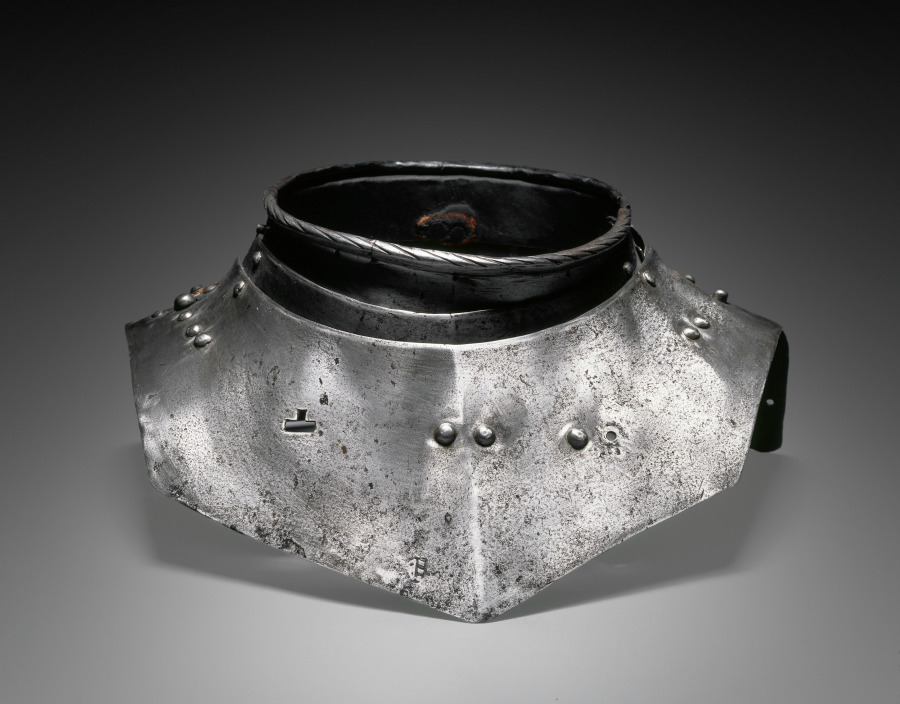
Gorget
- Date
- c. 1560
- Medium
- steel
- Culture
- Germany
- Department
- Medieval Art
- Institution
- Cleveland Museum of Art
- Object ID
- 95920
From the Cleveland Museum of Art record
A gorget is an element of armor that protects the neck, throat, and upper part of the chest. It normally consists of two parts, front and back, joined by a hinge on the left shoulder and fastened with a stud on the right. Gradually the gorget grew smaller and more symbolic becoming a symbol of rank. By the 1700s it became a single crescent shape worn on a chain that suspended the gorget even lower on the chest, so that it no longer protected the throat in normal wear. This gorget has a guild mark from Nuremburg, which functioned as a seal of quality.
The authoritative record is held by Cleveland Museum of Art. LinkedCulture surfaces this object and its connections; it does not alter institutional metadata.
Get printable QR codesHide QR codes
Open QR codes for this object page and the museum record. They stay collapsed until needed.
Provenance & credit
As published by the source institution. Coverage varies — not every institution's open-data feed includes ownership history.
- Credit line
- Gift of Mr. and Mrs. John L. Severance
- Provenance
- -1916: Frank Gair Macomber (1849-1941), Boston, MA, sold to the Cleveland Museum of Art | 1916-: The Cleveland Museum of Art, Cleveland, OH
Part of a LinkedCulture topic
 European Renaissance Armor Components
These objects are all pieces of defensive armor and military equipment from 15th-17th century Europe, primarily from major armoring centers like Italy, Germany, and France.
500 objects from 4 institutions
Related across collections
Semantically similar works from Cleveland Museum of Art and other institutions.