Cleveland Museum of Art
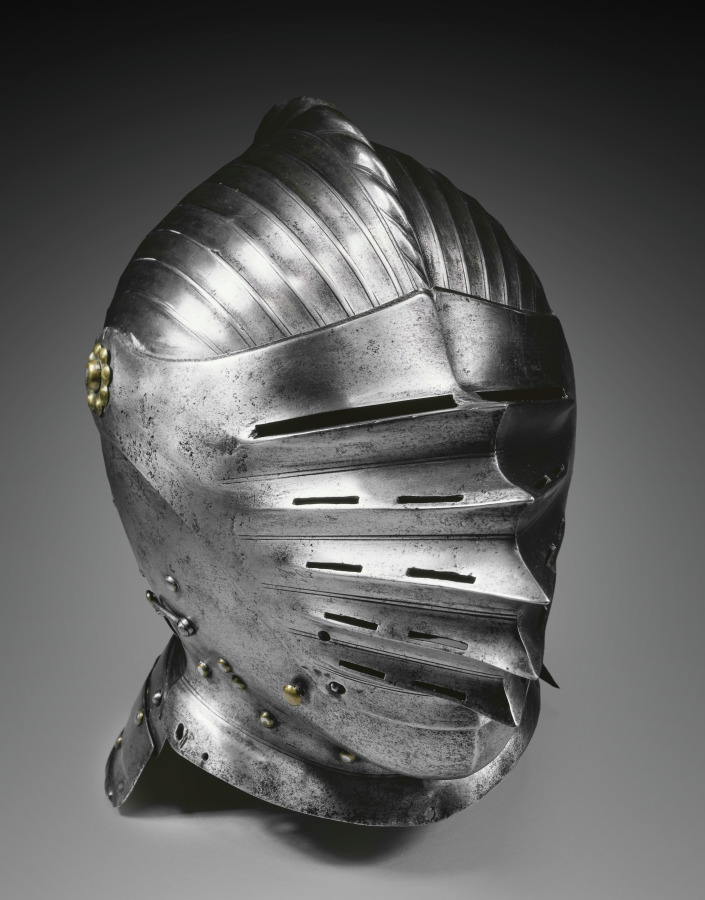
Close Helmet in Maximilian Style
- Date
- c. 1520
- Medium
- steel and brass
- Culture
- Germany
- Department
- Medieval Art
- Institution
- Cleveland Museum of Art
- Object ID
- 96109
From the Cleveland Museum of Art record
The regular fluting of this helmet is a style known as "Maximilian," named after Maximilian I, Holy Roman Emperor (1493–1519). Besides being decorative the fluting is a strengthening device that works similar to corrugated metal. This decoration would have been costly as it was time consuming to produce and required precise work. It would have only been available to the wealthiest of clients. Known as the "Last Knight," Maximilian played a prominent role in this history of armor by building up the armament industry and fostering the modernization of the armorer's craft.
The authoritative record is held by Cleveland Museum of Art. LinkedCulture surfaces this object and its connections; it does not alter institutional metadata.
Get printable QR codesHide QR codes
Open QR codes for this object page and the museum record. They stay collapsed until needed.
Provenance & credit
As published by the source institution. Coverage varies — not every institution's open-data feed includes ownership history.
- Credit line
- Gift of Mr. and Mrs. John L. Severance
- Provenance
- Prince Christopher Nikolaus Radziwill I (Mikołaj Krzysztof Radziwiłł) (1549-1616), Niasviž, Belarus | -1877: James Drummond Collection (1816-1877), Edinburgh, Scotland | -1916: Frank Gair Macomber (1849-1941), Boston, MA, sold to the Cleveland Museum of Art | 1916-: The Cleveland Museum of Art, Cleveland, OH
Part of a LinkedCulture topic
 European Renaissance Armor Components
These objects are all pieces of defensive armor and military equipment from 15th-17th century Europe, primarily from major armoring centers like Italy, Germany, and France.
500 objects from 4 institutions
Related across collections
Semantically similar works from Cleveland Museum of Art and other institutions.