Cleveland Museum of Art
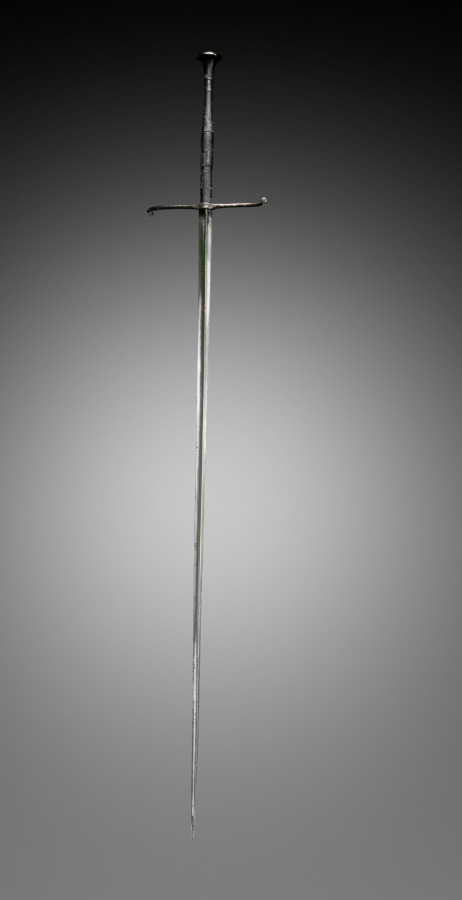
Estoc
- Date
- early 1500s
- Medium
- steel, wood and leather
- Culture
- Germany, early 16th Century
- Department
- Medieval Art
- Institution
- Cleveland Museum of Art
- Object ID
- 97033
From the Cleveland Museum of Art record
The French word estoc means "thrust" and therefore was adopted as the name for this long thrusting sword. It has a fairly long grip and simple cross-shaped hilt. The rigid blade, designed for thrusting at armored opponents, is three-sided for strength. The estoc was sometimes carried from the saddle. From the early 1300s, it was used by cavalrymen as an auxiliary side arm when a horseman had dismounted. Swords like this one were developed to counteract and pierce the increasingly heavy armor and sophisticated plates that nearly covered a knight.
The authoritative record is held by Cleveland Museum of Art. LinkedCulture surfaces this object and its connections; it does not alter institutional metadata.
Get printable QR codesHide QR codes
Open QR codes for this object page and the museum record. They stay collapsed until needed.
Provenance & credit
As published by the source institution. Coverage varies — not every institution's open-data feed includes ownership history.
- Credit line
- Gift of Mr. and Mrs. John L. Severance
- Provenance
- Sauran | Richard Zschille (1847-1903), Leipzig, Germany | ?-1916: Frank Gair Macomber (1849-1941), Boston, MA, sold to the Cleveland Museum of Art | 1916-: The Cleveland Museum of Art, Cleveland, OH
Part of a LinkedCulture topic
 European Edged Weapons Collection
These objects are all European swords, daggers, and bladed weapons from the medieval and early modern periods, showcasing the arms and armor traditions across the continent.
336 objects from 4 institutions
Related across collections
Semantically similar works from Cleveland Museum of Art and other institutions.