Cleveland Museum of Art
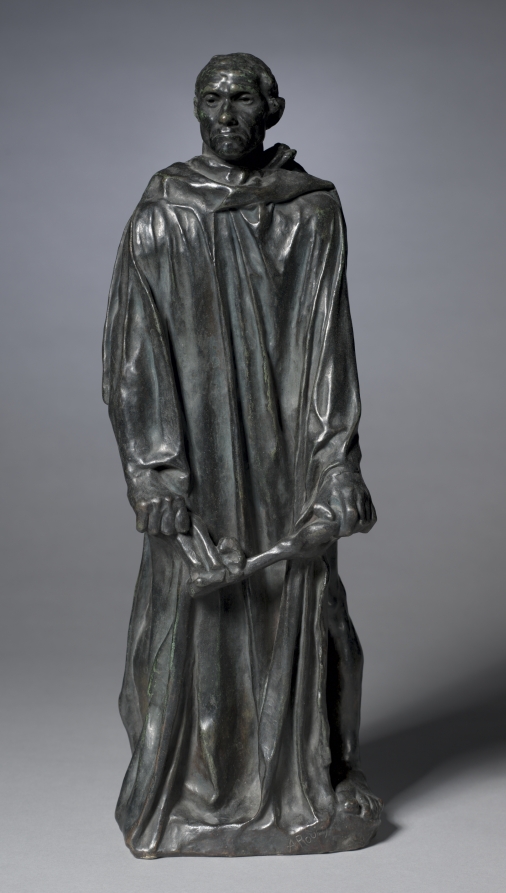
Jean d'Aire
Auguste RodinLinkedCulture matchlcp-330bd0e8de10
- Date
- 1884
- Medium
- bronze
- Culture
- France, 19th century
- Department
- Modern European Painting and Sculpture
- Institution
- Cleveland Museum of Art
- Object ID
- 98103
What the image shows
A bronze statue of a robed figure holding a staff.
Generated by LinkedCulture from the photograph alone, without the museum’s catalogue text (Qwen/Qwen2.5-VL-7B-Instruct), and not yet reviewed by a person. It describes the picture, not the object’s history, and it is not part of the museum’s record.
From the Cleveland Museum of Art record
In 1884 Rodin received a commission to create a large public monument honoring six French men who volunteered to be taken prisoner by an English army in exchange for the English releasing the town of Calais from a brutal 11-month siege. This reduced cast depicts one of the volunteers from the monument. Rather than idealized heroes, Rodin portrays the prominent citizens known as burghers as ordinary men experiencing personal confrontations with death. Jean d’Aire faces his fate with stoic resolve. The thick folds of his tunic weigh heavily on his body, as if symbolic of an internal struggle between his willingness to sacrifice his life and a desire to live. His intense glare into space seems to betray the dread and anxiety raging within his mind. Immensely popular as an independent sculpture, Rodin made numerous versions in various sizes.
The authoritative record is held by Cleveland Museum of Art. LinkedCulture surfaces this object and its connections; it does not alter institutional metadata.
Get printable QR codesHide QR codes
Open QR codes for this object page and the museum record. They stay collapsed until needed.
Provenance & credit
As published by the source institution. Coverage varies — not every institution's open-data feed includes ownership history.
- Credit line
- Gift of Loïe Fuller
- Provenance
- Loïe Fuller, Paris, France.
Related across collections
Semantically similar works from Cleveland Museum of Art and other institutions.