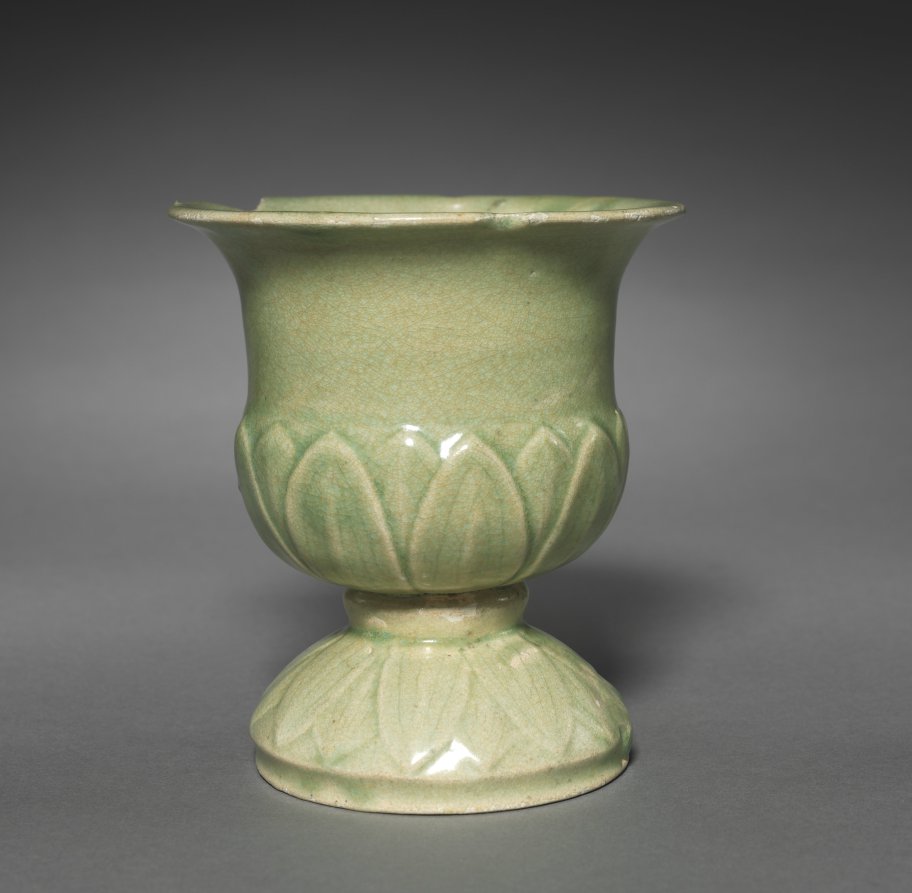
Cleveland Museum of Art
Incense Burner with Lotus Petal Design in Relief
- Date
- 1100s
- Medium
- stoneware
- Culture
- Korea, Goryeo dynasty (918–1392)
- Department
- Korean Art
- Institution
- Cleveland Museum of Art
- Object ID
- 98815
From the Cleveland Museum of Art record
Celadons wares used for everyday such as this incense burner were among the most common burial objects in tombs during the Goryeo period (918–1392). Furnishing tombs with an elaborate assemblage of objects was believed to honor and comfort the newly dead. Generally, Goryeo tombs were left untouched until the late 19th century. During the colonial period (1910–45), however, Japanese archaeologists competitively excavated the tombs located in Kaeseong, the former capital of the Goryeo period, and these wares soon became available for Japanese and Western collectors. This incense burner may have been produced at one of the state-run kilns located in Kangjin, southern Jeolla province. The exterior decor that resembles an opening lotus flower was shaped in a carved wooden mold. Then the potter touched it up with incised details.
The authoritative record is held by Cleveland Museum of Art. LinkedCulture surfaces this object and its connections; it does not alter institutional metadata.
Get printable QR codesHide QR codes
Open QR codes for this object page and the museum record. They stay collapsed until needed.
Provenance & credit
As published by the source institution. Coverage varies — not every institution's open-data feed includes ownership history.
- Credit line
- Director's Contingent Fund
- Provenance
- acquired by Langdon Warner in Korea.
Related across collections
Semantically similar works from Cleveland Museum of Art and other institutions.