Getty Museum
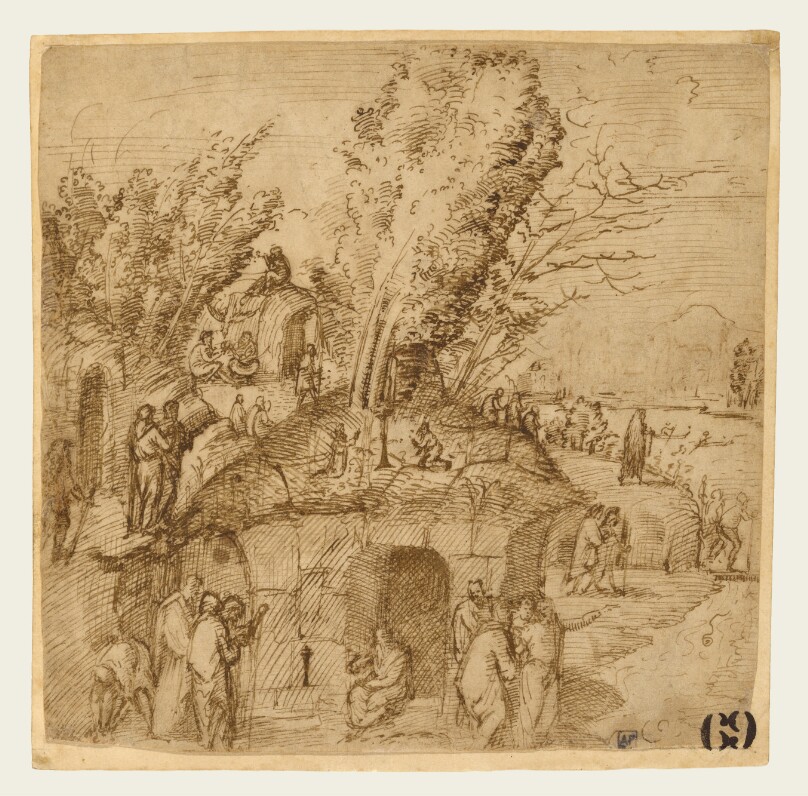
A Thebaid: Monks and Hermits in a Landscape
Creator
Lorenzo CostaItalian Artist · 1460–1535
All works by this person →Scholars know little about Lorenzo Costa's life and artistic training. Early on he was influenced by the austere Ferrarese painters Cosimo Tura and Ercole de' Roberti, and he may have been the pupil of one of them. By 1483 Costa had settled in Bologna, where he lived until 1506, except for a brief interlude in Ferrara and trips to Tuscany and Umbria. In Bologna he decorated many chapels with fresc
More on Getty ULAN- Date
- about 1505
- Medium
- Pen and brown ink
- Culture
- Italian
- Department
- Drawings
- Institution
- Getty Museum
- Object ID
- 05d3e867-90e0-4354-8380-b43530864415
From the Getty Museum record
Using only pen and ink, Lorenzo Costa portrayed the cradle of Christian monasticism, the Thebaid, a Roman division of the upper Nile River valley. Beginning with Saint Paul of Thebes and Saint Anthony of Egypt in the 200s, Christian monks retreated to this region, to live a solitary life of ascetism and prayer. Over time, these monks, also known as "desert fathers," organized into communities. Costa's scratchy, energetic draftmanship created a bustling composition filled with monks and a landscape riddled with the grottoes, huts, and caves they used for prayer and shelter. He portrayed an imaginary scene, incorporating a variety of monastic saints and spanning different periods. In the upper left background, Saints Paul and Anthony are shown seated, receiving bread from a raven through which God provided nourishment. Mary Magdalene, who supposedly lived her later years alone in the desert, stands near the river to the right. The landscape itself appears more European than Egyptian, perhaps reflecting Costa's native countryside around Bologna, Italy, rather than the real Thebaid.
The authoritative record is held by Getty Museum. LinkedCulture surfaces this object and its connections; it does not alter institutional metadata.
Get printable QR codesHide QR codes
Open QR codes for this object page and the museum record. They stay collapsed until needed.
Related across collections
Semantically similar works from Getty Museum and other institutions.