Getty Museum
Gospel Book
Creator
UnknownAll works by this person →More on Getty ULAN- Date
- late 13th century
- Medium
- Tempera colors, gold leaf, gold ink, and ink
- Culture
- Byzantine
- Department
- Manuscripts
- Institution
- Getty Museum
- Object ID
- 0db52d1e-4b34-468f-a208-2f69f3201ac3
From the Getty Museum record
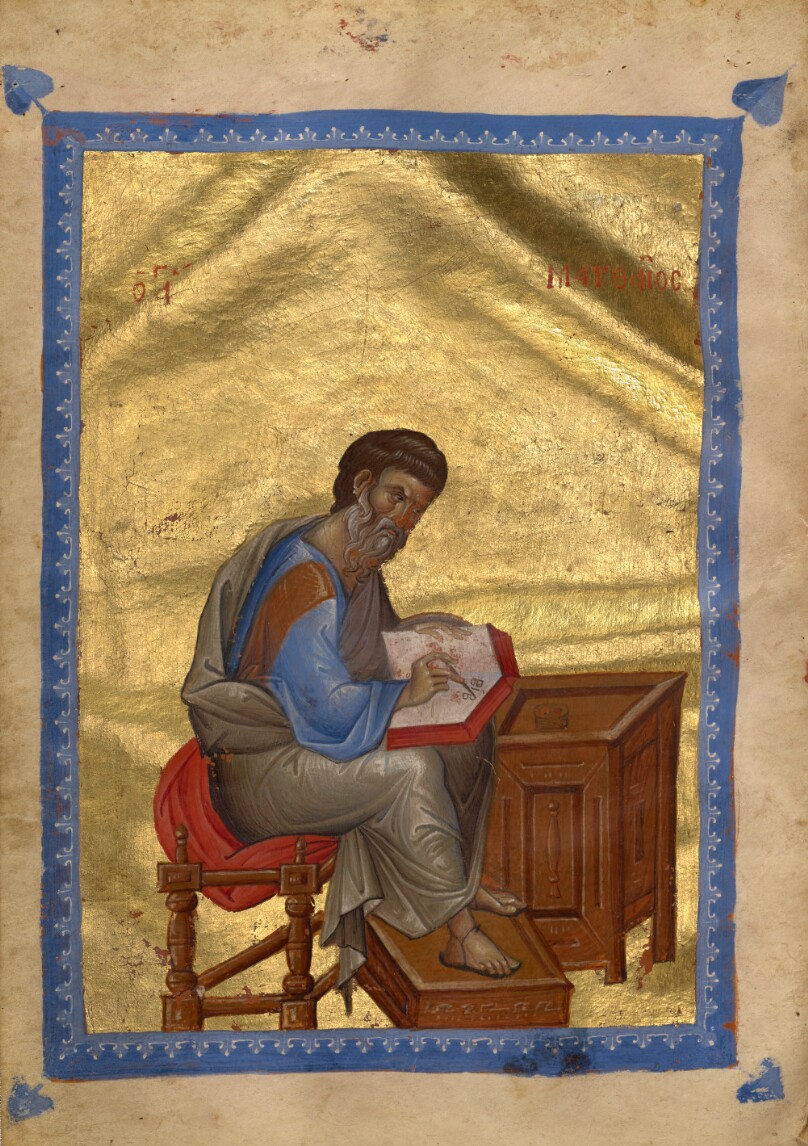
This small gospel book was made in the later years of the Byzantine Empire, which was the eastern Roman Empire, centered in Constantinople (modern Istanbul), that existed from 330-1453 CE. It contains luxurious and gracefully-rendered author portraits of the four Evangelists, Matthew, Mark, Luke, and John. Bound by simple, decorated frames, they sit in attitudes of work or contemplation, each before a slightly different style of desk or writing stand and each backed by a solid field of brightly burnished gold. While the anonymous artist or artists of the manuscript added fine details and delicate highlights to each painting, the Evangelists convey a sense of massive, calm solidity. Their clothing falls in deep weighty folds over their monumental figures, and they rest heavily in their ornate chairs. Gospel books are the most common type of illustrated manuscript to survive from Byzantium. Objects of personal and communal devotion, they served as rich gifts and were used in services. In addition to the author portraits, this volume includes a set of ornamented Eusebian canon tables (which offer a concordance of biblical stories across the gospel books) and decorative headpieces, which are large floral and geometric decorations that introduce major sections of text. The handwriting, figural style, and decorative elements in this manuscript connect it to a small group of late-thirteenth century books, called the Palaeologina Group after a Byzantine noblewoman who seems to have owned at least some of the volumes. (The word Palaeologina describes women from the Palaeologus family, which formed the last ruling dynasty of Byzantium.) Nearly all the manuscripts in this group contain biblical or liturgical texts. All are lavishly made and their figural illustrations draw inspiration from the more restrained and monumental style of Byzantine books made in earlier centuries.
The authoritative record is held by Getty Museum. LinkedCulture surfaces this object and its connections; it does not alter institutional metadata.
Get printable QR codesHide QR codes
Open QR codes for this object page and the museum record. They stay collapsed until needed.
Related across collections
Semantically similar works from Getty Museum and other institutions.