Getty Museum
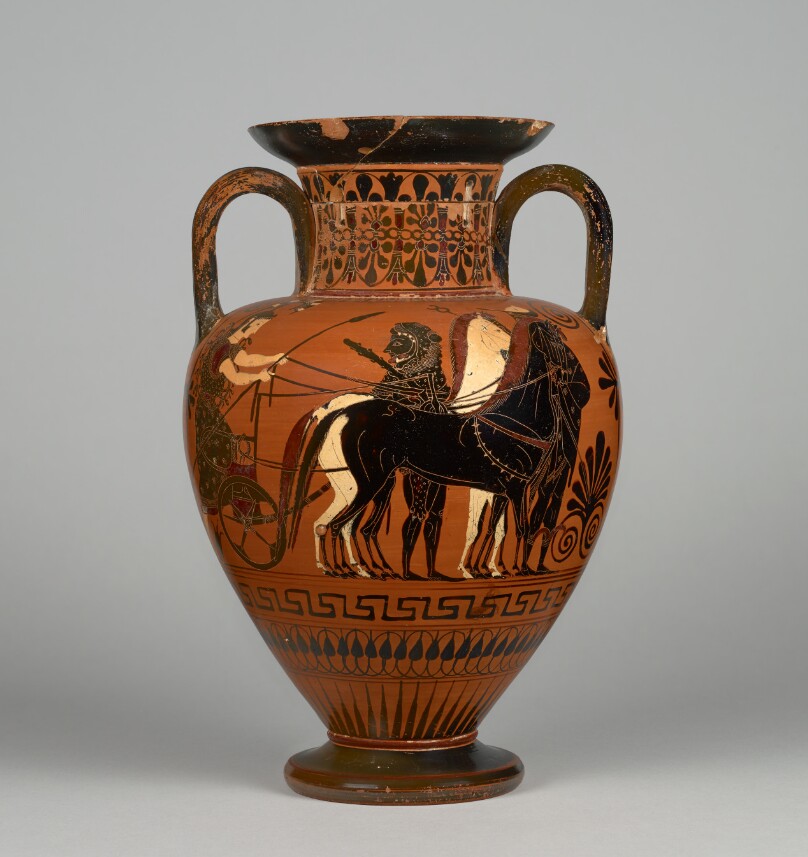
Attic Black-Figure Neck-Amphora
- Date
- 530–520 B.C.
- Medium
- Terracotta
- Culture
- Greek (Attic)
- Department
- Vessels
- Institution
- Getty Museum
- Object ID
- 0f57d703-2ee3-42e8-845f-b3c7d303c77c
From the Getty Museum record
The apotheosis of Herakles decorates the front of this Athenian black-figure amphora. Identified by his attributes of club and lionskin, Herakles waits while the goddess Athena, his protective deity, mounts the chariot that will drive him to the home of the gods on Mount Olympos. Hermes, the messenger of the gods, stands behind the horses' heads preparing to lead the chariot. The back of the vase shows a battle scene in which a hoplite, or heavily armed infantryman, falls to the ground between two cavalrymen. Herakles being escorted to Olympos in a chariot was an especially popular subject in Athenian art in the late 500s B.C. Some scholars have suggested that the image's popularity was politically motivated: the tyrants of Athens in this period, Peisistratos and his sons, had adopted Herakles as their symbol. An account of Peisistratos's return from exile, in fact, describes how he had a woman dressed as Athena ride in the chariot with him. This vase was broken and extensively repaired in antiquity. One handle was reattached with staples, and the mouth of the amphora was replaced with one taken from another similar vessel. The substitute mouth appears to be at least twenty years later than the original, indicating that the vase had been used for some time before it was damaged.
The authoritative record is held by Getty Museum. LinkedCulture surfaces this object and its connections; it does not alter institutional metadata.
Get printable QR codesHide QR codes
Open QR codes for this object page and the museum record. They stay collapsed until needed.
Related across collections
Semantically similar works from Getty Museum and other institutions.