Getty Museum
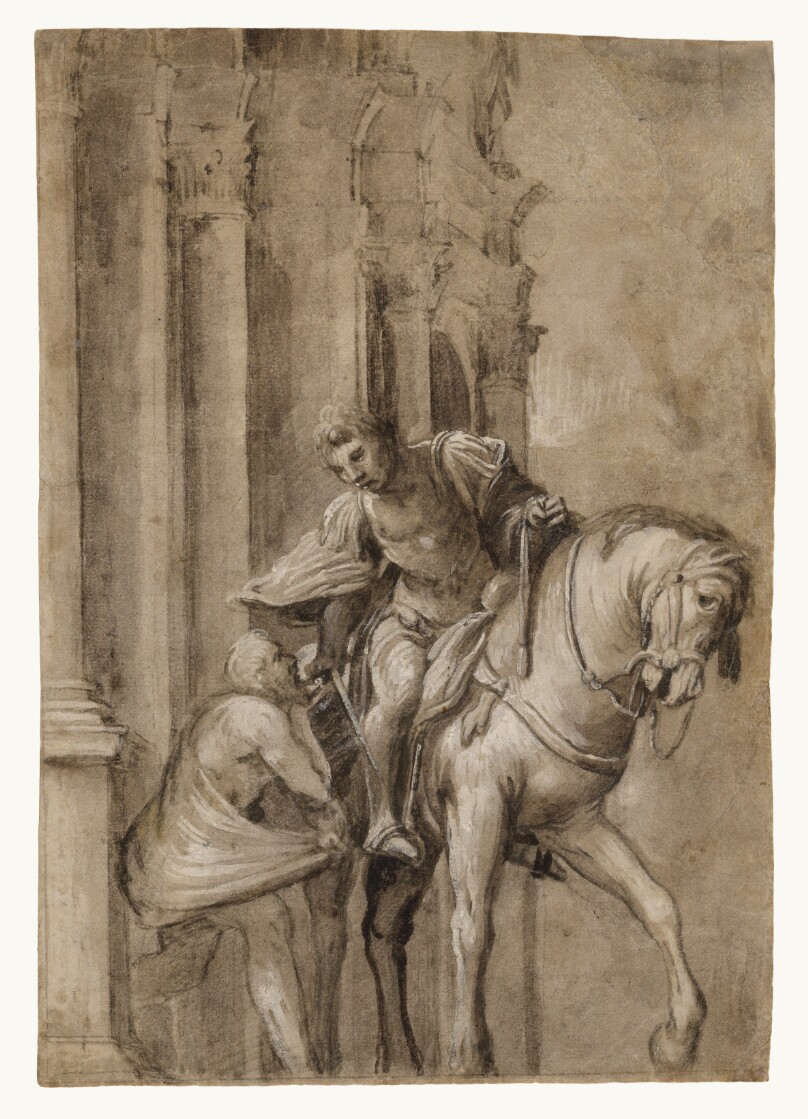
Saint Martin Dividing His Cloak with a Beggar
Creator
Lorenzo LottoItalian Artist · 1480–1556
All works by this person →One of the most prolific Venetian artists of the sixteenth century, Lorenzo Lotto is known for his nomadic career and highly individual style. He primarily produced religious paintings and portraits that were particularly popular in the Venetian mainland and the papal states of the Marches. Over the course of his youth, he assimilated the style of Giovanni Bellini, the patriarch of Venetian painti
More on Getty ULAN- Date
- about 1530
- Medium
- Brush with gray brown wash, over black chalk, heightened with white opaque watercolor, on light brown paper
- Culture
- Italian
- Department
- Drawings
- Institution
- Getty Museum
- Object ID
- 19d18c4f-d875-441b-97f4-57744573c2e1
From the Getty Museum record
As his horse paws the ground anxiously, Saint Martin leans down with his sword to cut his cape in half. The naked beggar looks up gratefully at the saint as he wraps the edge of the cloak around his body. A Christian saint who founded the first monasteries in France, Saint Martin enrolled in the Roman army before joining the Roman Catholic Church. According to legend, he once came upon a poor man on the road, shivering in the cold, and cut in half his military cloak to share it with him. That night Christ appeared to him in a dream wearing the piece of cloak he had given away. Using a very low viewpoint, Lorenzo Lotto focused attention on the figure of the saint and his mount. He used white and cream strokes of bodycolor to create a powerful sense of movement in the sweeping stretch of fabric, the leaning saint, and the horse's arching foot and neck.
The authoritative record is held by Getty Museum. LinkedCulture surfaces this object and its connections; it does not alter institutional metadata.
Get printable QR codesHide QR codes
Open QR codes for this object page and the museum record. They stay collapsed until needed.
Related across collections
Semantically similar works from Getty Museum and other institutions.