Getty Museum
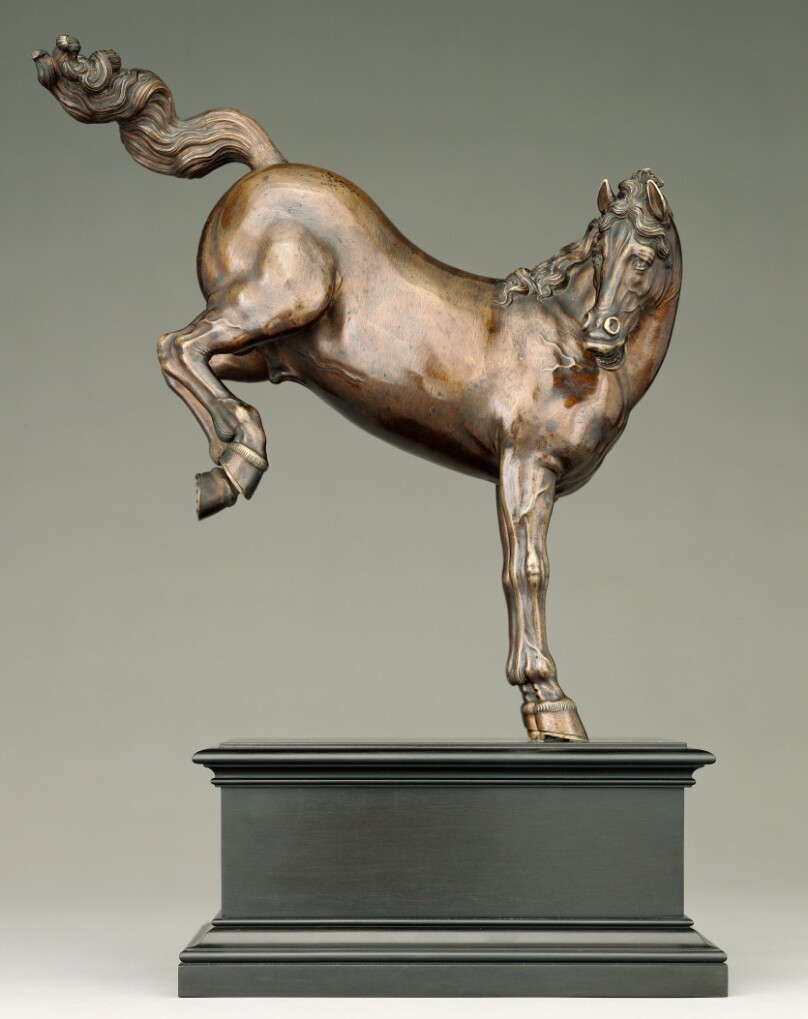
Kicking Horse
Creator
Caspar GrasGerman Artist · 1585–1674
All works by this person →German-born sculptor Caspar Gras was one of the finest metalworkers of the 1600s in Northern Europe. After learning the craft of goldsmithing from his father, he became an apprentice embosser at the court of Archduke Maximilian III in Bad Mergentheim. By 1610 he was promoted to Court Embosser and soon received most of the court's commissions. These included not just relief sculpture, but also life
More on Getty ULAN- Date
- about 1630
- Medium
- Bronze
- Culture
- German
- Department
- Sculpture
- Institution
- Getty Museum
- Object ID
- 1a355b44-17d8-4875-b864-6b4f0c5de2c9
From the Getty Museum record
The kicking horse twists his head back as if to be sure he is aiming correctly at the attacking lion or boar, now lost, that originally formed part of the sculpture. His tail swirls in the air while he pricks up his ears and furrows his brow. These expressive details of the horse, caught in action, add to the sense of intense struggle. The artist Caspar Gras's interest in dramatic moments and spontaneous movement is characteristic of the Baroque style. Possibly one of the earliest known Baroque bronze horses shown kicking both rear feet in the air, this sculpture's creation was made possible by new technical advances. Beginning about 1600, thinner, lighter casts allowed sculptors to balance the metal's weight on only two points. Sculptors also perfected the technique of casting bronze figures in parts, allowing for compositions with many projecting, separately cast elements.
The authoritative record is held by Getty Museum. LinkedCulture surfaces this object and its connections; it does not alter institutional metadata.
Get printable QR codesHide QR codes
Open QR codes for this object page and the museum record. They stay collapsed until needed.
Related across collections
Semantically similar works from Getty Museum and other institutions.