Getty Museum
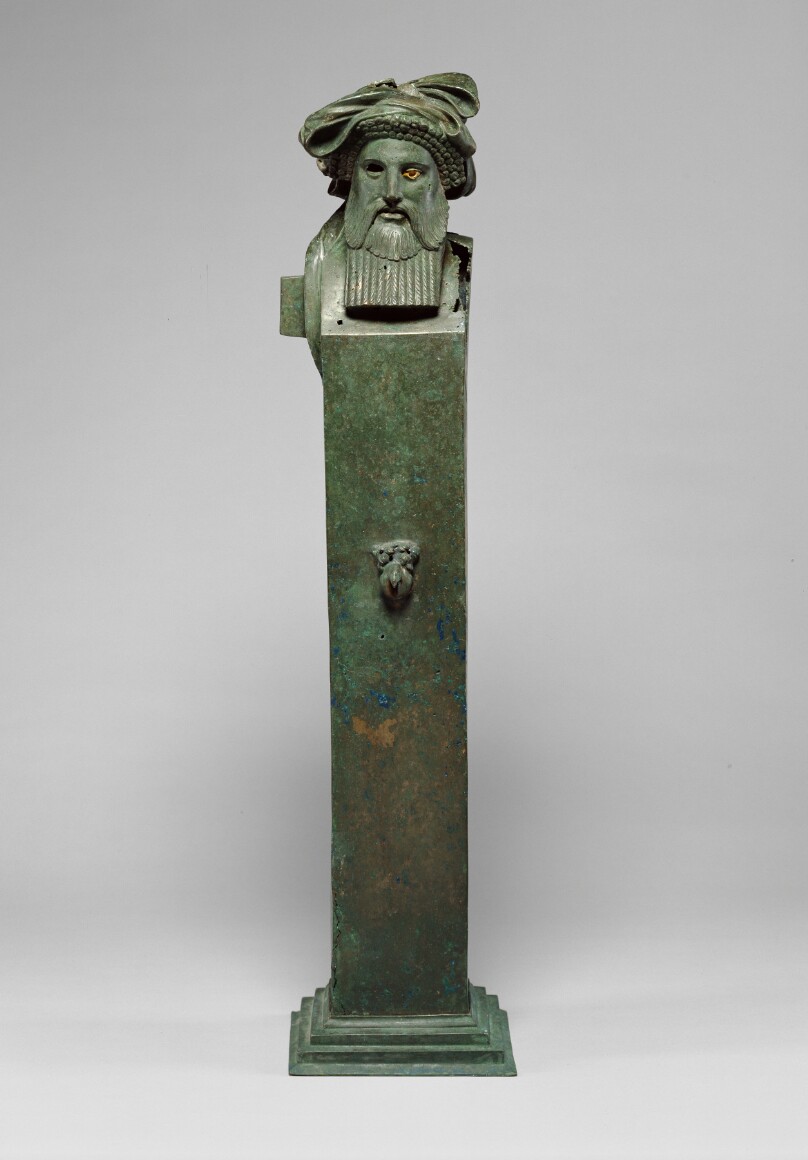
Herm of Dionysos
Creator
Boëthos of KalchedonGreek Artist
All works by this person →Boethos worked as a bronze caster and silversmith in the second century B.C. As with many ancient sculptors, we know of his work primarily from passing references by Roman writers such as Pliny and Pausanias and from later Roman copies of his sculptures. One signed original statue by Boethos survives: a bronze herm from a shipwreck off the coast of Tunisia near the city of Mahdia, now in the Bardo
More on Getty ULAN- Date
- 200–100 B.C.
- Medium
- Bronze, calcitic stone
- Culture
- Greek
- Department
- Sculpture
- Institution
- Getty Museum
- Object ID
- 1b9c1d59-e1a0-49b4-9022-822a937896f3
From the Getty Museum record
Beginning in the 500s B.C., Greeks placed herms, pillars surmounted by a head of the god Hermes, at physical boundaries, such as crossroads or even doorways. Such places were sites of ritual and worship, where the herms served a magical, protective function. By the Hellenistic period, the repertoire of heads found on herms had expanded to include other gods and even famous mortals, and people began to use the herms for non-religious, decorative purposes. This herm carries a head of Dionysos wearing a turbanlike headdress of loosely wound ribbons. Both the hair and the beard of Dionysos have been carved in a style that would have looked old-fashioned to the contemporary viewer. Greek bronze statues typically had eyes made of contrasting materials. In most instances the eyes have been lost, but this herm still retains the stone inlay of the white of its left eye, giving a better idea of the work's original appearance.
The authoritative record is held by Getty Museum. LinkedCulture surfaces this object and its connections; it does not alter institutional metadata.
Get printable QR codesHide QR codes
Open QR codes for this object page and the museum record. They stay collapsed until needed.
Related across collections
Semantically similar works from Getty Museum and other institutions.