Getty Museum
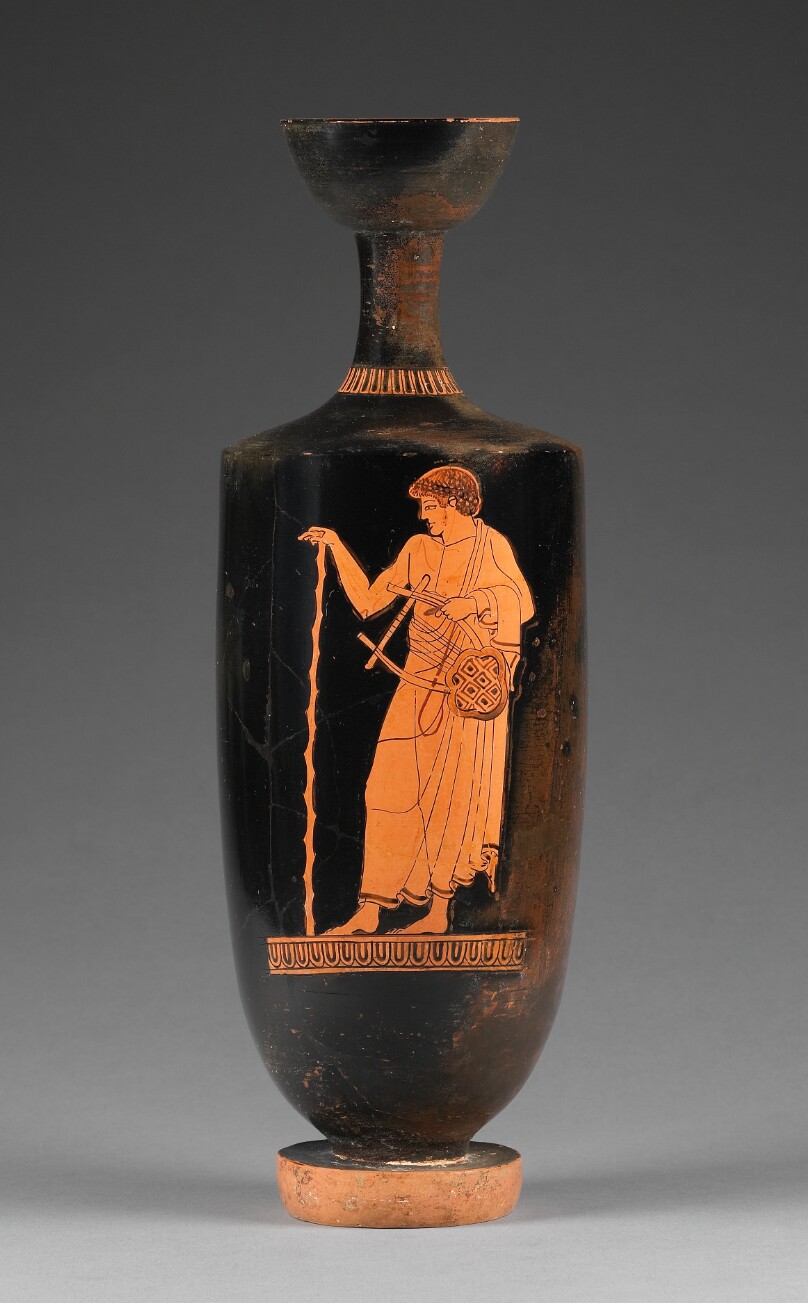
Attic Red-Figure Lekythos
Creator
Eucharides PainterPainter
All works by this person →By the early 400s B.C., most Athenian vase-painters had committed to either the black-figure or the newer red-figure technique of vase decoration. The Eucharides Painter was one of the few artists to leave a substantial group of vases in both techniques. Working in Athens in the years from about 500 to 470 B.C., the Eucharides Painter decorated a wide variety of vase shapes, from large kraters to
More on Getty ULAN- Date
- about 480 B.C.
- Medium
- Terracotta
- Culture
- Greek (Attic)
- Department
- Vessels
- Institution
- Getty Museum
- Object ID
- 214715cf-5a83-431a-ac2a-3a4c909304e9
From the Getty Museum record
A young man holding a lyre made from a tortoise shell decorates this Athenian red-figure lekythos. He stands resting one hand on a walking stick and wearing only a mantle wrapped over one shoulder. Aristocratic Greek youths were trained in a variety of skills. In addition to athletics, boys were taught the arts of music and poetry, which were considered essential for well-bred youths to master. A lekythos was used to store and pour precious oil, and the narrow neck and bowl-shaped mouth helped conserve the expensive commodity. Lekythoi and many other vessels produced in Athenian pottery workshop were exported to Italy, and an *M* -shaped graffito scratched under the foot of this lekythos was a trader's mark, used to identify goods in shipment.
The authoritative record is held by Getty Museum. LinkedCulture surfaces this object and its connections; it does not alter institutional metadata.
Get printable QR codesHide QR codes
Open QR codes for this object page and the museum record. They stay collapsed until needed.
Related across collections
Semantically similar works from Getty Museum and other institutions.