Getty Museum
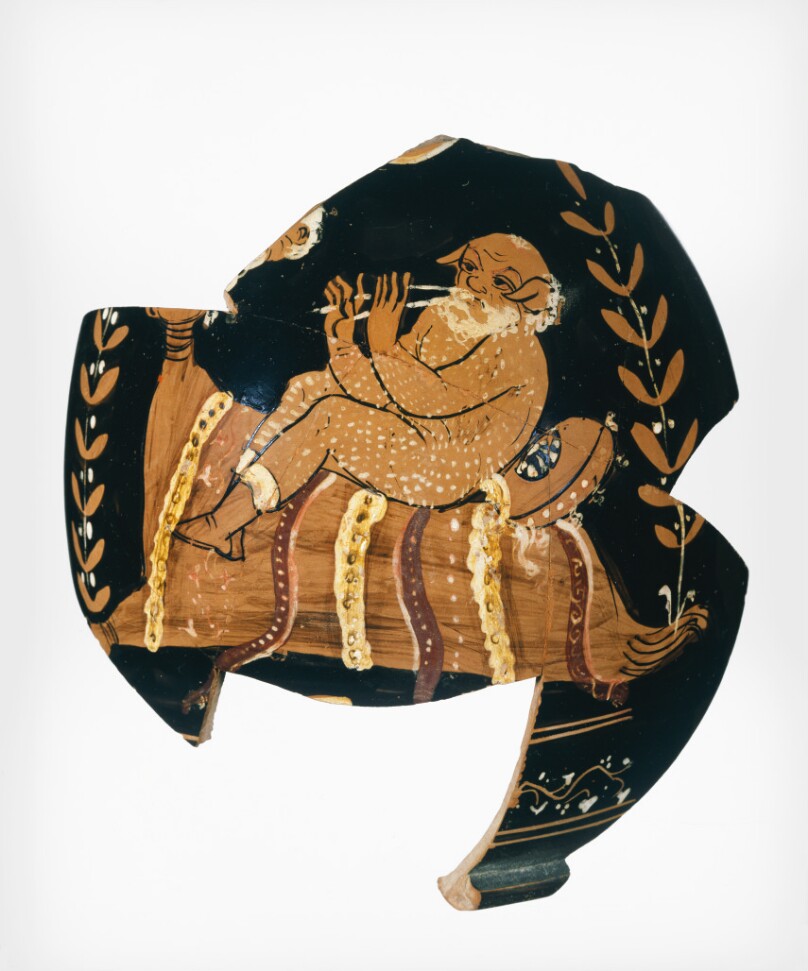
Fragment of an Apulian Squat Lekythos
Creator
Darius PainterPainter
All works by this person →The Darius Painter is the name of an artist who decorated pottery using the red-figure technique in Apulia in southern Italy in the late 300s B.C. As with most vase-painters, the real name of the Darius Painter is unknown, and he is identified only by the stylistic traits of his work. He is named for a vase in Naples that depicts Darius, a Persian king. The Darius Painter was one of the first to d
More on Getty ULAN- Date
- 350–325 B.C.
- Medium
- Terracotta
- Culture
- Greek (South Italian, Apulian)
- Department
- Vessels
- Institution
- Getty Museum
- Object ID
- 220fae44-0338-42bf-b227-6c4cce1b93b9
From the Getty Museum record
A silenos, or old satyr, a part-human, part-animal creature, reclines and plays the double flutes on this vase fragment. Companions of Dionysos, the god of wine, satyrs lived in a world of hedonistic pleasure. This silenos entertains himself by resting on a full wineskin. His white beard and tail, as well as the tufts of white hair covering his body, convey his advanced age. A small piece of a comic mask is visible just along the break on the upper left side of the fragment. The scene pokes fun at a popular contemporary motif on vases, that of Dionysos reclining on a couch at a banquet with a comic mask hanging in the background. Here the satyr mimics his master. The red-figure technique used for the main design is augmented with added color for the pattern work, a combination frequently used on small vases produced by the Workshop of the Darius Painter.
The authoritative record is held by Getty Museum. LinkedCulture surfaces this object and its connections; it does not alter institutional metadata.
Get printable QR codesHide QR codes
Open QR codes for this object page and the museum record. They stay collapsed until needed.
Related across collections
Semantically similar works from Getty Museum and other institutions.