Getty Museum
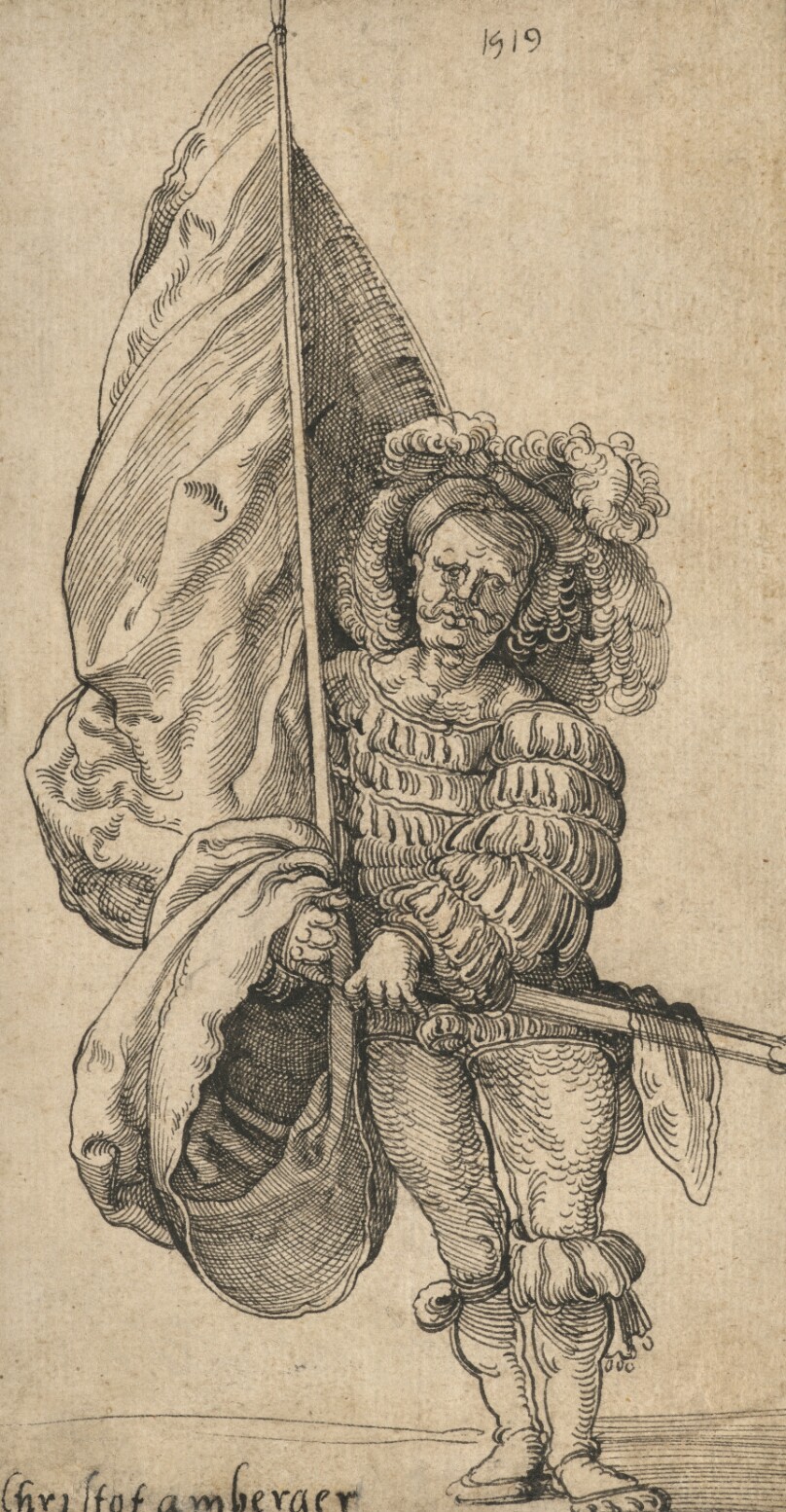
A Standard Bearer
Creator
Sebald BehamGerman Artist · 1500–1550
All works by this person →Born to a family of artists, Hans Sebald Beham created an enormous body of work, including nearly 2,000 prints. His tiny engravings of widely varied subjects put him among the German printmakers whom scholars call the Little Masters. Known for both his intricate craft and his interest in depicting peasant life, Beham was equally comfortable in larger woodcut formats. He also designed playing cards
More on Getty ULAN- Date
- 1519
- Medium
- Pen and black ink
- Culture
- German
- Department
- Drawings
- Institution
- Getty Museum
- Object ID
- 248d2658-17e1-49e3-a0a6-c8b5e59f0689
From the Getty Museum record
Hans Sebald Beham chose an unusual pose for his standard bearer. Artists typically portrayed such figures in motion, striding forward with a flag fully unfurled, but Beham chose a static, frontal composition instead. The standard bearer strikes a classical contrapposto pose to balance the visual and actual weight of the massive flag, drawn with delicate penmanship. The standard bearer wears an elegant doublet with wide, flowing sleeves that have been quite literally "torn to ribbons." The fashion for slashing garments became extremely popular in Europe in the early 1500s, particularly in Germany, where it reached the most extravagant levels. Tailors cut slits in the clothing and pulled the lining through to show off its different color. In the same lavish style, the man wears tights held up with ribbons tied below the knee and a broad hat covered with multiple long plumes. Throughout the drawing, the nineteen-year-old artist used distinctive strokes such as the short, hooked lines on the man's thighs and gnarled collarbone. In the dark folds of the flag, Beham explored shadowy areas through varied patches of dark hatching.
The authoritative record is held by Getty Museum. LinkedCulture surfaces this object and its connections; it does not alter institutional metadata.
Get printable QR codesHide QR codes
Open QR codes for this object page and the museum record. They stay collapsed until needed.
Related across collections
Semantically similar works from Getty Museum and other institutions.