Getty Museum
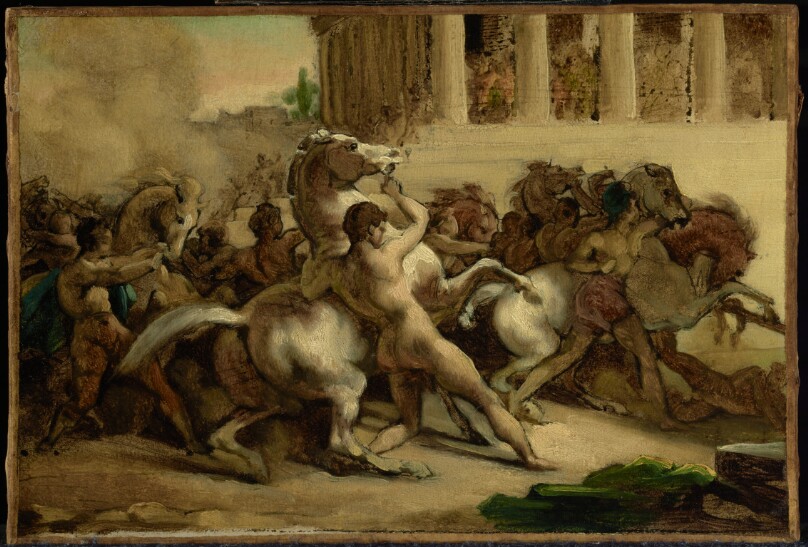
The Race of the Riderless Horses
Creator
Théodore GéricaultFrench Artist · 1791–1824
All works by this person →> Obstacles and difficulties which repel mediocre men are a necessity and nourishment to genius. They mature and elevate it, when in an easier road it would have remained cold. > > --Théodore Géricault Géricault's fiery, daring personality and short life fit the mold of Romantic artists of his era and, along with his controversial paintings, profoundly influenced nineteenth-century art. Despite ab
More on Getty ULAN- Date
- 1817
- Medium
- Oil and pen and ink on paper laid on canvas
- Culture
- French
- Department
- Paintings
- Institution
- Getty Museum
- Object ID
- 26f763e1-078d-4168-ba1b-e074e0d24540
From the Getty Museum record
As a boy, Théodore Géricault loved drawing horses and would sit in the stables watching and sketching. In 1817, he traveled to Rome where he witnessed the annual Carnival horse race and subsequently made numerous studies of this spectacle. This study marks the moment just before the race begins, when the terrified riderless horses begin their run down the Corso in Rome.A groom tries to contain a rearing horse in the center, while other men all around push and pull the wild animals, goading them into a frenzied stampede. Géricault used virtually monochromatic colors applied in thick swirls to animate and suggest extreme physical strength. The dramatic use of light and shadow adds energy to the relief-like scene. Géricault mythologized the event: the muscular nude in the center recalls athletes of ancient Greece, and the thrusting horses bring to mind the Parthenon frieze designed by Phidias. Géricault intended to use this study for a grand painting to submit to the Salon, but he had to abandon that plan when he was called back to France on short notice.
The authoritative record is held by Getty Museum. LinkedCulture surfaces this object and its connections; it does not alter institutional metadata.
Get printable QR codesHide QR codes
Open QR codes for this object page and the museum record. They stay collapsed until needed.
Related across collections
Semantically similar works from Getty Museum and other institutions.