Getty Museum
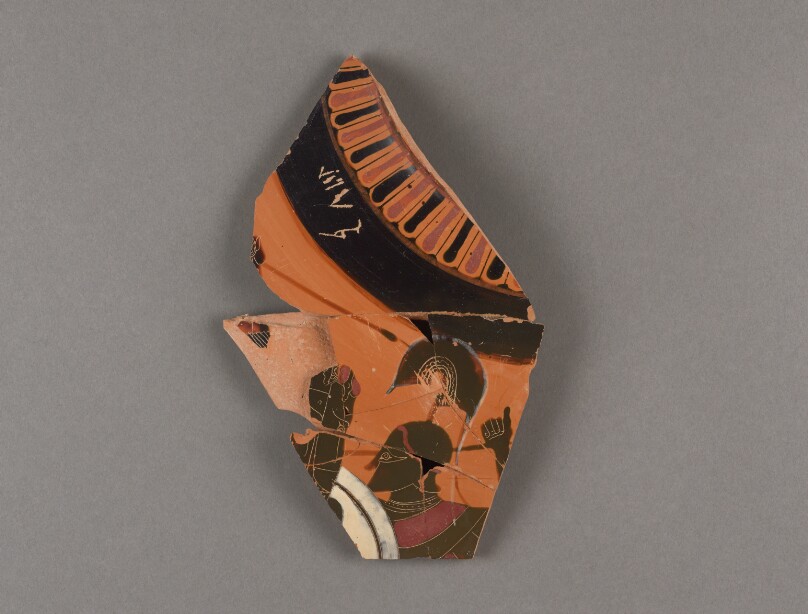
Attic Black-Figure Neck Amphora Fragment with a Battle Scene
Creator
Swing PainterPainter
All works by this person →More on Getty ULAN- Date
- about 530 B.C.
- Medium
- Terracotta
- Culture
- Greek (Attic)
- Department
- Vessels
- Institution
- Getty Museum
- Object ID
- 2bf3cea4-4635-4a55-844c-e0bee44dfaf8
From the Getty Museum record
Composed of eight joined sherds, this fragment of an Attic black-figure amphora shows the heads of a pair of horses, which are part of a chariot group moving to the right. Above is the front end of a spear, aimed at the crest of a helmet worn by a warrior, who faces the horses. The warrior’s upper chest, head, and Corinthian helmet with a tall crest is preserved. In his raised left hand is a spear and he holds a shield, the outer part of which is in added white. Added red decorates the top of the helmet, a band on the front of the warrior’s mantle, and the horses’ manes. The scene is bordered above by a thick black band, on which an Etruscan retrograde graffito has been incised above the chariot group: “SUTIL.” Above, at the join of the neck and shoulder, is a frieze of alternating added red and black tongues. The Etruscan word “sutil” (or suthil, suthina) indicates that an object is “for the tomb” and not for continued use by the living. The inscription appears on some imported Attic figured vases found in late 6th and early 5th century B.C. funerary contexts in southern Etruria, especially in Cerveteri. At several late 4th and early 3rd century B.C. sites near Orvieto and Bolsena, the term also occurs on bronze mirrors, vessels, candelabra, thymiateria, cistae, weapons and armor, all of which were deposited as grave goods accompanying burials.
The authoritative record is held by Getty Museum. LinkedCulture surfaces this object and its connections; it does not alter institutional metadata.
Get printable QR codesHide QR codes
Open QR codes for this object page and the museum record. They stay collapsed until needed.
Related across collections
Semantically similar works from Getty Museum and other institutions.