Getty Museum
After
Creator
William HogarthArtist · 1697–1764
All works by this person →Although honored as a painter during his lifetime and the author of a treatise on painting, William Hogarth was often typecast as a satirist because of his mass-market, often satirical engravings. After an apprenticeship to an engraver of arms, Hogarth had his own engraving shop by 1720. A natural with oils, he reached the height of his reputation as a painter before the decade's end. His early wo
More on Getty ULAN- Date
- 1730–1731
- Medium
- Oil on canvas
- Culture
- English
- Department
- Paintings
- Institution
- Getty Museum
- Object ID
- 35071dc5-8626-4957-86bc-1f1afbfb0e24
From the Getty Museum record
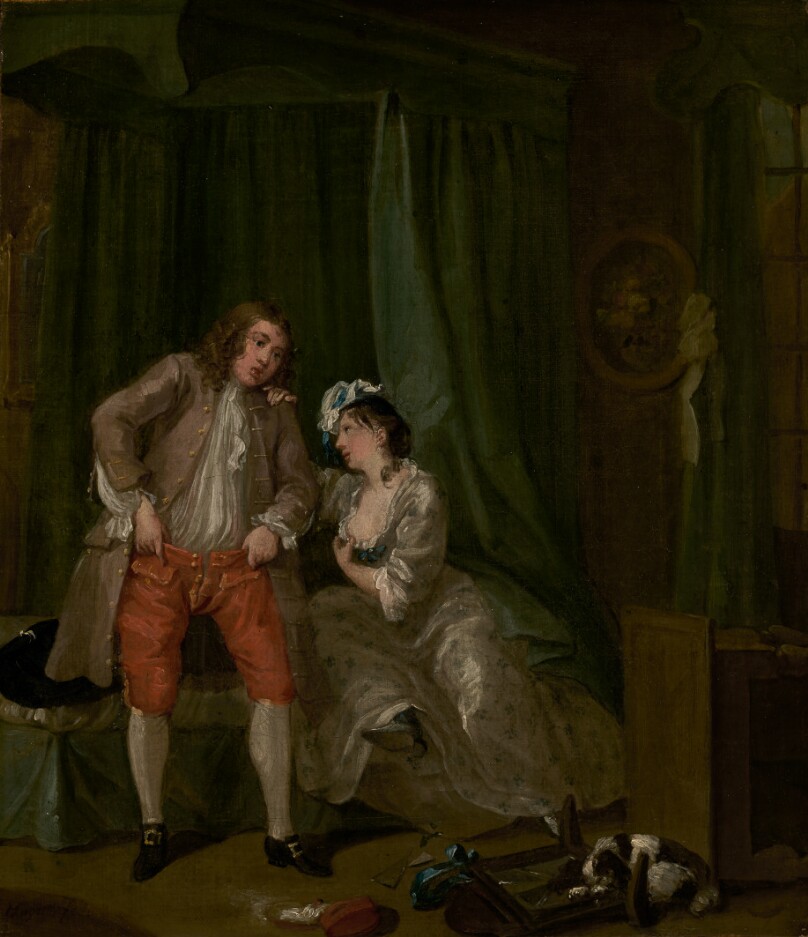
In this companion piece to [Before](http://www.getty.edu/art/collection/objects/660/william-hogarth-before-english-1730-1731/) [the Seduction], a man stands and hurriedly pulls up his breeches after successfully seducing a young woman. Cap and clothing askew, the disheveled woman implores his discretion. The overturned table and broken mirror symbolize the woman's shattered life now that she has lost her virginity. The dog sleeping in the foreground refers to post-coital exhaustion. In the Biographical Anecdotes of William Hogarth, published in 1785, John Nichols wrote that a "certain vicious nobleman," the Duke of Montague, supposedly commissioned this painting and its partner. According to an old tradition, the scene's protagonist was said to have been Sir John Willes, later Chief Justice of the Court of Common Pleas. Many artists created engravings, some of them scandalous, after these two paintings. Hogarth's own engravings stayed truer to his paintings.
The authoritative record is held by Getty Museum. LinkedCulture surfaces this object and its connections; it does not alter institutional metadata.
Get printable QR codesHide QR codes
Open QR codes for this object page and the museum record. They stay collapsed until needed.
Related across collections
Semantically similar works from Getty Museum and other institutions.