Getty Museum
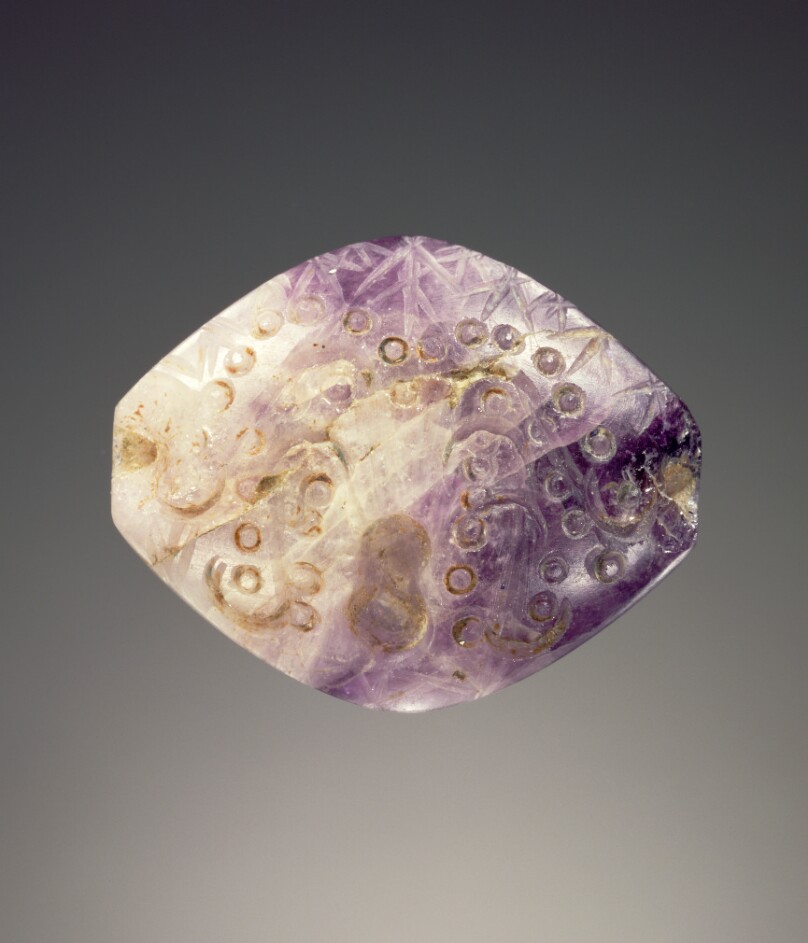
Amygdaloid engraved seal
Creator
UnknownAll works by this person →More on Getty ULAN- Date
- 1700–1450 B.C.
- Medium
- Amethyst
- Culture
- Greek (Minoan)
- Department
- Jewelry
- Institution
- Getty Museum
- Object ID
- 3826c80b-e08b-47ad-be90-4cd9548abee8
From the Getty Museum record
The image of an octopus on this amygdaloid (almond-shaped) engraved seal appears to be floating in the water. Four of its eight legs are readily discernible and complete with suckers. The ancient engraver has organized the composition to fill the oval field of the stone.Minoan craftsmen carved seals from stone, ivory, and other precious materials. When pressed into soft clay or wax, the engraved seals produced relief images. Such impressions were employed as signatures on documents, and to seal pots and other containers as a way to guarantee or label their contents. Simple designs decorated the earliest seals, while later examples show detailed pictorial compositions. Two of the most common types are amygdaloid and lentoid (lens-shaped). Although stones found locally, such as hematite, carnelian, steatite, agate, and jasper were commonly used, seals were also produced from exotic materials, such as amethyst, lapis lazuli, and hippopotamus ivory.
The authoritative record is held by Getty Museum. LinkedCulture surfaces this object and its connections; it does not alter institutional metadata.
Get printable QR codesHide QR codes
Open QR codes for this object page and the museum record. They stay collapsed until needed.
Related across collections
Semantically similar works from Getty Museum and other institutions.