Getty Museum
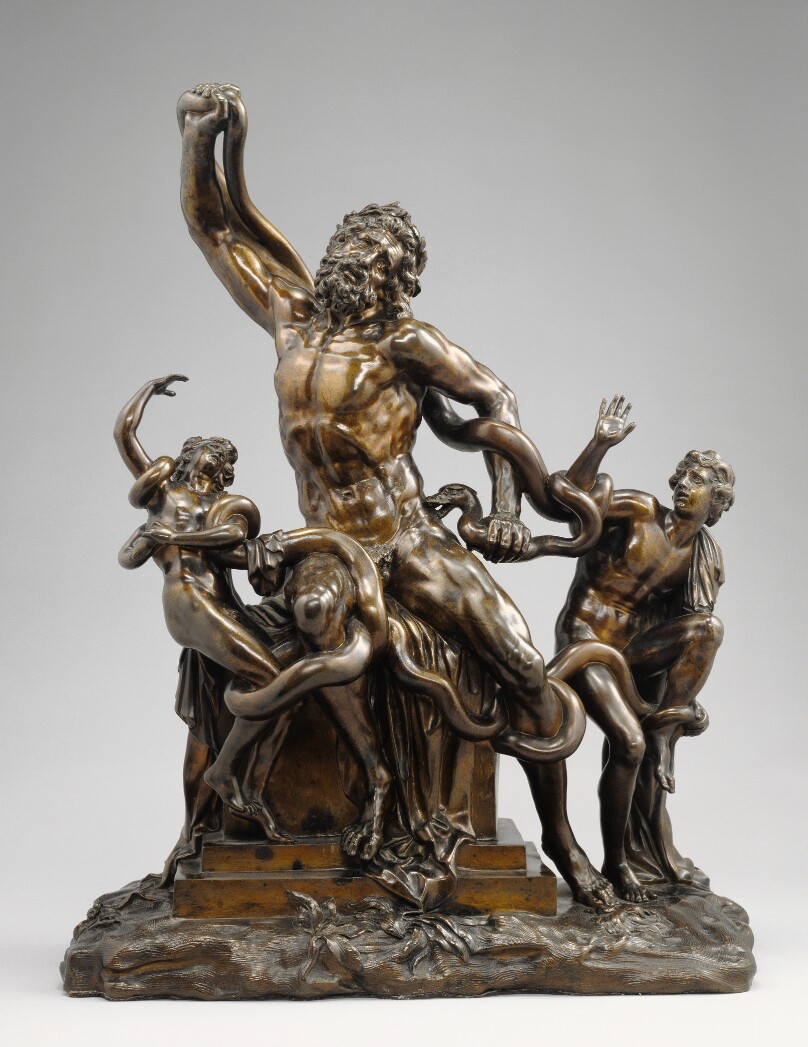
Laocöon
Creator
Giovanni Battista FogginiItalian Artist · 1652–1725
All works by this person →After training in Florence, Giovanni Battista Foggini was sent to Rome in 1673 by Cosimo III de' Medici, grand duke of Tuscany, to attend the new Accademia Fiorentina. He returned home in 1676 with the characteristic Baroque, painterly style he kept for life. Foggini's reliefs often display contrasting diagonals and skies with mythological or Christian figures amid clouds and shafts of light. Drap
More on Getty ULAN- Date
- about 1720
- Medium
- Bronze
- Culture
- Italian
- Department
- Sculpture
- Institution
- Getty Museum
- Object ID
- 40909a5d-ddbc-4672-a1b2-d701f1cc7e33
From the Getty Museum record
Laocoön and his two sons writhe and struggle, caught in the grip of the serpents that wind among their limbs. The father's large size, powerful musculature, and wild hair and beard contrast with his smaller, smoother-limbed sons. As retold in Greek mythology, the Trojan prince Laocoön angered Apollo by breaking a vow of celibacy he swore to the god and then warning the Trojans not to bring the wooden horse left by the Greeks into the city. To silence him, Apollo sent serpents from the sea to kill him and his sons. Giovanni Battista Foggini's bronze of this story is based on a famous marble sculpture of the Laocoön unearthed in Rome in 1506. The Roman historian Pliny had described this renowned sculpture in awed language, as "a work to be preferred to all that the arts of painting and sculpture have produced." Its celebrity prompted many bronze reductions, or smaller-scale copies including this one, made in Florence. Although it imitates an antique work, the emotionalism and frontality of this bronze are characteristics of the late Baroque Florentine style. This type of tabletop bronze was often displayed on a cabinet where it served as a souvenir of the "Grand Tour," evidence of its owner's classical education.
The authoritative record is held by Getty Museum. LinkedCulture surfaces this object and its connections; it does not alter institutional metadata.
Get printable QR codesHide QR codes
Open QR codes for this object page and the museum record. They stay collapsed until needed.
Related across collections
Semantically similar works from Getty Museum and other institutions.