Getty Museum
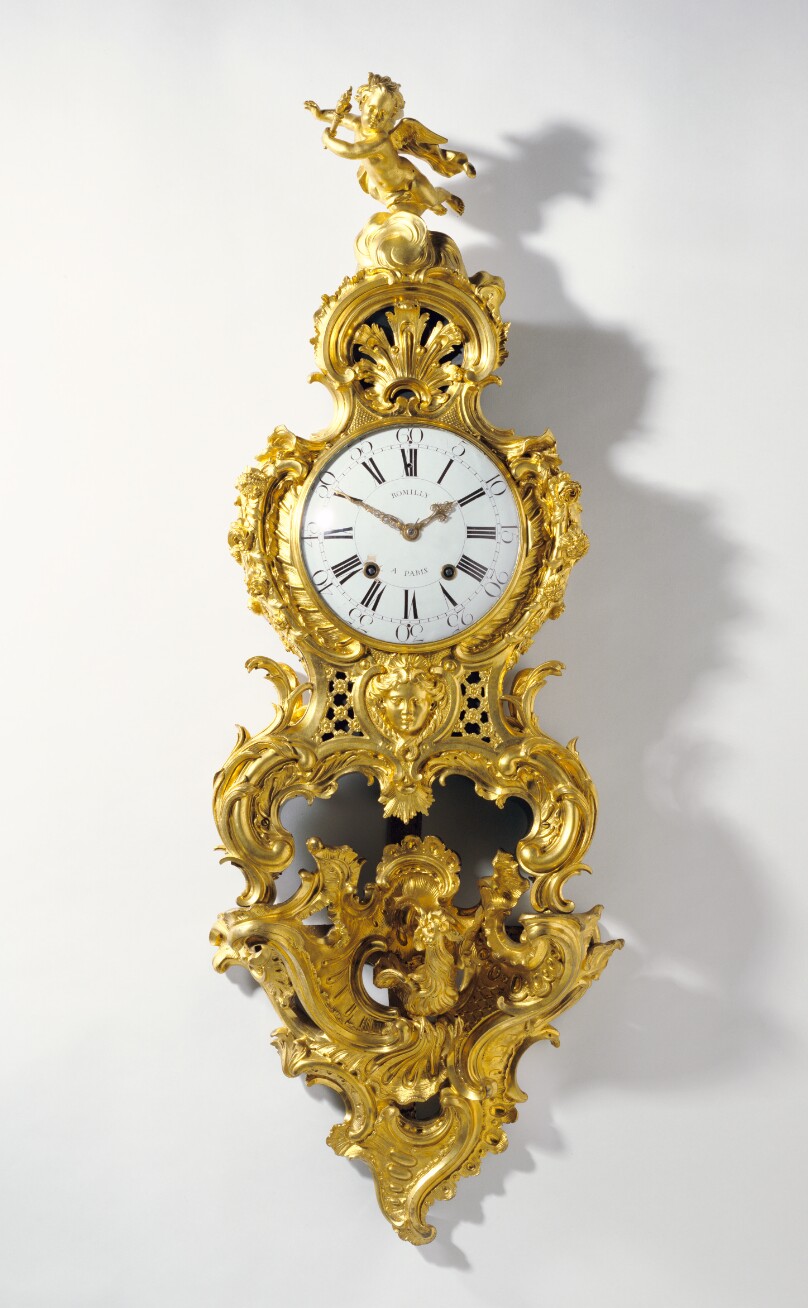
Clock on Bracket (Cartel sur une console)
- Date
- about 1758
- Medium
- Gilt bronze, enameled metal; glass
- Culture
- French
- Department
- Decorative Arts
- Institution
- Getty Museum
- Object ID
- 410d5fac-7278-4bee-9881-af5684874406
From the Getty Museum record
This wall clock design with an ornate gilt bronze case and bracket was popular in France; artisans produced such examples for nearly twenty years through the 1740s and 1750s. In the corner of the Getty Museum's pastel painting by Maurice-Quentin de la Tour from around 1740 sits a similar model in the form of a clock, on top of a cabinet. The Getty Museum's example can be dated to about 1758 because one of the movement's springs is inscribed with this date. Scholars believe that Charles Cressent, one of the greatest *ébénistes* of the 1700s, designed the elaborate gilt bronze and enameled metal case of this clock. Stringent guild regulations prohibited Cressent from gilding and chasing this design himself as he was a cabinetmaker and not a member of the bronze caster's guild. However, by veneering the wooden sides of this clock with metal and then attaching the gilt bronze mounts on top, he could successfully avoid prosecution.
The authoritative record is held by Getty Museum. LinkedCulture surfaces this object and its connections; it does not alter institutional metadata.
Get printable QR codesHide QR codes
Open QR codes for this object page and the museum record. They stay collapsed until needed.
Part of a LinkedCulture topic
 Decorative Timekeeping Across Cultures
These objects are all ornate clocks from various time periods and regions, showcasing how timekeeping devices served as both functional instruments and decorative art objects across different cultures from the 16th to 19
48 objects from 5 institutions
Related across collections
Semantically similar works from Getty Museum and other institutions.