Getty Museum
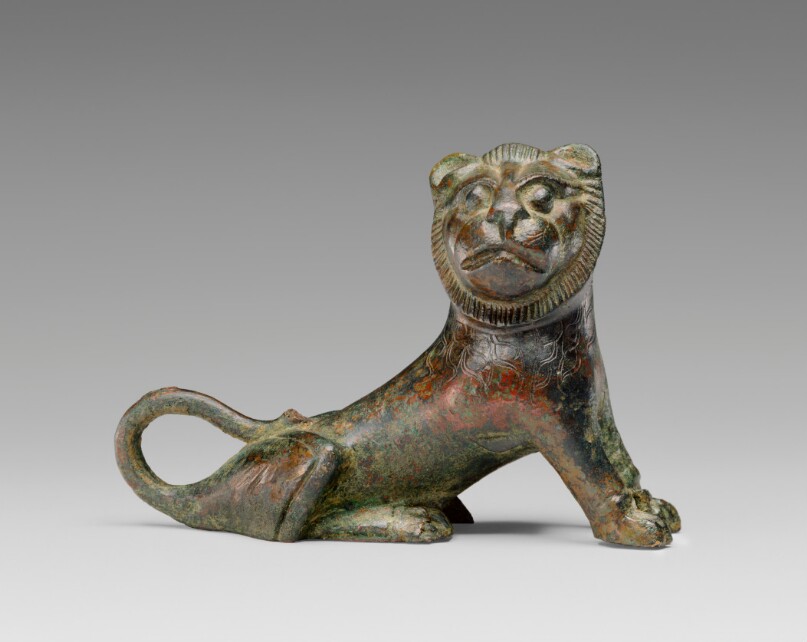
Statuette of a Seated Lion
Creator
UnknownAll works by this person →More on Getty ULAN- Date
- about 550 B.C.
- Medium
- Bronze
- Culture
- Greek (Lakonian)
- Department
- Sculpture
- Institution
- Getty Museum
- Object ID
- 41943d96-3b5a-41c4-a32b-2337af034d28
From the Getty Museum record
Sitting calmly with his mouth closed, this small, hollow-cast lion looks less than ferocious. He sits back on his haunches with his front paws outstretched, turning his head to look straight at the viewer. His tail makes a graceful S-curve up the center of his back. Certain stylistic features indicate that the statuette was made in the region of Laconia in southern Greece, the area once controlled by the ancient city of Sparta. The treatment of the lion’s ruff as short and incised, the flamelike lines incised on the body to indicate the patterns of fur, and the rounded face and ears are all hallmarks of the Laconian style. This statuette was originally attached to another object, perhaps the rim of a large metal vessel. The remnants of an attachment pin are preserved on the bottom of the lion’s left front paw. The figure was hollow cast, and much of the ancient core material remains inside. Lions were a popular subject in Greek art during the Archaic period (about 700–480 B.C.). In antiquity lions were seen as guardian beasts. Statues of lions were placed on the corners of funerary plots or atop graves to guard the deceased. They also frequently adorned temples. In contrast with the more common sculptural depictions of lions as fierce and menacing, however, this miniature bronze figure was probably intended to serve a decorative purpose. Metalworkers frequently ornamented bronze vessels, utensils, and armor with cast and embossed figures and reliefs. Mythological figures, animals, warriors, and banqueters decorated bowls, jugs, and other items used at banquets or offered as prestigious dedications in sanctuaries.
The authoritative record is held by Getty Museum. LinkedCulture surfaces this object and its connections; it does not alter institutional metadata.
Get printable QR codesHide QR codes
Open QR codes for this object page and the museum record. They stay collapsed until needed.
Related across collections
Semantically similar works from Getty Museum and other institutions.