Getty Museum
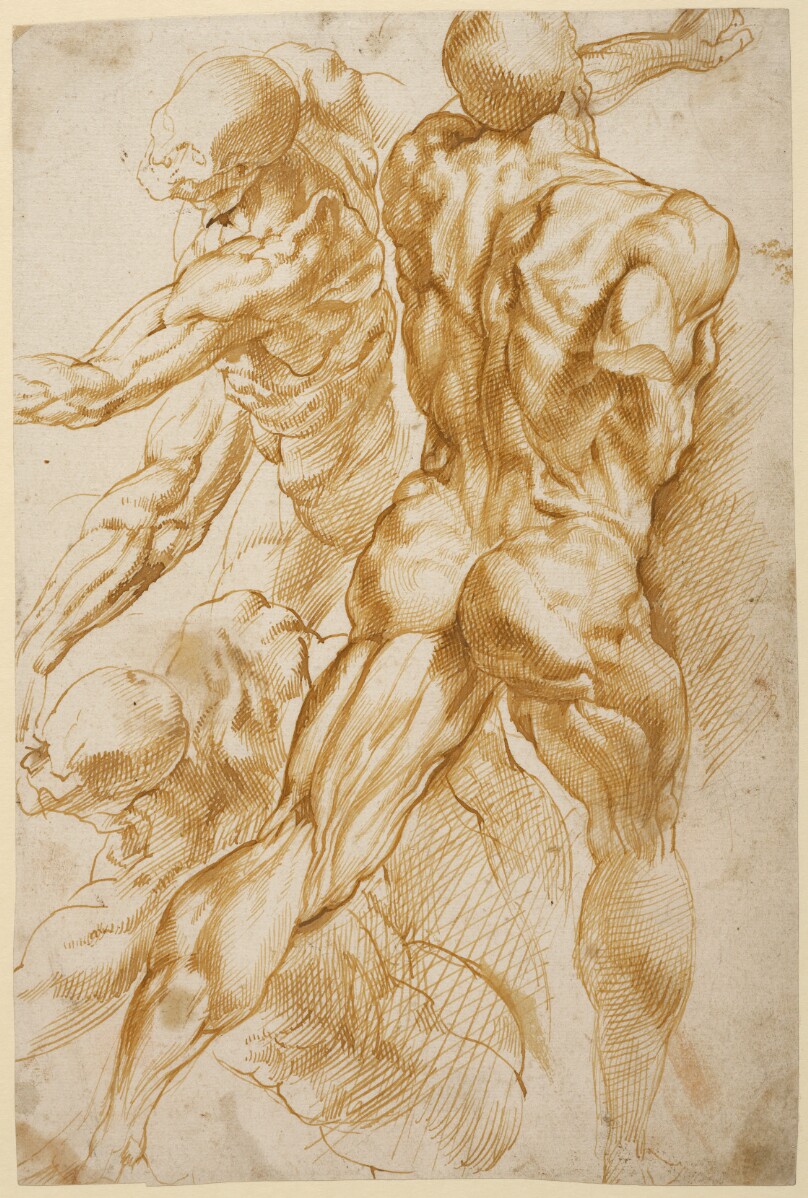
Anatomical Studies
Creator
Peter Paul RubensFlemish Artist · 1577–1640
All works by this person →International diplomat, savvy businessman, devout Catholic, fluent in six languages, an intellectual who counted Europe's finest scholars among his friends, Peter Paul Rubens was always first a painter. Few artists have been capable of transforming such a vast variety of influences into a style utterly new and original. After study with local Antwerp painters, Rubens began finding his style in Ita
More on Getty ULAN- Date
- about 1600–1605
- Medium
- Pen and brown ink
- Culture
- Flemish
- Department
- Drawings
- Institution
- Getty Museum
- Object ID
- 429040d4-8f79-49cb-af0e-9bd521250c12
From the Getty Museum record
In a technique known by the French term *écorché,* three figures appear as if without skin. Drawn in luminous light brown ink, the principal figure demonstrates the muscular structure of the back, buttocks, and legs. Fascinated with the structure of the human body, Peter Paul Rubens then drew two subsidiary views of the same powerful form and a detail of the left arm from a different angle. Rubens produced this drawing sometime during an eight-year stay in Italy, and it shows the strong influence of the new approaches he learned there. The skillfully drawn forms show his complex grasp of the human body in three dimensions. The main figure's truncated right arm suggests the artist's study of broken antique statues, while the surging, heroically proportioned forms and the extensive hatching of the musculature display his familiarity with Michelangelo's drawings. Scholars believe that Rubens produced this anatomical drawing in preparation for an instructional book on human anatomy, which he never published. After the artist's death, a printer published an engraving of this drawing in the mid-1600s.
The authoritative record is held by Getty Museum. LinkedCulture surfaces this object and its connections; it does not alter institutional metadata.
Get printable QR codesHide QR codes
Open QR codes for this object page and the museum record. They stay collapsed until needed.
Related across collections
Semantically similar works from Getty Museum and other institutions.