Getty Museum
The Glory of Good Monks and Nuns
Creator
Simon MarmionFlemish Illuminator · 1450–1489
All works by this person →Not long after his death, Simon Marmion was praised by the poet Jean Lemaire de Belges as the "prince of illumination." This reputation probably owed much to the artist's proficiency in depicting nature and his skill as a storyteller. Marmion was especially gifted in the representation of light and the textures of objects, as well as the creation of engaging psychological content in the gestures a
More on Getty ULAN- Date
- 1475
- Medium
- Tempera colors, gold leaf, gold paint, and ink
- Culture
- Franco-Flemish
- Department
- Manuscripts
- Institution
- Getty Museum
- Object ID
- 45cd6719-c10b-422d-aedf-da8a4c764f10
From the Getty Museum record
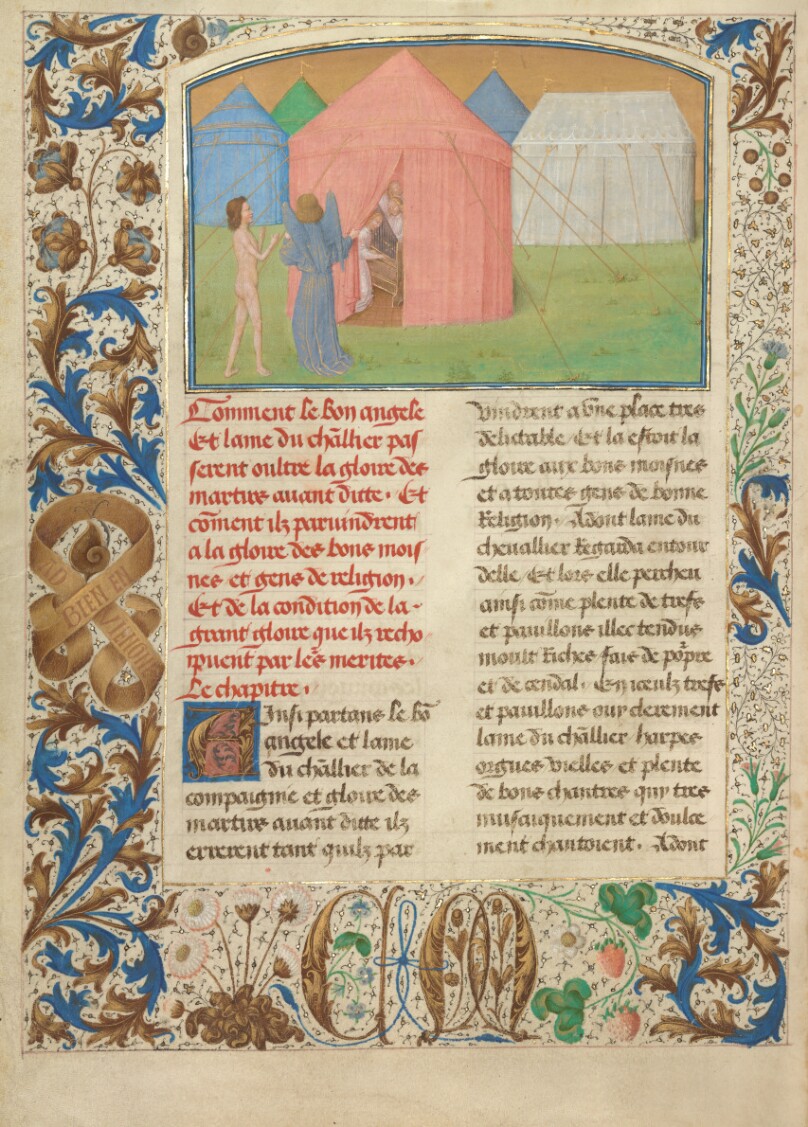
Once in paradise, the angel and the soul of Tondal come to a place filled with silken tents and pavilions, from which music emanates. Although Tondal is allowed to look inside, he is forbidden to enter. This place is reserved for monks and nuns who lived their lives in complete obedience and chastity and now share the company of angels and dwell in the presence of the Holy Trinity. The artist chose to give the viewer only a partial glimpse into one of the pavilions. The souls of the good monks and nuns, resembling angels and playing musical instruments, are visible but the elaborate decorations described in the text are not revealed. Instead, the slightly raised curtain and the concealed interior hint at the privileged nature of the place. In this miniature set in Paradise, the artist employed pastel blue, green, and pink tones, creating a strong contrast with the dark scenes of Hell.
The authoritative record is held by Getty Museum. LinkedCulture surfaces this object and its connections; it does not alter institutional metadata.
Get printable QR codesHide QR codes
Open QR codes for this object page and the museum record. They stay collapsed until needed.
Related across collections
Semantically similar works from Getty Museum and other institutions.