Getty Museum
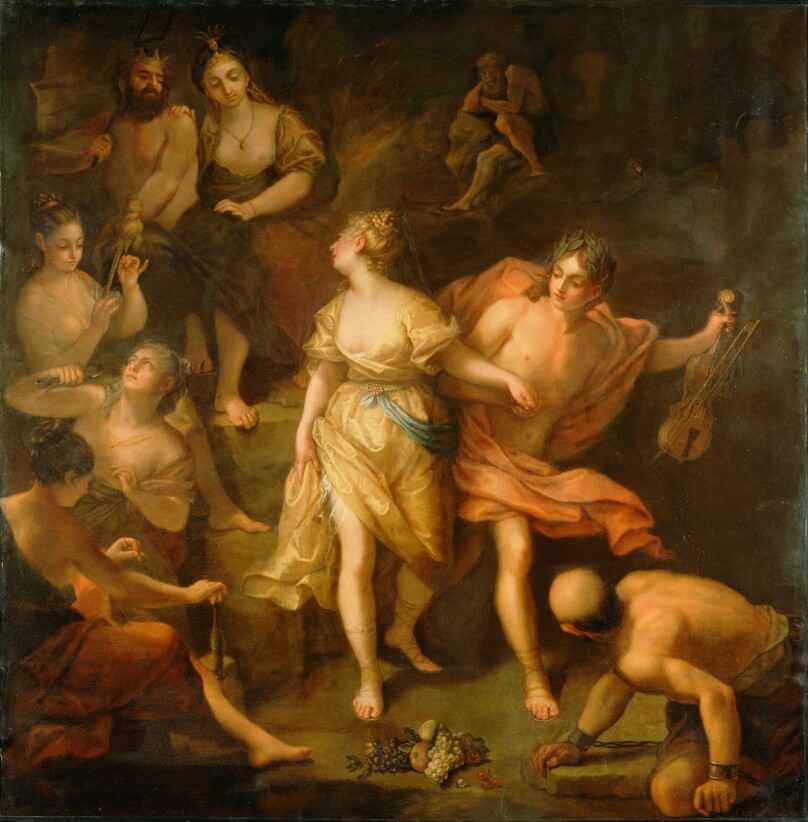
Orpheus and Eurydice
Creator
Jean RaouxFrench Artist · 1677–1734
All works by this person →Jean Raoux first trained in Montpellier with a pupil of Hyacinthe Rigaud, then moved to a Paris studio. After winning the Prix de Rome in 1704, Raoux was able to complete his education at the Académie de France in Rome and spent time in Florence and Padua. From 1707 to 1709 he was in Venice, where he met the leader of the Knights of Malta, who later offered him generous lodgings in Paris. Raoux's
More on Getty ULAN- Date
- about 1709
- Medium
- Oil on canvas
- Culture
- French
- Department
- Paintings
- Institution
- Getty Museum
- Object ID
- 4ad4af14-88da-411d-b1c4-8d17c8b065a5
From the Getty Museum record
In the center of the picture, Orpheus leads his wife, Eurydice, out of Hades after having won her release by his enchanting violin playing. Pluto, ruler of Hades, and his wife Proserpine observe their departure from the upper left. The three Fates ominously spin the future at the left, foreshadowing Orpheus's eventual downfall. He broke the one condition that Proserpine had set for Eurydice's return to earth: he could not look at her until they had lef the netherworld. On reaching earthly light, Orpheus could not resist a glimpse, and Eurydice vanished forever. Jean Raoux painted the scene in a highly theatrical manner, spotlighting the figures and arranging them as if on a stage. The action seems especially compressed because the canvas was cut down on all sides early in the twentieth century.
The authoritative record is held by Getty Museum. LinkedCulture surfaces this object and its connections; it does not alter institutional metadata.
Get printable QR codesHide QR codes
Open QR codes for this object page and the museum record. They stay collapsed until needed.
Related across collections
Semantically similar works from Getty Museum and other institutions.