Getty Museum
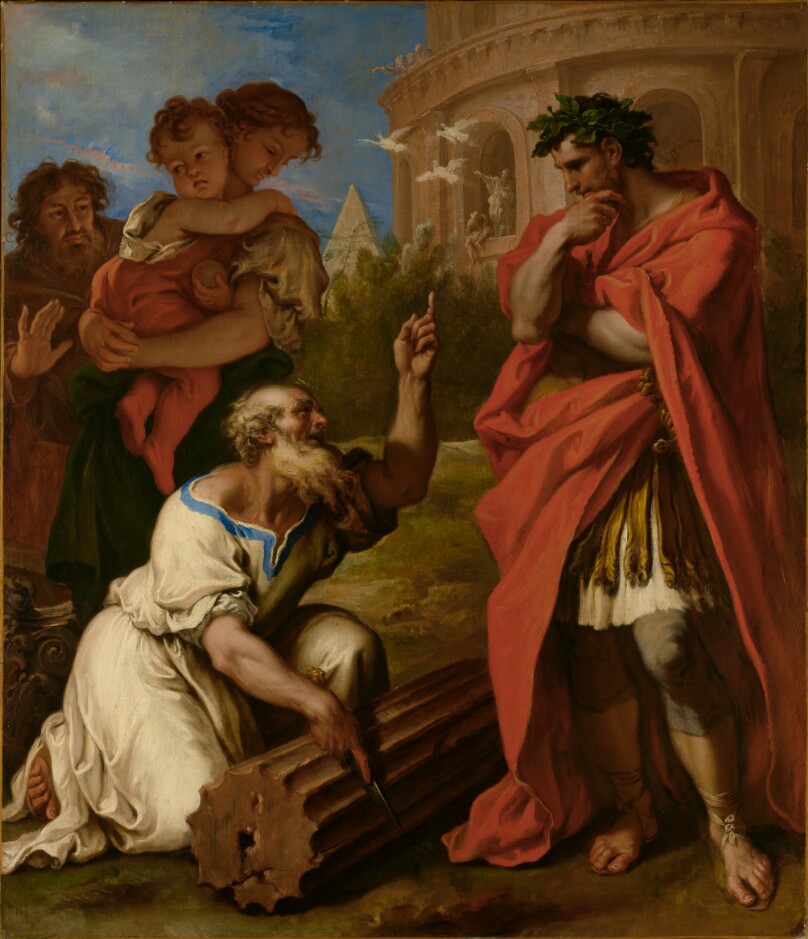
Tarquin the Elder Consulting Attus Navius
Creator
Sebastiano RicciItalian Artist · 1659–1734
All works by this person →One of the principal figures in the revival of Venetian painting in the 1700s, Sebastiano Ricci's dramatic and sumptuous work appealed to ecclesiastical and royal patrons across Europe. Ricci's painting was indebted both to Paolo Veronese and other Italian painters of the 1500s and looked ahead to the next generation of Venetian artists including Giambattista Tiepolo and Antonio Guardi. Ricci bega
More on Getty ULAN- Date
- about 1690
- Medium
- Oil on canvas
- Culture
- Italian
- Department
- Paintings
- Institution
- Getty Museum
- Object ID
- 4fb7fa19-8b95-4c1c-aed5-6abaa12a1dc9
From the Getty Museum record
During the war between the Romans and the Sabines in about 290 B.C., Tarquin, king of Rome, challenged Attius Navius, a fortuneteller, to read his mind. When Navius declared that Tarquin's thought would be accomplished, Tarquin revealed that he thought Navius would cut a whetstone in half with a razor, which he did immediately. Sebastiano Ricci took this subject from Livy's *History of Rome,* first published in A.D. 14, but he showed Navius cutting a column, a more aesthetic object. Ricci pared the composition down to its dramatic essentials--two large figures making eloquent gestures--and added a recognizable setting and bystanders to create a sense of community. The slightly shadowed mother and child is a typical Ricci motif. Effectively employing the usual Roman Baroque sense of dramatic light and color, he adopted Giovanni Battista Gaulli's strong, rather hot colors for the costumes and the sky. He also adopted the characteristic faces of the child and the man on the extreme left from Gaulli.
The authoritative record is held by Getty Museum. LinkedCulture surfaces this object and its connections; it does not alter institutional metadata.
Get printable QR codesHide QR codes
Open QR codes for this object page and the museum record. They stay collapsed until needed.
Related across collections
Semantically similar works from Getty Museum and other institutions.