Getty Museum
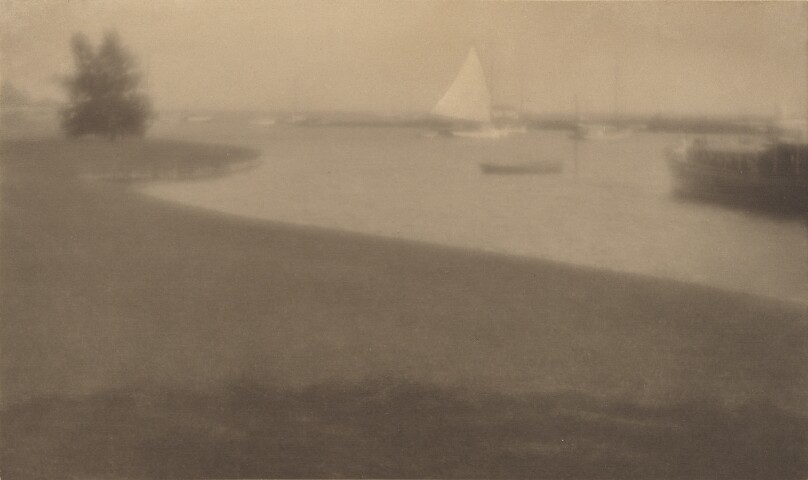
Bay Shore, Long Island, New York
Creator
Paul StrandAmerican Photographer · 1890–1976
All works by this person →Paul Strand began photographing in New York in the 1910s. During the early 1920s he received recognition for both his painting and his photography. He visited New Mexico in 1926 and, beginning in 1930, returned for three consecutive summers, making portraits of artist friends and acquaintances. It was there, amidst a community of visual artists and writers, that Strand began to develop his belief
More on Getty ULAN- Date
- 1914
- Medium
- Platinum print with gouache
- Culture
- American
- Department
- Photographs
- Institution
- Getty Museum
- Object ID
- 6624919f-6aa2-4573-bc1a-aeb4e7675705
From the Getty Museum record
When Lewis W. Hine (1874-1940) took his class of photography students to Alfred Stieglitz's Little Galleries of the Photo-Secession in 1907, Paul Strand was only seventeen years old. On display was an exhibition featuring the work of the most prominent photographers creating art in America at this time: Alvin Langdon Coburn (1882-1966), Frank Eugene (1865-1936), Gertrude Kasebier (1852- 1934), George Seeley (1880-1955), Edward Steichen (1879-1973), Stieglitz, and Clarence H. White (1871-1925). For an introduction to the art form, the visit did not come up short for the young Strand. The Little Galleries of the Photo-Secession were located at 291 Fifth Avenue, New York. The exhibition space was established in 1905 by Steichen and Stieglitz to promote and display photography within the context of art. The Photo-Secessionists espoused the artistic potential of the medium by developing a painterly approach to their work. Through subject matter and printing processes, their photographs possessed certain aesthetic qualities that became characteristic of the movement, later called Pictorialism. Strand's 1907 exposure to these artworks seemed to make a lasting impression on him. By 1910, having already graduated from high school, he was experimenting with soft-focus lenses and gum processes. His subject matter was typically Pictorial in nature—scenes of dreamlike landscapes celebrating beauty for its own sake, such as this one from 1913. While early work such as this scene of a boat on a lake shows Strand's mastery of the medium, the photographs are short on social content. His interest in Pictorialism waned, and by 1917 he wholly rejected the style, stating in an essay he penned for the journal _The Seven Arts_ that it was "merely the expression of an impotent desire to paint." In this article Strand advocated an approach to photography that was true to the unique nature of the medium. Originally published in _Paul Strand_, In Focus: Photographs from the J. Paul Getty Museum by Anne M. Lyden (Los Angeles: J. Paul Getty Museum, 2005), 12. ©2005, J. Paul Getty Trust.
The authoritative record is held by Getty Museum. LinkedCulture surfaces this object and its connections; it does not alter institutional metadata.
Get printable QR codesHide QR codes
Open QR codes for this object page and the museum record. They stay collapsed until needed.
Related across collections
Semantically similar works from Getty Museum and other institutions.