Getty Museum
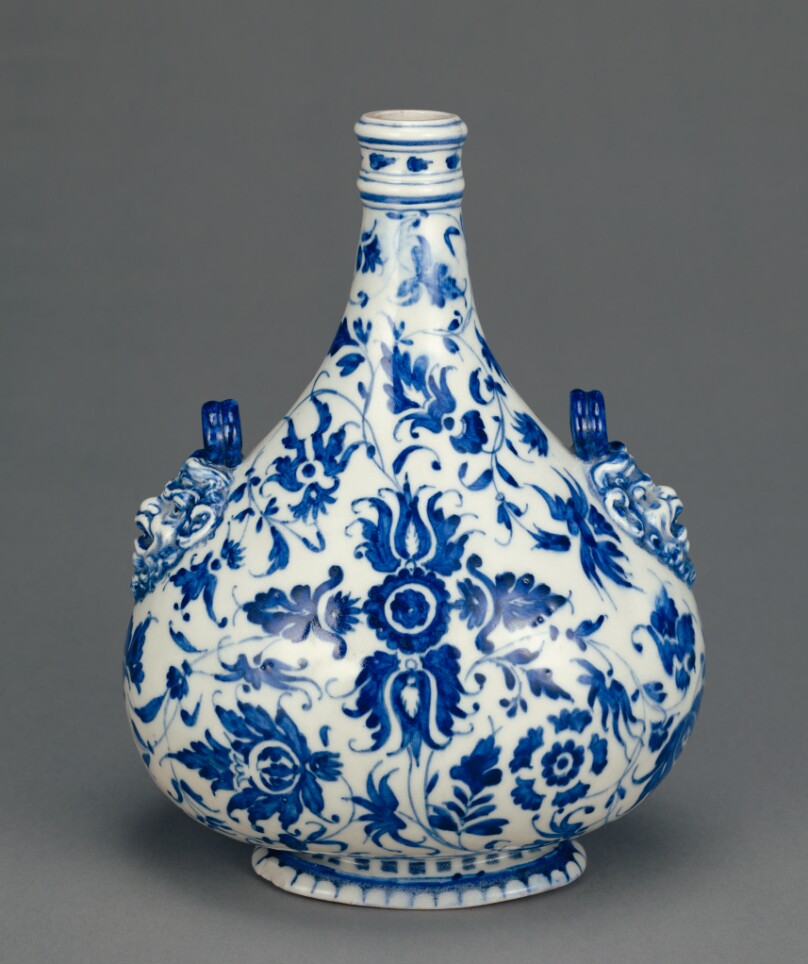
Pilgrim Flask
- Date
- 1580s
- Medium
- Soft-paste porcelain, underglaze blue decoration
- Culture
- Italian
- Department
- Decorative Arts
- Institution
- Getty Museum
- Object ID
- 66f44f93-1ab0-40cd-a0d8-25e9b73ae79e
From the Getty Museum record
This pilgrim flask, one of the rare porcelains produced in the Medici factory, is an example of the earliest porcelain made in Europe. By the late 1500s, maiolica wares had begun to decline in popularity among the affluent. In its place, soft-paste porcelain was invented, to satisfy consumers' demand for novelty and increasing passion for true porcelain from China. An exceptionally beautiful piece, the Getty Museum's flask is one of only about sixty remaining Medici porcelain pieces. It displays the finest qualities of the factory's production, including a translucent white body decorated with clear designs in underglaze blue. Flasks of this kind were fashioned after vessels used by pilgrims and travelers to carry drinking water. This piece would have served simply for display as the applied side loops, in the form of grotesque masks, would never have suspended the vessel from a pilgrim's shoulder. The arabesque patterns and stylized floral decoration--including rose, carnation, tulip, and palmette motifs--imitate Chinese porcelain as well as Turkish ceramic wares from around 1500.
The authoritative record is held by Getty Museum. LinkedCulture surfaces this object and its connections; it does not alter institutional metadata.
Get printable QR codesHide QR codes
Open QR codes for this object page and the museum record. They stay collapsed until needed.
Related across collections
Semantically similar works from Getty Museum and other institutions.