Getty Museum
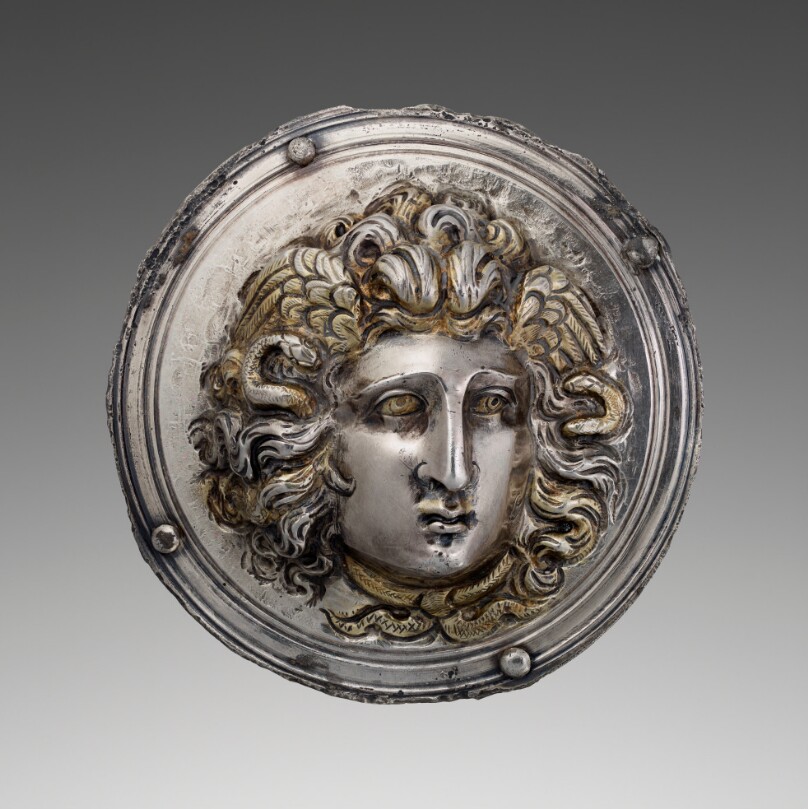
Roundel with the Head of Medusa
Creator
UnknownAll works by this person →More on Getty ULAN- Date
- A.D. 150–235
- Medium
- Silver with gilding, remains of bronze attachments on the back
- Culture
- Roman
- Department
- Sculpture
- Institution
- Getty Museum
- Object ID
- 67b8b7b6-c3c1-41b8-8107-0d63d1343752
From the Getty Museum record
Over time in Greek and Roman art, the image of the gorgon Medusa evolved from that of a horrifying, monstrous creature into a more appealing, almost human representation. This high relief repoussé roundel made in the late 100s or early 200s A.D. replaces the hideous visage and fangs of early representations with an elegant woman's face. The writhing snakes of the early Medusa's hair here give way to a thick windblown hairstyle reminiscent of that worn by Alexander the Great, with two small wings sprouting from her forehead. The snakes are now confined to a single example at each temple with their tails neatly knotted beneath her chin. The knitted brows and tightly closed, downturned mouth give this Medusa a melancholy rather than ferocious expression. A luxury item, this roundel is made of silver with gilding added to Medusa's hair and eyes. Four silver rivets in the border mark the places where bronze guides were fastened to the back so that the roundel could be threaded onto a strap, probably as a bridle ornament.
The authoritative record is held by Getty Museum. LinkedCulture surfaces this object and its connections; it does not alter institutional metadata.
Get printable QR codesHide QR codes
Open QR codes for this object page and the museum record. They stay collapsed until needed.
Related across collections
Semantically similar works from Getty Museum and other institutions.