Getty Museum
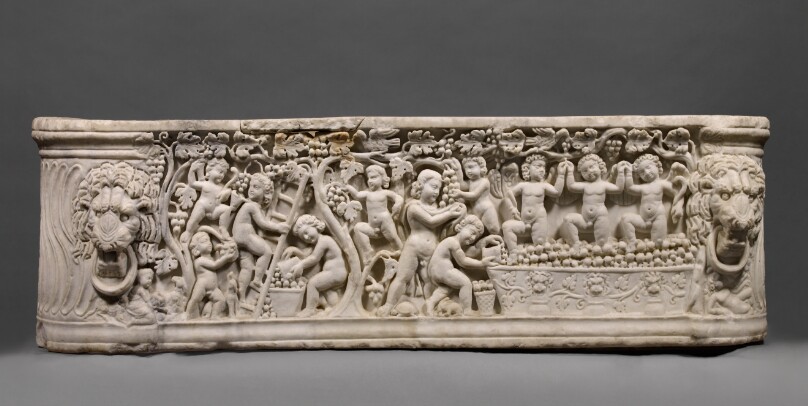
Sarcophagus representing a Dionysiac Vintage Festival
Creator
UnknownAll works by this person →More on Getty ULAN- Date
- A.D. 290–300
- Medium
- Marble
- Culture
- Roman
- Department
- Sculpture
- Institution
- Getty Museum
- Object ID
- 68a4af00-fdce-44bc-bbf4-dc8b13f6747a
From the Getty Museum record
A lively pastoral scene decorates this oval-shaped sarcophagus. It lacks a lid, but is carved on three sides in high relief. Two lions' heads with rings in their mouths flank the central panel depicting a mythological representation of the *Vindemia*, a rural Roman wine festival. An assortment of Erotes, or *putti*--chubby, naked infants with and without wings--harvest grapes from vines overhead. At right, they stomp on grapes in a *lenos*, or large wine pressing trough. The sarcophagus itself imitates the shape of the container with grapes. This chest is an excellent example of a common type of third century Roman funerary monument. The use of the running drill in carving the lions' manes and the hair of the Erotes stomping grapes, along with the sharply drawn eyebrows and drilled holes in the corners of the eyes and mouth to create a shadowing effect, are also indicative of the style of this period. Elements of symmetry, such as the repeated pose of the three Erotes in the trough, strongly suggest the sculptor used a pattern book, as was common in larger scale workshop production. This sarcophagus transcends its function as a tomb monument by touching on themes of daily Roman life: festivals, religious beliefs, and sculptural reproduction.
The authoritative record is held by Getty Museum. LinkedCulture surfaces this object and its connections; it does not alter institutional metadata.
Get printable QR codesHide QR codes
Open QR codes for this object page and the museum record. They stay collapsed until needed.
Related across collections
Semantically similar works from Getty Museum and other institutions.