Getty Museum
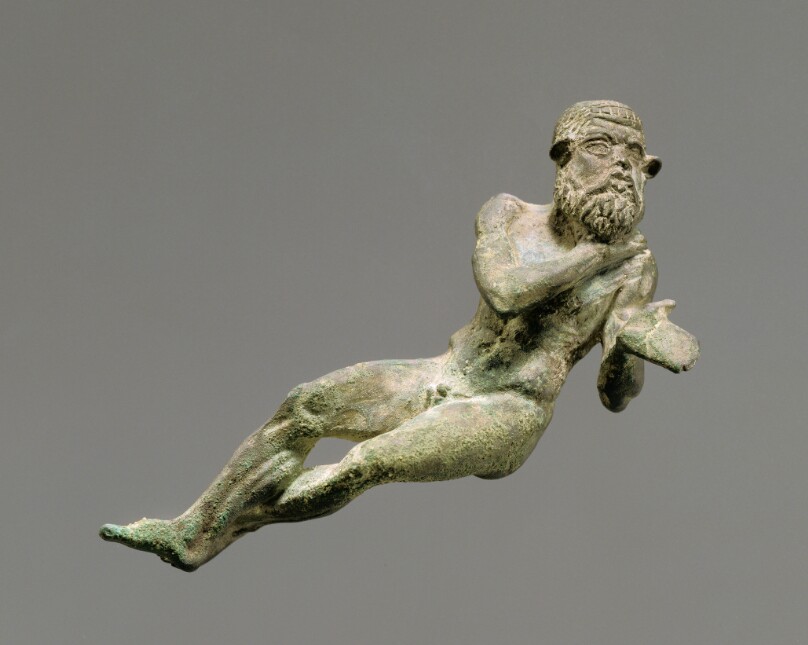
Statuette of a Reclining Satyr
Creator
UnknownAll works by this person →More on Getty ULAN- Date
- 450–425 B.C.
- Medium
- Bronze
- Culture
- Greek or South Italian
- Department
- Sculpture
- Institution
- Getty Museum
- Object ID
- 6ed81995-b21c-4f00-a3fb-4968732cc8ba
From the Getty Museum record
Reclining like a guest at a symposion, or aristocratic drinking party, this satyr rests on his left elbow with his ankles casually crossed. With his relaxed pose and the fillet or ribbon in his hair, this civilized satyr looks much like any human reveler, with only his large goat-like ears betraying his animal nature. In Greek mythology, satyrs were the companions of Dionysos, the god of wine. The unknown sculptor of this statuette has taken the symposion, a social ritual from the world of men, and transferred it to Dionysos's realm. This figure has a nearly identical twin in a private collection and the two pieces were probably used together in antiquity. Reclining satyrs were a popular decoration for vessels used at symposia. Although no traces of any attachments marks remain, this statuette and its mate probably once decorated the rim or handles of a large bronze krater or mixing vessel for wine and water.
The authoritative record is held by Getty Museum. LinkedCulture surfaces this object and its connections; it does not alter institutional metadata.
Get printable QR codesHide QR codes
Open QR codes for this object page and the museum record. They stay collapsed until needed.
Related across collections
Semantically similar works from Getty Museum and other institutions.