Getty Museum
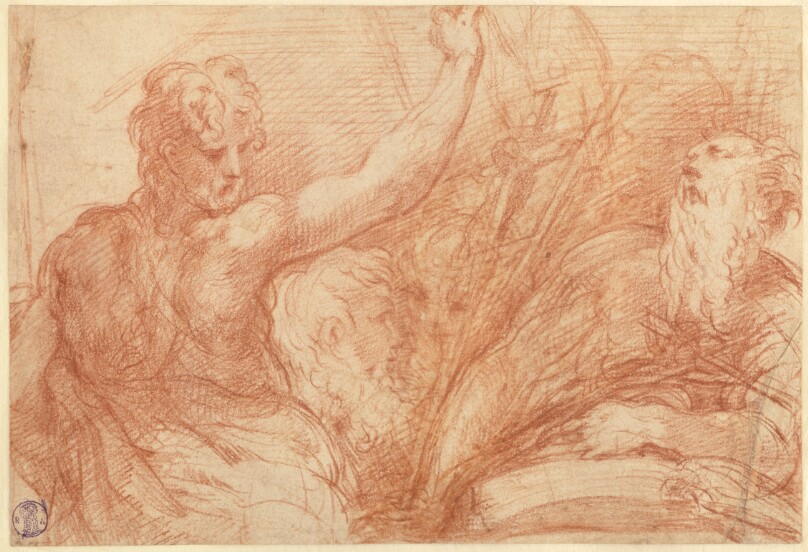
Studies of Saints John the Baptist and Jerome, a Crucifix, and Various Heads (recto); Studies of the Christ Child, a Crucifix, and a Dog (verso)
Creator
Parmigianino (Francesco Mazzola)Italian Artist · 1503–1540
All works by this person →Parmigianino, born Girolamo Francesco Maria Mazzola in Parma, Italy, became Italy's most influential Mannerist painter in his brief twenty-year career. His father and uncles taught him the techniques of painting, and by age sixteen he had already completed an altarpiece for a local church. Beginning in 1520, the celebrated Renaissance artist Correggio became his primary inspiration. Scholars belie
More on Getty ULAN- Date
- about 1525–1527
- Medium
- Red chalk
- Culture
- Italian
- Department
- Drawings
- Institution
- Getty Museum
- Object ID
- 7086d491-f816-4ad2-bf48-fa8946816885
From the Getty Museum record
Renowned for the austere remoteness of his Mannerist paintings, Parmigianino nonetheless created drawings that display dynamic energy and human warmth. He used self-discipline to transform his initial passionate concepts from the freedom and rhythms of sheets like this to the famed glacial grace of his panel paintings. An instinctive and prolific draftsman, he often covered both sides of sheets with varied figures and themes. Scholars generally connect the drawings on the recto--Saint John the Baptist, Saint Jerome, a crucifix seen from the side, and several heads--with Parmigianino's famous altarpiece, the *Vision of Saint Jerome* in the National Gallery of Art in London. Parmigianino may also have drawn these figures as a compositional study for a similar, earlier altarpiece that was either lost or never made. The verso includes a standing Christ Child, another crucifix, and a large, handsome greyhound that appears in a painting from about 1523.
The authoritative record is held by Getty Museum. LinkedCulture surfaces this object and its connections; it does not alter institutional metadata.
Get printable QR codesHide QR codes
Open QR codes for this object page and the museum record. They stay collapsed until needed.
Related across collections
Semantically similar works from Getty Museum and other institutions.